

The release of Christopher Nolan’s latest Hollywood epic, The Odyssey—an adaptation of Homer’s ancient Greek poem, widely regarded as the foundation of Greek literature—has renewed interest in Europe’s first civilisation. At a time when modern Europe is being pulled apart by questions of identity, politics and economics, there is perhaps no better time to look back at the civilisation that laid its foundations. This article is adapted from a forthcoming Geopolity booklet, The Geopolitics of Europe. It is part of a series of seven booklets examining the geopolitics of the world—Europe, Africa, the Middle East, Asia-Pacific, South Asia, Central Asia and the Americas. The series will be published in 2027.
Ancient Greece was the founding culture of Western civilisation; it gave the Western world its first philosophy, politics and intellectual tradition. From around 1600 BC, the Ancient Greek civilisation emerged and came to dominate the northeastern Mediterranean.
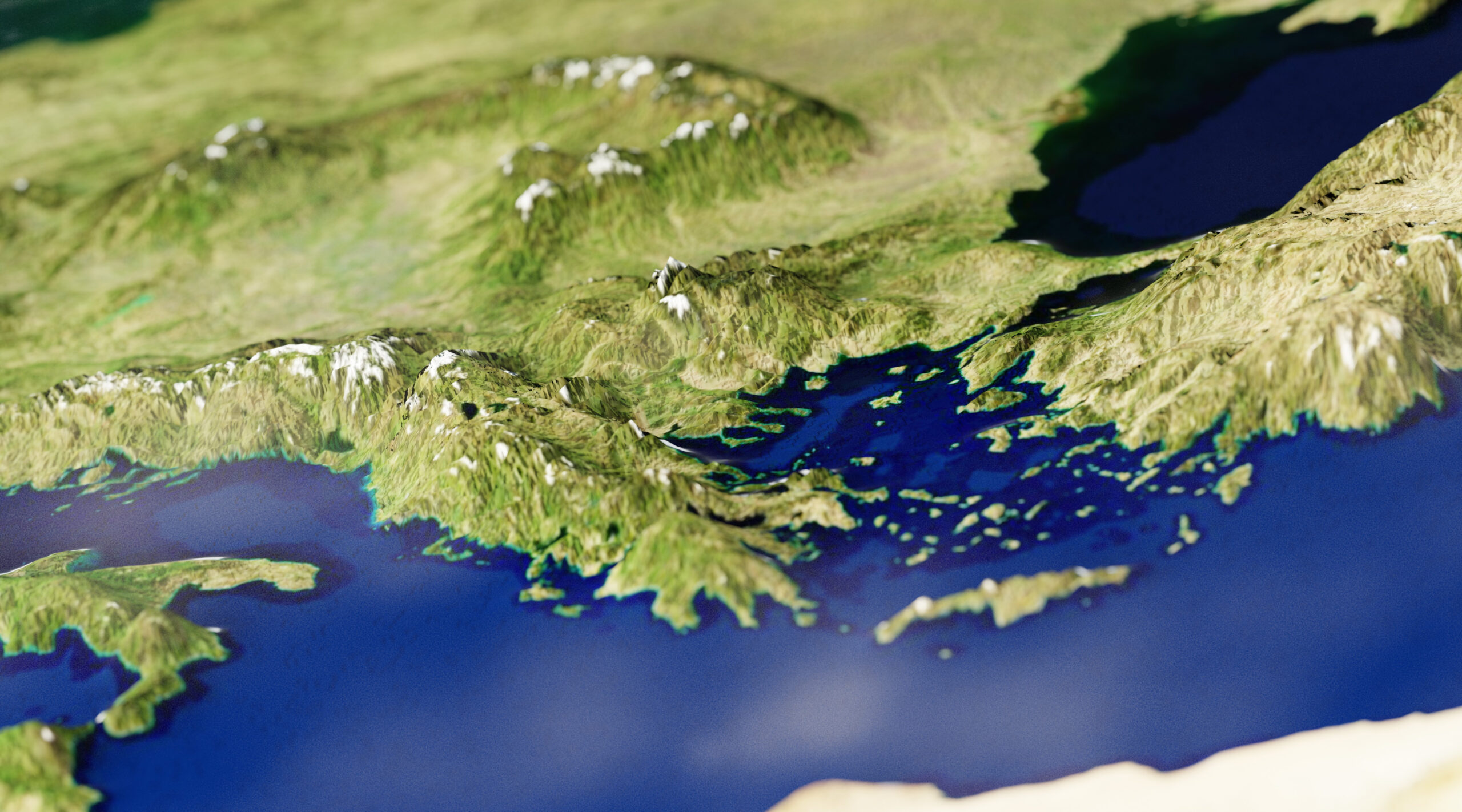
In ancient times, much like today, Greece was made up of numerous archipelagos of islands and narrow peninsulas. Today, these number nearly 6,000 and are dominated by mountains and hills. This rocky interior was not suitable for large communities, which is why Ancient Greece developed into a collection of independent city states. The mountains acted as barriers against both foreign invaders and neighbouring Greeks. They were so important to the Greeks that they came to believe their gods lived atop some of them. This is where the names Zeus, Hera, Apollo and Achilles became embedded in Greek mythology.
These city states were constantly at war with one another over land and power. One of the greatest poets in European history also emerged from Greece. Homer wrote the Iliad, recounting the Trojan War, from which the legendary story of Troy and subsequent Hollywood movies all originate from.
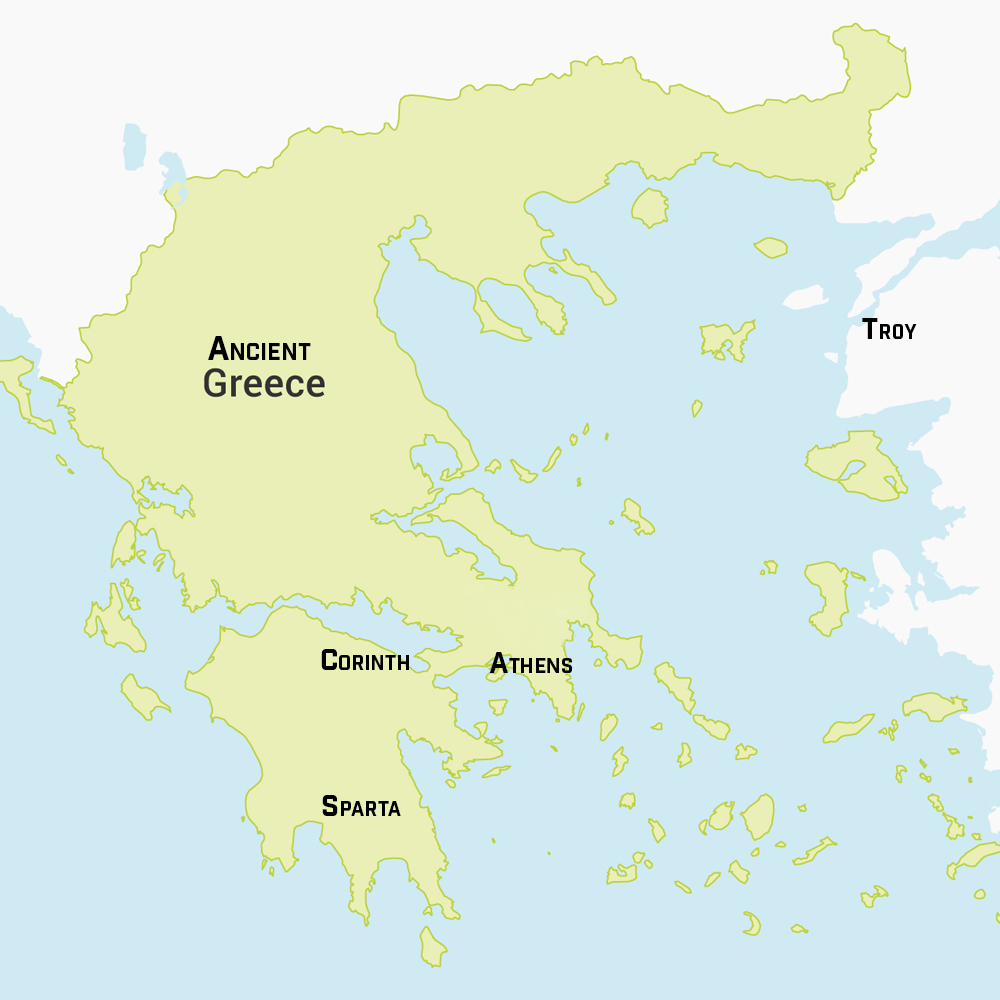
The Greeks established self-governing cities and, over time, Athens, Corinth and Sparta emerged as the most influential. Their word for such a city was polis, from which we derive the word “politics”. A polis was organised on very simple lines: there were free men, and there were slaves. Free men had rights; slaves had none. Europeans often point to Ancient Greece as the birthplace of democracy, but these were small city states where only male citizens could vote. Slaves, foreigners and women had no political rights.
Despite believing in a pantheon of gods they created, the emergence of the Greek city states provided the organisation and resources for what the Greeks are most famous for—the emergence of writers and thinkers whose ideas became the foundations of Western civilisation. Socrates developed the principles of sceptical inquiry. Plato was his most famous student, and Aristotle was Plato’s. Archimedes, Euclid and Pythagoras made enormous contributions to science and mathematics. Yet however sophisticated their philosophy became, the Greeks never abandoned their need for myths and gods to explain the world around them.
The geography of Ancient Greece, with its rugged terrain, also encouraged the development of a powerful naval culture. This enabled the Greeks to expand across the Mediterranean. By 499 BC, this led to the Greco-Persian Wars, as the Greek city states confronted the vast Persian Empire.
Led by Athens and Sparta, the Greeks united and defeated the mighty Persians during two major invasions of Greece. Their citizen-soldier armies proved that unity, discipline and strategy could overcome even the largest empire. One of the most famous episodes was a small force of Spartans holding back the Persian army at the narrow pass of Thermopylae, the battle that inspired the Hollywood movie 300.
The Greek city states had stood together in the Delian League against Persia, but only 50 years later that unity collapsed as Athens and Sparta turned on one another.
Sparta was built around the ultimate military culture, while Athens considered itself culturally superior as the home of democracy.
The Peloponnesian War began in 431 BC. Thucydides’ account of the conflict is widely regarded as one of the founding works of geopolitics and international relations. He introduced the idea now known as the Thucydides Trap, where an established power goes to war with a rising power in an attempt to preserve the existing order—much like many analysts argue we are witnessing today between the United States and China.
The war was devastating. Decades of bloodshed between Athens and Sparta brought Greece’s golden age to an end. Sparta emerged victorious but exhausted, with its strength diminished, its alliance network weakened and its wealth greatly depleted. Not for another two thousand years would the Greeks unite again.
The final Greek state to emerge—and the one that produced probably Greece’s most famous son—was Macedonia. The Kingdom of Macedonia, north of Athens, saw King Philip II reform his army by equipping his soldiers with longer spears and introducing new tactics, allowing him to conquer Greece. To preserve unity within his empire, Philip planned a grand campaign against Persia. But in 336 BC, before he could begin, he was assassinated. The task of confronting Persia fell to his 20-year-old son, Alexander.
Alexander conquered Asia Minor and Egypt, where he founded a new city that bore his name—Alexandria. His army decisively defeated the Persians in modern-day Iraq before advancing into Persia itself. When King Darius III was murdered by his own men, Alexander became King of Persia. He continued into Afghanistan and northern India, winning every major battle he fought. Eventually, his exhausted soldiers demanded to return home, forcing him to turn back. In 323 BC, Alexander contracted a fever and died on the Euphrates at just 32 years of age. Such extraordinary achievements at so young an age earned him the title of Alexander the Great.
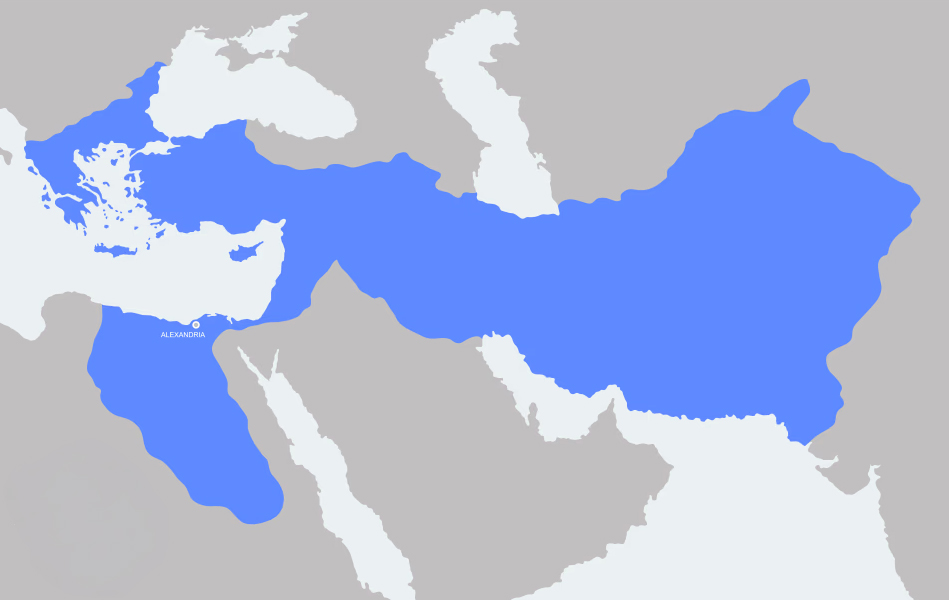
Alexander founded cities throughout his empire and spread Greek language, culture and ideas across the ancient world. Historians refer to this period as the Hellenistic Age, from Hellas, the Greek name for Greece. Alexander was unusually open to adopting aspects of the cultures he conquered, and this flexibility helped him govern his vast empire.
Following his death, however, the empire was divided among his generals, who fought one another for supremacy. Within a decade, Alexander’s empire had fragmented beyond repair. Greek political unity disappeared, and power gradually shifted westwards with the rise of the Roman Empire.
Although Ancient Greece eventually declined and was absorbed into the Roman Empire, its ideas outlived its political power. The Romans preserved and spread Greek philosophy, science and learning across Europe, while later generations rediscovered Greek thought during the Renaissance, helping to shape the modern Western world. European politics, philosophy, mathematics, logic and scientific inquiry all trace part of their intellectual heritage back to the Greek city states.
More than two thousand years after its decline, Europe’s first civilisation continues to shape the continent’s politics, laws, culture and identity.