


Three years after October 7, the most important fact about the conflict is also the easiest to miss: this stopped being merely a Gaza war a long time ago.
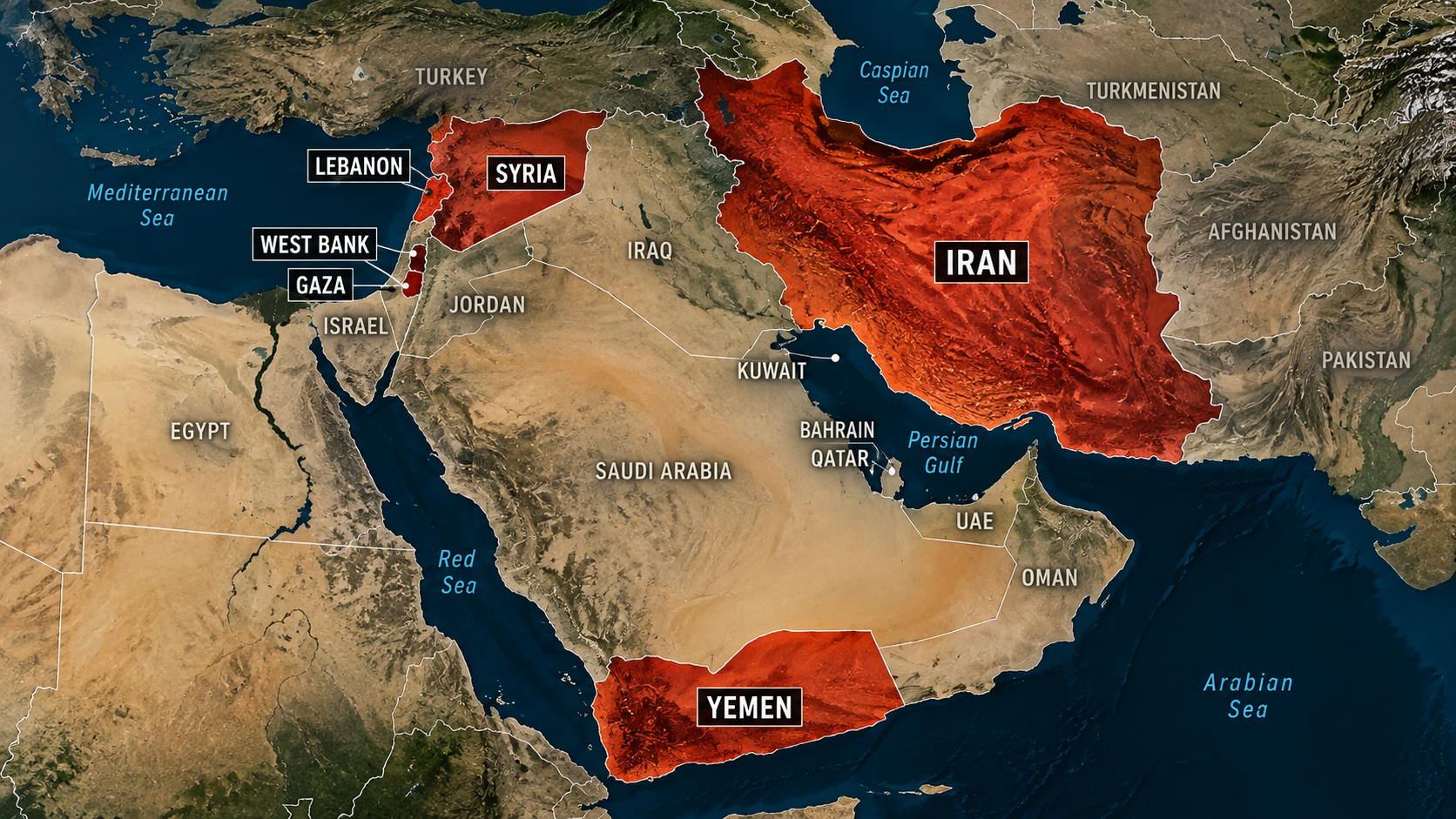
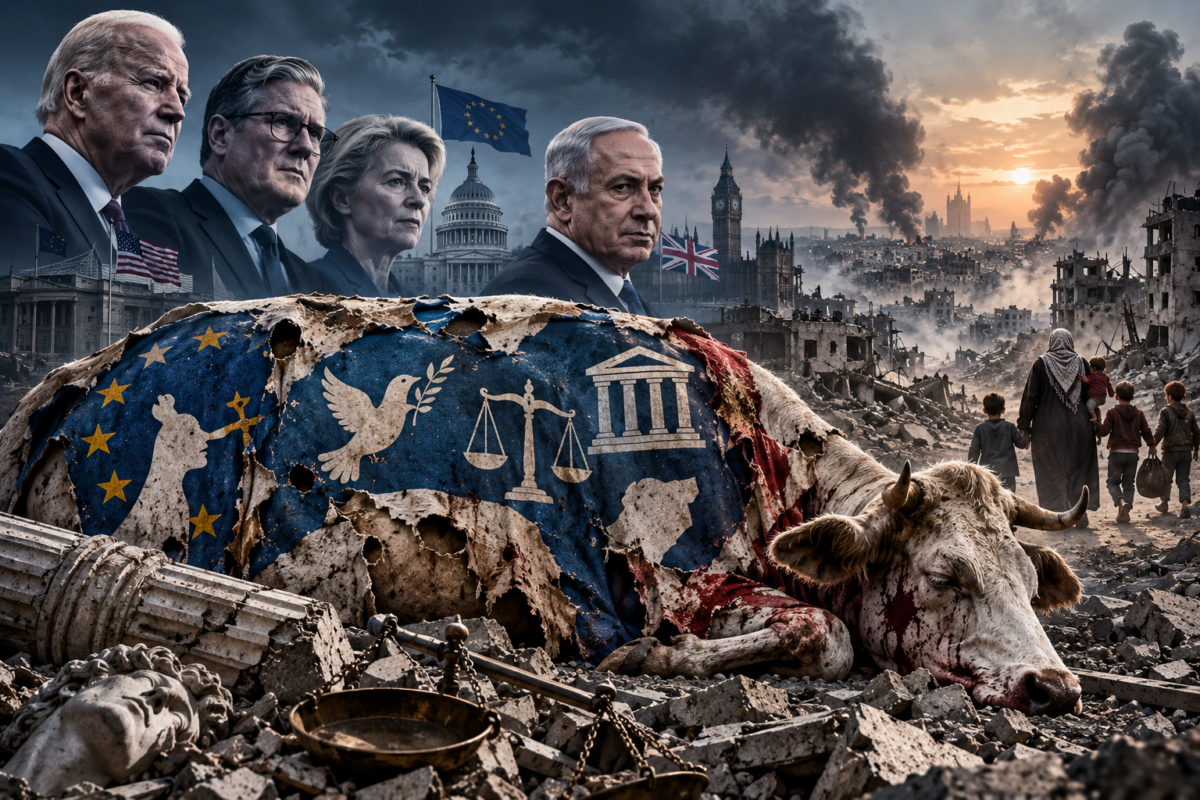
What began with the Hamas-led attack on southern Israel on October 7, 2023, and Israel’s devastating military response in Gaza has metamorphosised into a war with Lebanon, Syria, Yemen, Iran and drawn in the Gulf states. The regional order that existed before October 7 has been altered.
Israel may have demonstrated conventional military reach. But military superiority has not translated into its desired outcome. Hamas has survived years of war. The Houthis emerged as a significant Red Sea military actor. Iran has endured direct American and Israeli attack. Washington has discovered the extraordinary cost of prolonged missile and drone warfare.
Three years on, these are the ten developments that matter most.
1. This Is Now a Regional War – The original battlefield was Gaza. But the conflict expanded across borders into series of confrontations across the Middle East region. Gaza became one front. Lebanon became another. Syria has become an important arena. Yemen and the Red Sea are now another battlefield through the Houthis. Finally, direct conflict with Iran transformed what had once been a largely indirect confrontation into interstate warfare.
We now must view these conflicts as multiple battlefields in one war. Each theatre affects the others. Israeli operations in Gaza influence Hezbollah and Lebanon. Developments in Lebanon affect Syria. Syria has become an arena involving Israel and Turkey. The Houthis have demonstrated that a comparatively poor state on the southern Arabian Peninsula can affect international shipping through one of the world’s most important maritime chokepoints. Iran, meanwhile, sits behind much of the wider strategic competition even where it does not exercise direct operational control.
October 7 therefore did something much larger than trigger another Gaza war. It exposed the interconnected nature of Middle Eastern security. The result is effectively a regional system of wars stretching from the Mediterranean to the Persian Gulf and Red Sea.
That matters because Israel’s overwhelming military superiority is much easier to employ against one enemy on one front than against multiple adversaries dispersed across thousands of miles. The challenge is no longer simply destroying targets. It is converting military power into a regional political settlement.
Three years after October 7, that settlement remains elusive.
2. Hamas Survived – Israel has since October 7, reiterated it wants to destroy Hamas. But three years later, Gaza has been devastated and Hamas has suffered enormous losses. Its leadership, infrastructure and military capabilities have been repeatedly targeted. Yet survival itself has strategic significance.
Insurgent and resistance movements do not necessarily measure victory in the same way conventional militaries do. They do not need to conquer enemy capitals or defeat armies in open battle. They merely need to remain sufficiently intact to demonstrate that overwhelming military force could not eliminate them. That is why the political question surrounding Hamas is more important than simply counting fighters, tunnels or rockets.
If Hamas or organisations descended from it retain the ability to recruit, organise and influence Palestinian politics, Israel faces the same fundamental dilemma that has confronted it throughout the conflict: who governs Gaza after the fighting? Destroying buildings is considerably easier than constructing a viable post-war political order.
This is the paradox at the centre of Israel’s Gaza campaign. Israel can dominate the battlefield while remaining unable to determine what ultimately replaces Hamas. Unless a Palestinian political structure emerges with legitimacy among Palestinians themselves, military operations risk repeatedly recreating the conditions for resistance.
The question three years after October 7 is therefore no longer whether Hamas is weaker. The more consequential question is whether Israel succeeded in achieving its declared objective of permanently removing Hamas as a meaningful political and military force. The fact that this question can still be asked shows the limits of military power.
Insurgent and resistance movements do not necessarily measure victory in the same way conventional militaries do
3. Israel Never Sticks to Ceasefires – The word “ceasefire” has been used repeatedly since October 7. But the experience of the past three years shows for Israel these are just tactical pauses, not political settlements.
Gaza has seen agreements, pauses and negotiations, but Israel has continued with its massacres, destruction and violence. Lebanon has experienced similar problems. Iran and Israel have also moved between direct confrontation, pauses and renewed threats.
The two ceasefires that were agreed in Gaza saw the freezing of the conflict, which was to the benefit of Israel. Israel never stuck to the term of the ceasefire, blamed Hamas for violating it, even though it openly broke the terms agreed.
A ceasefire can stop missiles for a period. It cannot determine Gaza’s political future. It cannot resolve Israel’s confrontation with Hezbollah. It cannot settle Iran’s nuclear programme or the broader contest between Tehran, Washington and Israel. Nor can it resolve the Palestinian question.
This is why ceasefires have repeatedly functioned as tactical breathing spaces. Israel has used periods of reduced fighting to reorganise, replenish stocks, reposition forces and re-start military operations.
The two ceasefires that were agreed in Gaza saw the freezing of the conflict, which was to the benefit of Israel
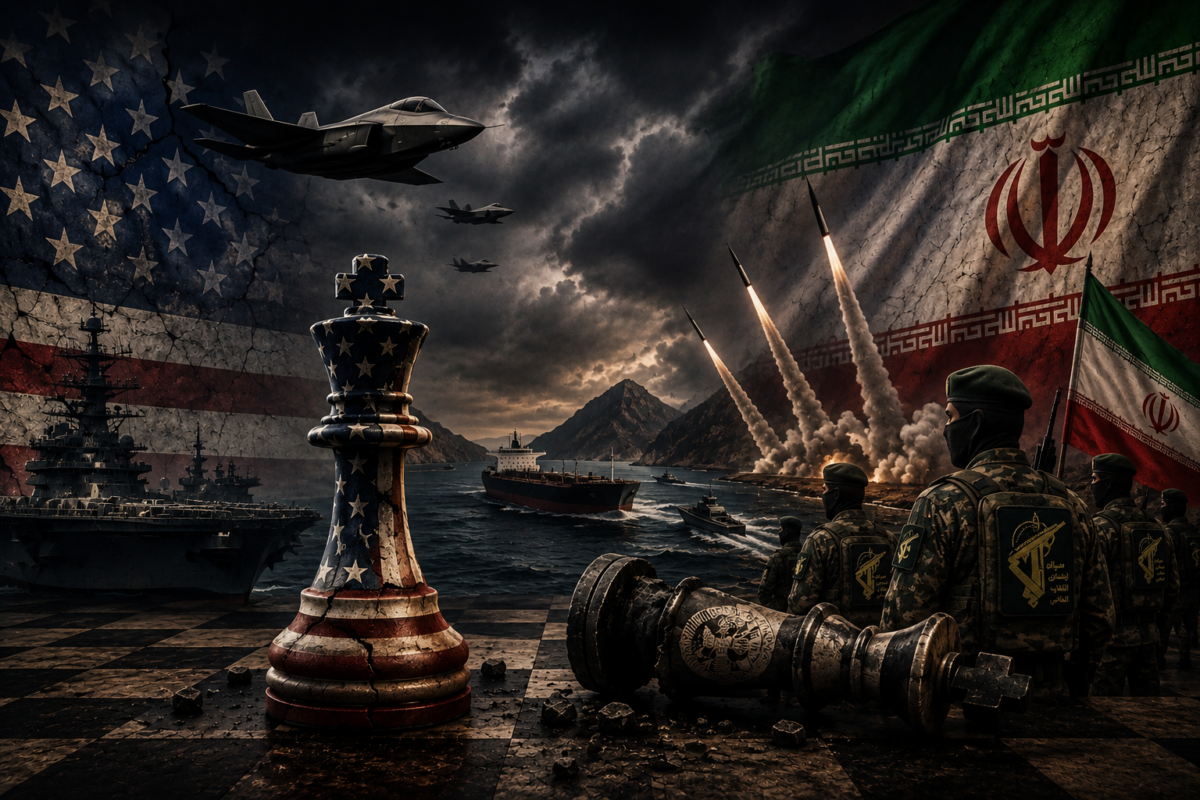
4. Iran Has Exposed the Limits of American Power – The most consequential development since October 7 came with the confrontation with Iran.
The US and Israel possessed enormous advantages: superior air power, intelligence capabilities, precision weapons, surveillance systems and access to regional bases. Yet seven months of conflict have demonstrated the difference between damaging Iran and compelling Iran.
Iran has absorbed substantial military and economic punishment. But Tehran has retained the ability to threaten American forces and regional infrastructure, while disruption around the Strait of Hormuz has demonstrated the economic leverage created by geography.
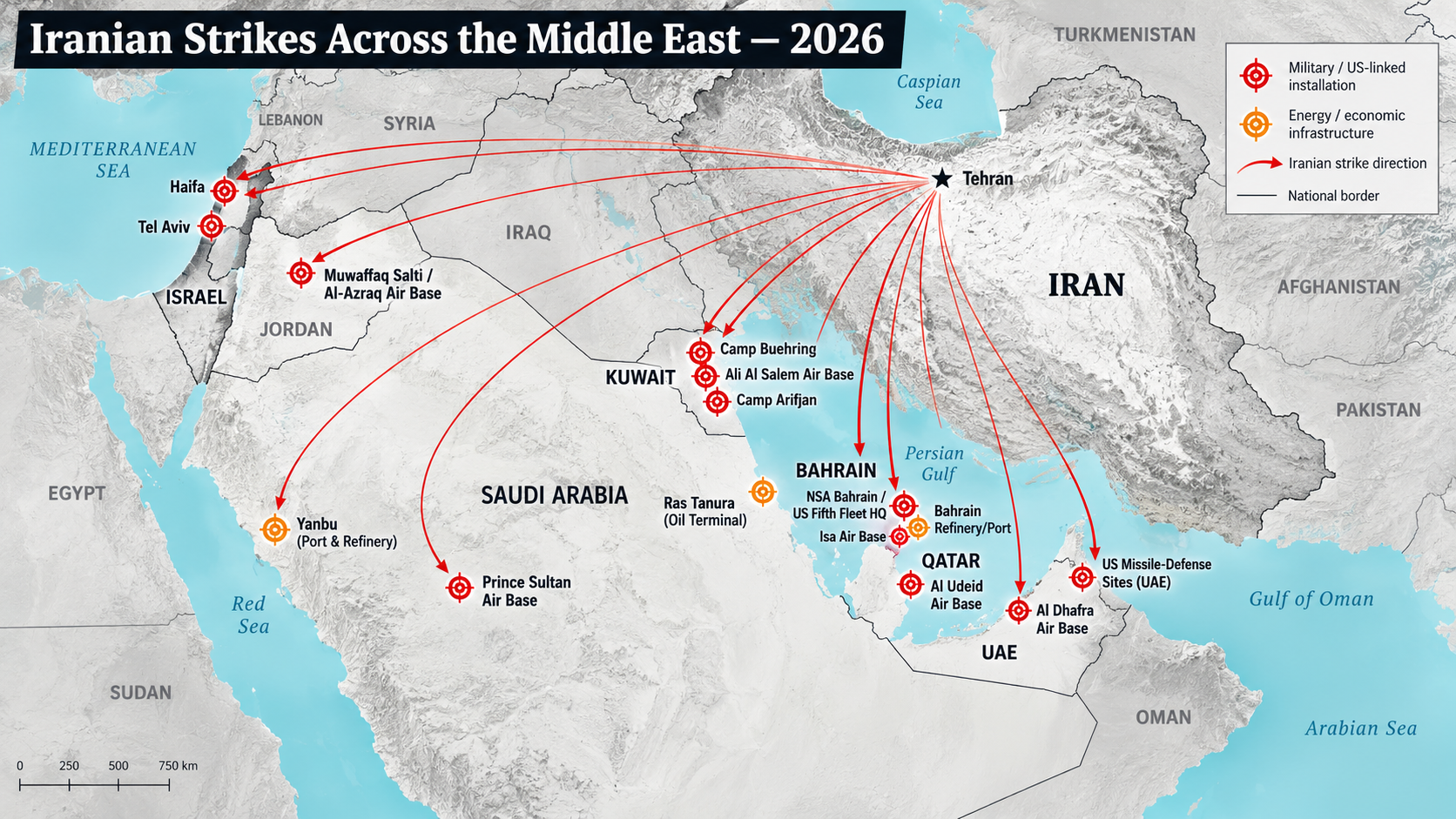
For Washington, the conflict has exposed the vulnerability of modern missile defence. Patriot and other interceptor inventories were never designed around the assumption of endless high-intensity regional warfare while Washington simultaneously maintains commitments in Europe and the Indo-Pacific. Every interceptor used in the Middle East is one that must be replaced.
Iran has shown rather than military bases being sources of strength in the face of drones and missiles, they are liabilities.
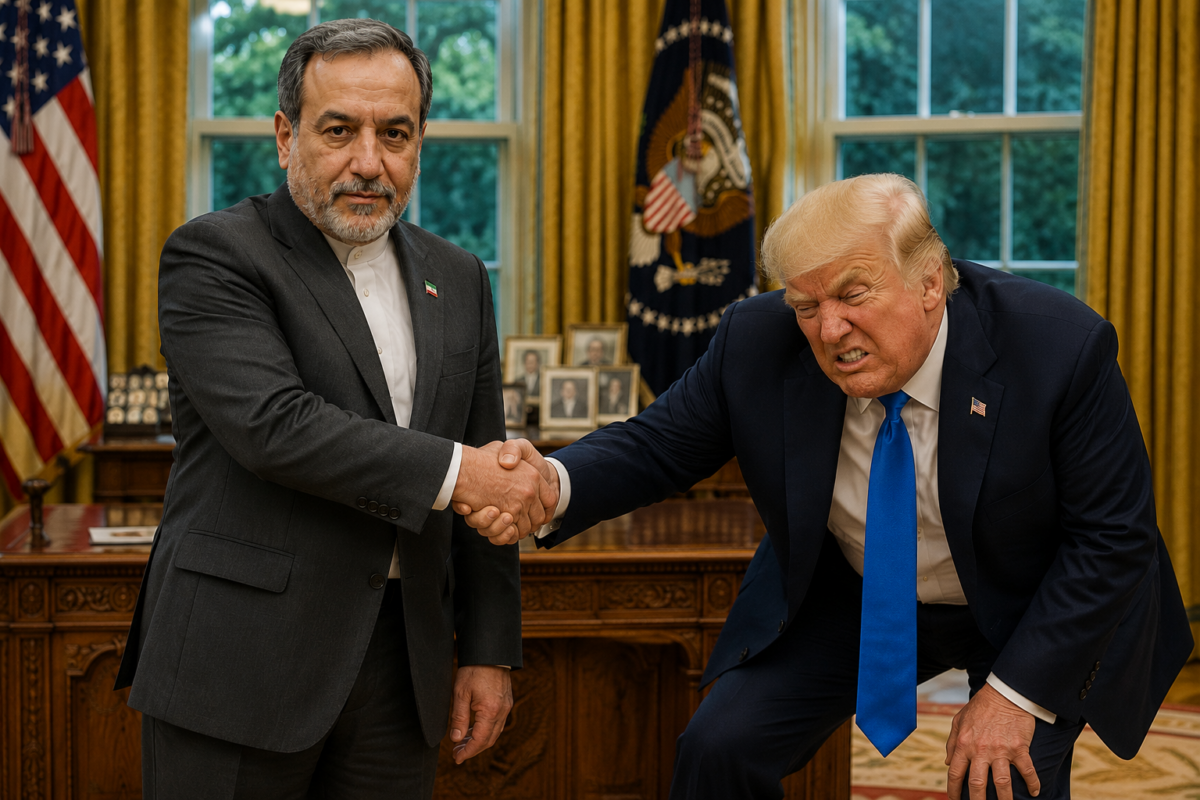
Seven months into the conflict, Iran remains under enormous pressure. But the persistence of diplomacy, military reinforcement and threats of renewed escalation illustrates that decisive victory has proved far harder than the opening strikes suggested. America remains the world’s dominant military power, but Iran has demonstrated that even dominant powers can struggle to convert military superiority into political submission.
Iran has shown rather than military bases being sources of strength in the face of drones and missiles, they are liabilities
5. Israel Is Already Looking Beyond Iran – One of the most revealing developments of 2026 has occurred largely outside Gaza. Israel is increasingly thinking about what comes after Iran.
Israel’s Nagel Committee, a government-appointed commission established to examine Israel’s defence requirements. In its January 2025 report, it warned Israel to prepare for a possible direct confrontation with Turkey.
Turkey has emerged prominently in Israeli strategic debate, particularly because of Ankara’s expanding influence in Syria. Israeli and Turkish interests now overlap in ways that create possibilities for confrontation.
Syria is central. Turkey wants a stable Syrian state closely connected to Ankara. Israel wants to prevent Syria from becoming a platform from which hostile military forces could threaten it. Israeli strikes on Syrian military infrastructure allegedly connected to possible Turkish deployments have demonstrated how easily those objectives can collide.
The competition extends beyond Syria. Turkey possesses a large military, an expanding indigenous defence industry, a substantial drone sector and growing naval ambitions. Unlike many of Israel’s previous regional adversaries, it is also a NATO member with a large economy and considerable strategic depth.
Israeli officials have simultaneously expressed concern about Egypt’s military build-up in Sinai and the rapidly deepening military relationship with Ankara. Egypt presents a different challenge. Cairo maintains peace with Israel, but its military capabilities, control of the Suez Canal and geographic position ensure that Israeli planners continue watching developments there closely, particularly as Egypt and Turkey improve relations.
Whilst war is not inevitable at the moment, it means Israel’s strategic horizon is expanding. For decades, Israeli security planning focused on Arab armies, then Palestinian organisations and Iran’s regional network. Now a different strategic landscape is emerging in which powerful states such as Turkey could become increasingly important competitors.
October 7 may therefore eventually be remembered not merely for the wars it started, but for the regional balance of power it accelerated.
6. Western Public Opinion Is Moving Against Israel – Zionists may possess immense influence in the west, but their political position in the West has hit rock bottom.
Three years of images from Gaza, civilian casualties, destruction and repeated controversy over Israeli military operations have produced measurable changes in public opinion. The shift is significant in the US because American political and military support has historically been the foundation of Israel’s international position.
The change is generational as well as partisan. Younger Americans are considerably more critical of Israel than older generations. Negative attitudes towards the Israeli government have risen sharply, while sympathy for Palestinians has become much more visible in universities, political movements, trade unions and cultural institutions.
Similar pressures can be seen across Europe. Pro-Palestinian demonstrations have mobilised large crowds in London and other Western capitals. European governments have faced growing domestic pressure over arms exports, recognition of Palestine and relations with the Netanyahu government.
None of this means Western governments have abandoned Israel. But geopolitics is ultimately shaped by societies as well as governments. Today’s university students become tomorrow’s journalists, civil servants, politicians, lawyers and business leaders.
That is why Israel’s long-term challenge may be larger than any individual opinion poll. Israel historically presented itself in the West as a democratic ally surrounded by hostile forces. Gaza has destroyed that image for a growing section of Western society.
Military victories can be achieved relatively quickly. Reversing a generational change in political attitudes may prove much harder.
Israel historically presented itself in the West as a democratic ally surrounded by hostile forces. Gaza has destroyed that image for a growing section of Western society
7. Israelis Are Leaving Israel – Israel has always experienced migration in both directions. People leave and return for economic, professional and personal reasons. But recent numbers are a problematic trend for Israel.
Israeli official data show a marked rise in the number of people leaving the country, while the migration balance deteriorated sharply during the post-October 7 period. Part of this reflects immigrants who had arrived following Russia’s invasion of Ukraine subsequently moving elsewhere. But the increase also includes more native-born Israelis leaving.
This matters because Israel’s greatest strategic resource has never been territory or natural resources. It is people.
Israel depends heavily on a comparatively small population with high levels of education, technological expertise and military mobilisation. Its technology sector, universities, intelligence organisations and armed forces rely disproportionately on skilled human capital. A sustained increase in emigration would therefore have consequences far beyond population statistics.
It could affect the tax base, technology industry, military reserve system and ultimately the country’s demographic balance.
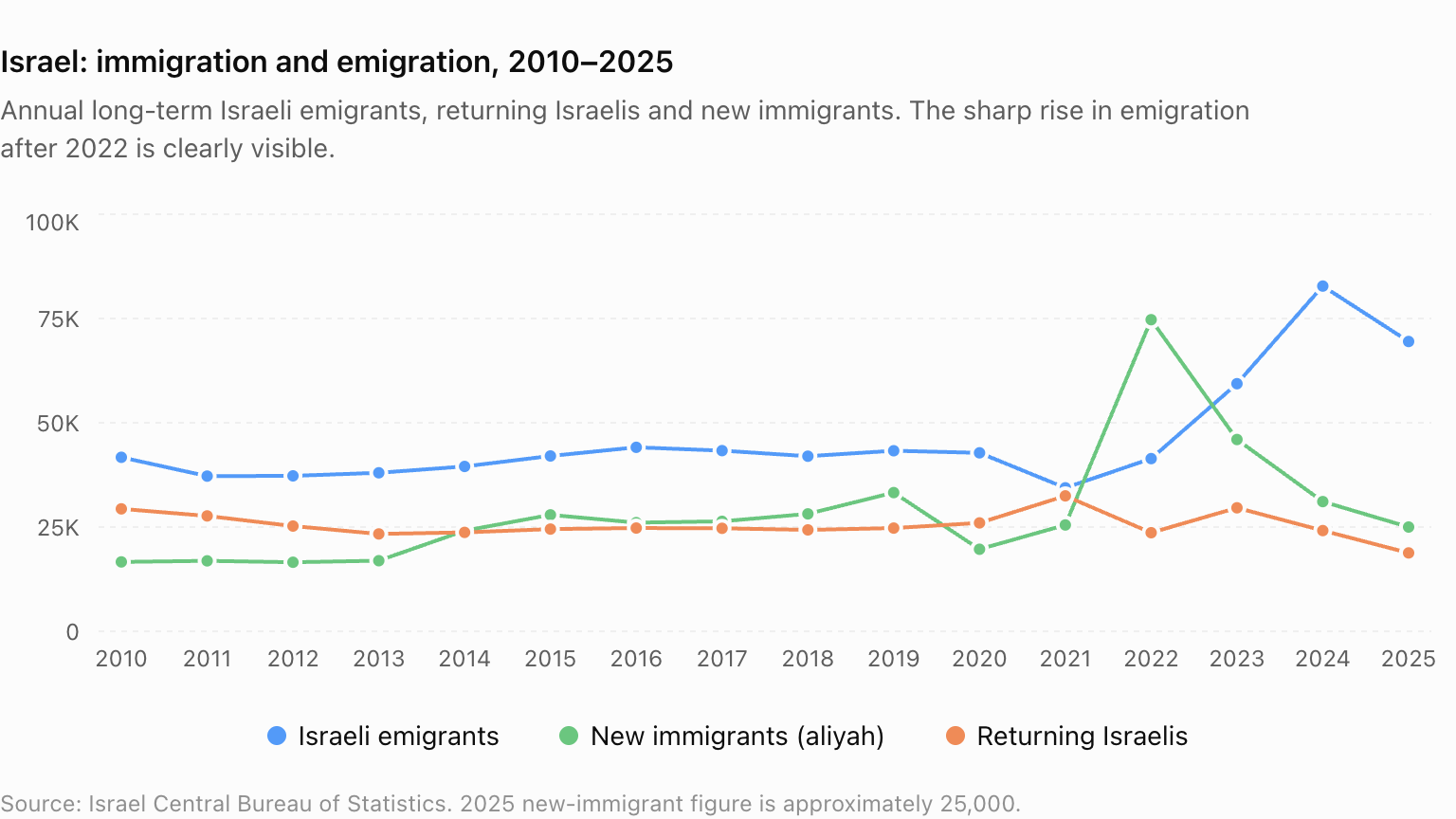
Zionism historically depended on the idea of aliyah: Jews moving to Israel. A prolonged period in which increasing numbers of Israelis instead seek lives abroad raise uncomfortable questions about security, prosperity and confidence in the country’s future.
One or two years do not establish an irreversible demographic trend. But if elevated emigration continues through the remainder of the decade, historians may eventually view it as one of the most consequential domestic effects of the post-October 7 wars.
8. Does Israel Care about its Hostages? – The hostages taken on October 7 became one of the defining symbols of the war. Israeli officials repeatedly argued that military pressure was necessary to secure their release. But the negotiating history reveals a very different story.
There were opportunities for hostage agreements throughout the conflict. Some succeeded. Others failed. Reports from the opening months of the war indicated that proposals involving pauses in fighting and releases of hostages were rejected or stalled. Hamas demanded an end to the war and Israeli withdrawal as part of any broader agreement.
What the 3 years of conflict show is Israel pursuing war over the release of its citizens and a fundamental tension inside Israeli strategy.
Recovering every hostage and pursuing the complete destruction of Hamas were not always compatible objectives. A comprehensive hostage agreement required negotiation with Hamas and potentially major concessions. Continuing the war sought to destroy Hamas militarily. Israeli hostage families themselves repeatedly highlighted this contradiction, with large demonstrations demanding that the government prioritise an agreement.
Israel’s government maintained that military pressure improved negotiating leverage. Critics argued that prolonging the war endangered the very hostages Israel claimed to be rescuing.
9. The Iran War Has Shaken Faith in America’s Security Umbrella – For decades, the basic Gulf security bargain was straightforward. The Gulf supplied energy to the world. The United States supplied security. October 7 and the wars that followed have placed that bargain under unprecedented pressure.
The confrontation with Iran has demonstrated that American military protection is neither unlimited nor cost-free. Iranian missiles and drones have threatened bases and infrastructure across the region. At the same time, the US has faced the enormous logistical challenge of supplying sufficient air-defence interceptors across multiple theatres.
Washington can deploy additional Patriot batteries, aircraft carriers and combat aircraft. But every deployment demonstrates something else: the enormous resources required merely to maintain the security architecture.
The Gulf states have learnt a hard lesson. Saudi Arabia, Qatar and the UAE cannot base their long-term survival on the assumption that American military capacity will always be available in unlimited quantities. Washington must simultaneously think about China, Russia, Europe, the Pacific and its own weapons inventories.
But the perception of unlimited American protection has been damaged. And in geopolitics, perceptions of guarantees can matter almost as much as the guarantees themselves.
the perception of unlimited American protection has been damaged. And in geopolitics, perceptions of guarantees can matter almost as much as the guarantees themselves
10. The Houthis Have Become a Strategic Problem? – Before October 7, Yemen’s Houthis were usually treated internationally as one faction in a long and brutal Yemeni civil war. Three years later, they have become a regional strategic actor. Their importance comes from geography.
Yemen sits beside Bab al-Mandab, the narrow gateway connecting the Red Sea to the Gulf of Aden and Indian Ocean. Shipping passing between Asia and Europe through the Suez Canal must transit this area. That gives the Houthis leverage far beyond Yemen’s economic or military weight.
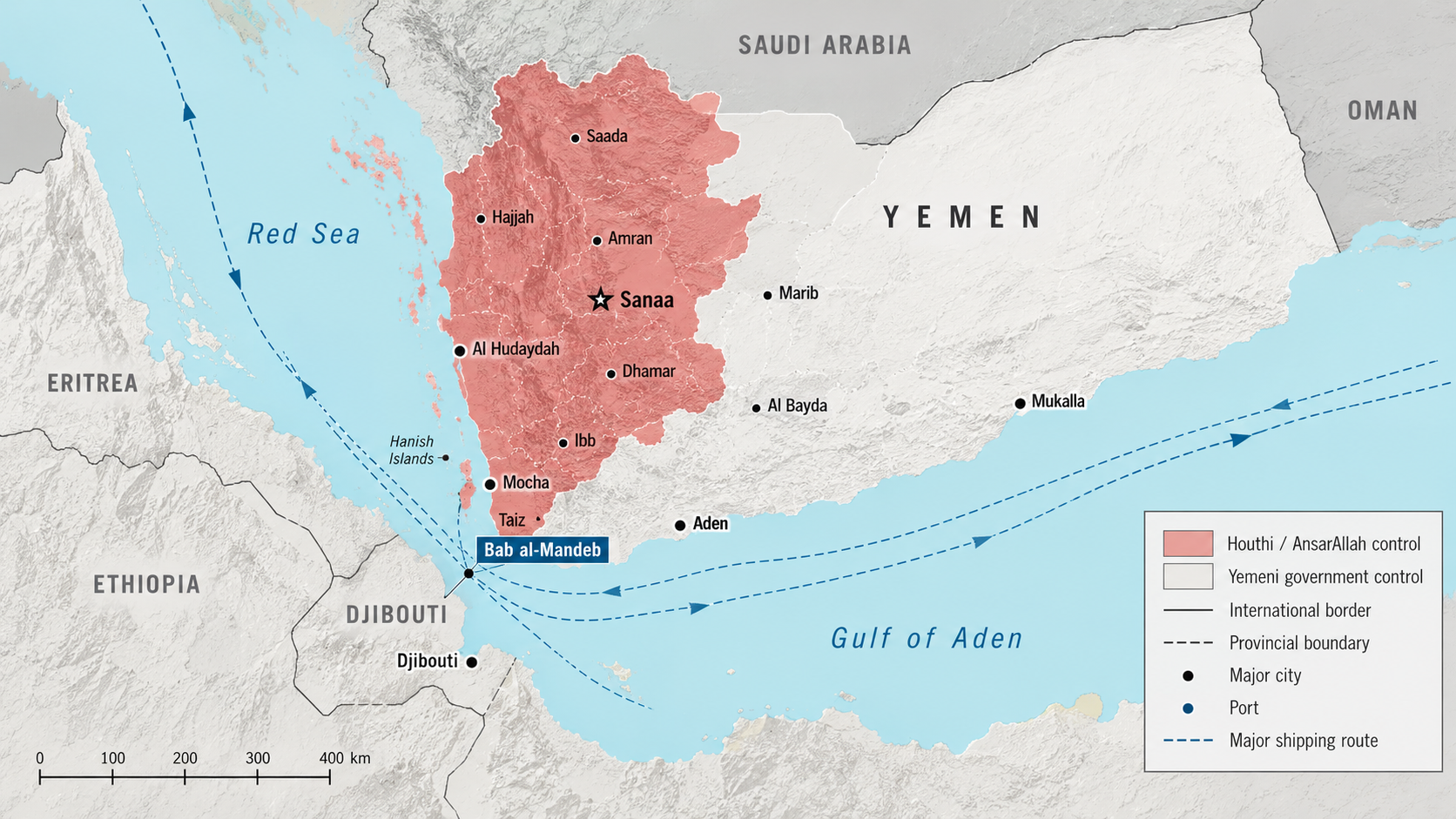
The movement has demonstrated an ability to launch drones and missiles over considerable distances and threaten maritime traffic. Western and regional military operations have damaged Houthi capabilities but have not eliminated the organisation.
Iran’s relationship with the Houthis makes this even more important. Tehran does not need to control every Houthi decision for the relationship to have strategic value. The existence of an armed movement capable of threatening Bab al-Mandab creates another pressure point against Israel, the United States and Gulf monarchies.
Combine this with Iran’s leverage around the Strait of Hormuz and a remarkable geographical picture emerges. Two of the world’s most important energy and maritime chokepoints can be threatened by Iran or a movement aligned with it. This is asymmetric warfare at its most effective.
The Houthis cannot defeat the United States conventionally. They do not need to. Their strategic value comes from imposing costs, complicating shipping, absorbing military resources and demonstrating that overwhelming firepower does not necessarily produce political control.
BONUS: What Did Israel Know Before October 7? – Three years after the attack, perhaps the most politically explosive question has returned: what warnings did Israel receive before October 7, and what happened to them? Recent reporting has added another layer to an already complicated intelligence picture.
Reports in Israeli and international media allege that UAE President Mohammed bin Zayed warned Benjamin Netanyahu before the October 7 attack. Separate reporting described warnings from Egypt’s intelligence leadership.
Netanyahu denied receiving advance warning of the Hamas attack and has attacked the allegations as false. But these claims sit alongside previously documented evidence that warning signs existed inside Israel’s own security establishment.
Israeli intelligence had obtained Hamas planning material before October 7. Border observers had reported unusual Hamas activity. Analysts had raised concerns about exercises and preparations. Egypt has long maintained that warnings were passed to Israel.
None of this proves that Israel’s government knew the precise timing, scale or operational details of the attack. But it does raise a different question: how many warnings are required before an intelligence failure becomes a political failure?
One comment
Valeria Luiza Dinca
7th October 2026 at 12:39 pm
Regarding the reality of this conflict, the claim that a terrorist organization like Hamas “always honors ceasefires” is factually incorrect and has been refuted on numerous occasions by international observers and intelligence agencies:
– Hamas’s track record of violations: Throughout successive conflicts (such as in 2008, 2014, or the period leading up to October 7), Hamas has violated humanitarian truces and ceasefires by launching sustained rocket attacks against Israeli civilian populations, staging surprise attacks on border patrols, or using periods of calm to rearm and dig infiltration tunnels. A notable example cited by the UN occurred in 2014, when Hamas unilaterally broke an Egypt-brokered humanitarian ceasefire by launching dozens of rockets and initiating combat while negotiations were still underway.
– The dynamics of recent truces: In more recent ceasefire attempts (such as those in 2025 or 2026), both sides have accused each other of breaching agreements. While media outlets sympathetic to Gaza report Israeli attacks on the Strip, Israeli intelligence and international mediators note that Hamas militias frequently test the limits of agreements by delaying the handover of hostages, refusing to disarm, concealing fighters in civilian areas, or launching sporadic projectiles.
– The position of the State of Israel: For its part, international reports document that Israel has resumed military operations during truce periods primarily as a defensive response to prior violations by the militias or due to Hamas’s failure to comply with conditions regarding the release of hostages.