


Princes and Thieves: Jared Kushner and Mohammed bin Zayed’s Secret Plot to Remake the Middle East
Matthew Cole
October 2026
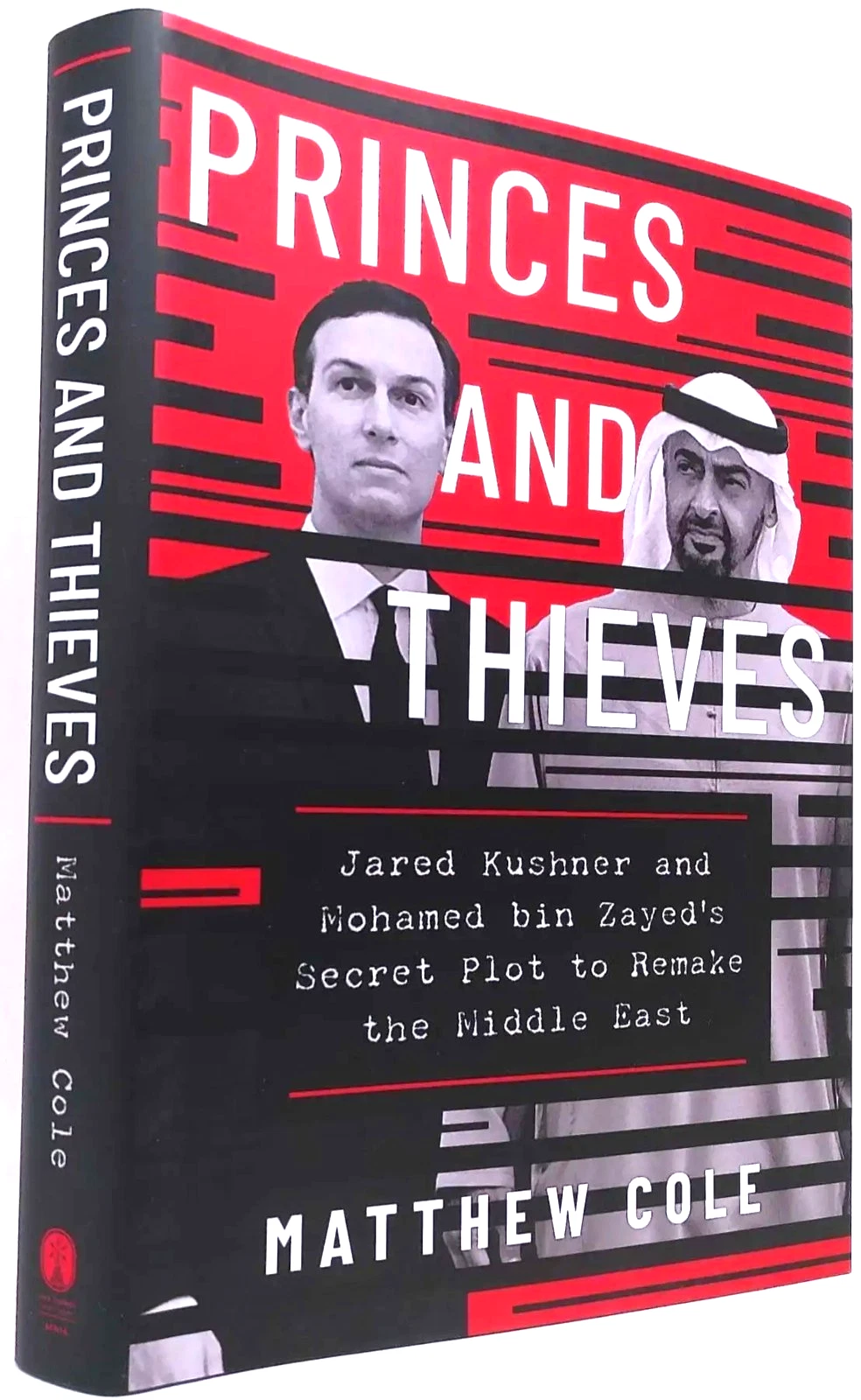 What happens when American foreign policy becomes entangled with private fortunes, Gulf monarchies and secret financial networks? Matthew Cole’s explosive investigation reveals how Jared Kushner and powerful Middle Eastern rulers allegedly used their relationships to reshape the region, raising fundamental questions about who really controls American foreign policy.
A New Middle East Built Behind Closed Doors
Foreign policy is generally presented as the product of national interests, strategic calculations and diplomatic negotiations. But what if some of the most consequential decisions affecting the Middle East were shaped by personal relationships, private financial interests and secret arrangements?
This is the central argument of Matthew Cole’s Princes and Thieves, an investigative account of Jared Kushner’s relationship with the rulers of the United Arab Emirates and Saudi Arabia during Donald Trump’s first presidency.
Cole, an investigative journalist specialising in intelligence and national security, argues that Kushner became the central figure in an extraordinary network connecting Washington, Abu Dhabi, Riyadh and Tel Aviv. What emerged was not simply a new diplomatic approach but, according to Cole, an attempt to restructure the Middle East around the interests of a small group of powerful individuals.
The book draws on five years of reporting and interviews with more than fifty individuals. Its allegations are substantial, although many depend on confidential sources and remain contested. Kushner’s lawyer has denied the central accusations.
The Princes Who Wanted to Remake the Region
One of the book’s most revealing arguments concerns Mohamed bin Zayed (MBZ), the UAE ruler, and Mohammed bin Salman (MBS), Saudi Arabia’s crown prince.
Cole portrays MBZ as the principal strategist behind an ambitious regional transformation. His objectives included weakening political Islam, containing Iran, marginalising Qatar and establishing closer relations between Israel and the Gulf monarchies.
The opportunity arrived with Trump’s election in 2016.
In December that year, before Trump entered the White House, MBZ secretly met Kushner at New York’s Four Seasons Hotel. Cole presents this meeting as a turning point. Rather than dealing through established American diplomatic institutions, the Emirati ruler had gained direct access to the incoming president’s son-in-law.
Kushner possessed something Gulf rulers understood exceptionally well: political authority derived from family connections.
For MBZ, this offered an opportunity to bypass traditional American foreign-policy institutions and influence Washington through personal relationships.
Qatar: The Attempted Regime Change
Perhaps the book’s most startling revelations concern the 2017 blockade of Qatar.
Saudi Arabia, the UAE, Bahrain and Egypt severed relations with Doha, accusing it of supporting extremism and maintaining unacceptable relations with Iran.
Cole argues that the blockade was only the beginning of a much more ambitious plan.
According to his reporting, MBZ and MBS contemplated military intervention to remove Qatar’s ruling emir, Sheikh Tamim bin Hamad Al Thani. Kushner was allegedly aware of discussions about escalating pressure on Doha.
The book describes how American officials, particularly Secretary of State Rex Tillerson, opposed the blockade and worked to prevent a military confrontation.
The episode exposes a remarkable contradiction: while parts of the American government attempted to preserve regional stability, individuals close to the president were allegedly supporting policies that threatened it.
Qatar ultimately survived, strengthened its relationship with Turkey and diversified its economic connections.
The Financial Interests Behind Diplomacy
The book’s most serious allegations concern money.
Kushner’s family business had accumulated enormous debts following its disastrous $1.8 billion purchase of 666 Fifth Avenue in Manhattan.
Cole argues that these financial vulnerabilities created opportunities for foreign governments seeking influence.
He investigates alleged secret accounts, including financial arrangements linked to the UAE and Azerbaijan, through which money was purportedly transferred to individuals involved in covert operations.
Among those discussed is Erik Prince, the founder of Blackwater, whose activities in Libya and connections to Emirati interests form an important part of the investigation.
Cole alleges that these arrangements helped finance activities outside conventional diplomatic and military channels.
These claims are allegations presented by Cole and Kushner denies receiving or controlling foreign-government funds while serving in the White House.
Nevertheless, they raise a fundamental question: what happens when officials responsible for foreign policy have private financial interests potentially vulnerable to foreign influence?
Israel and the Abraham Accords
Another important dimension concerns Israel.
Cole argues that Kushner, MBZ and MBS shared a vision of a Middle East in which Israel would become integrated into the regional order, while Iran and Islamic movements were marginalised.
The Abraham Accords, which normalised relations between Israel and several Arab states, represented the most visible achievement of this approach.
Yet Cole challenges the conventional presentation of the agreements as simply a diplomatic breakthrough.
He places them within a wider strategy involving regional power struggles, authoritarian rulers and efforts to bypass the Palestinian question.
The book also examines alleged plans concerning Jordan and the possibility of changing its political leadership to facilitate a regional settlement more favourable to Israel.
These allegations illustrate how the Palestinian issue became entangled with broader ambitions to redesign the Middle East.
Why This Book Matters
Princes and Thieves is compelling because it moves beyond official statements and diplomatic communiqués to examine the personal networks operating behind them.
Its greatest strength is demonstrating how geopolitical decisions can emerge from the intersection of wealth, ideology, family connections and strategic interests.
But some of its most explosive allegations rely on anonymous sources and financial arrangements that cannot be independently assessed.
Nevertheless, the book provides an important perspective on American power.
It challenges the assumption that Washington operates as a unified strategic actor. Instead, it depicts competing institutions, private interests and foreign governments struggling to shape American decisions.
For students of geopolitics, this is the book’s most valuable lesson. Understanding international relations requires examining not only states and their declared interests, but also the individuals, financial networks and informal alliances that influence them.
Princes and Thieves is therefore a valuable read for anyone seeking to understand how the Middle East’s political order has been shaped behind closed doors—and why the relationship between money and political power remains central to modern geopolitics.