


BOOK REVIEW: Anti-Zionism: A Jewish History
Benjamin Moser
24th September 2026
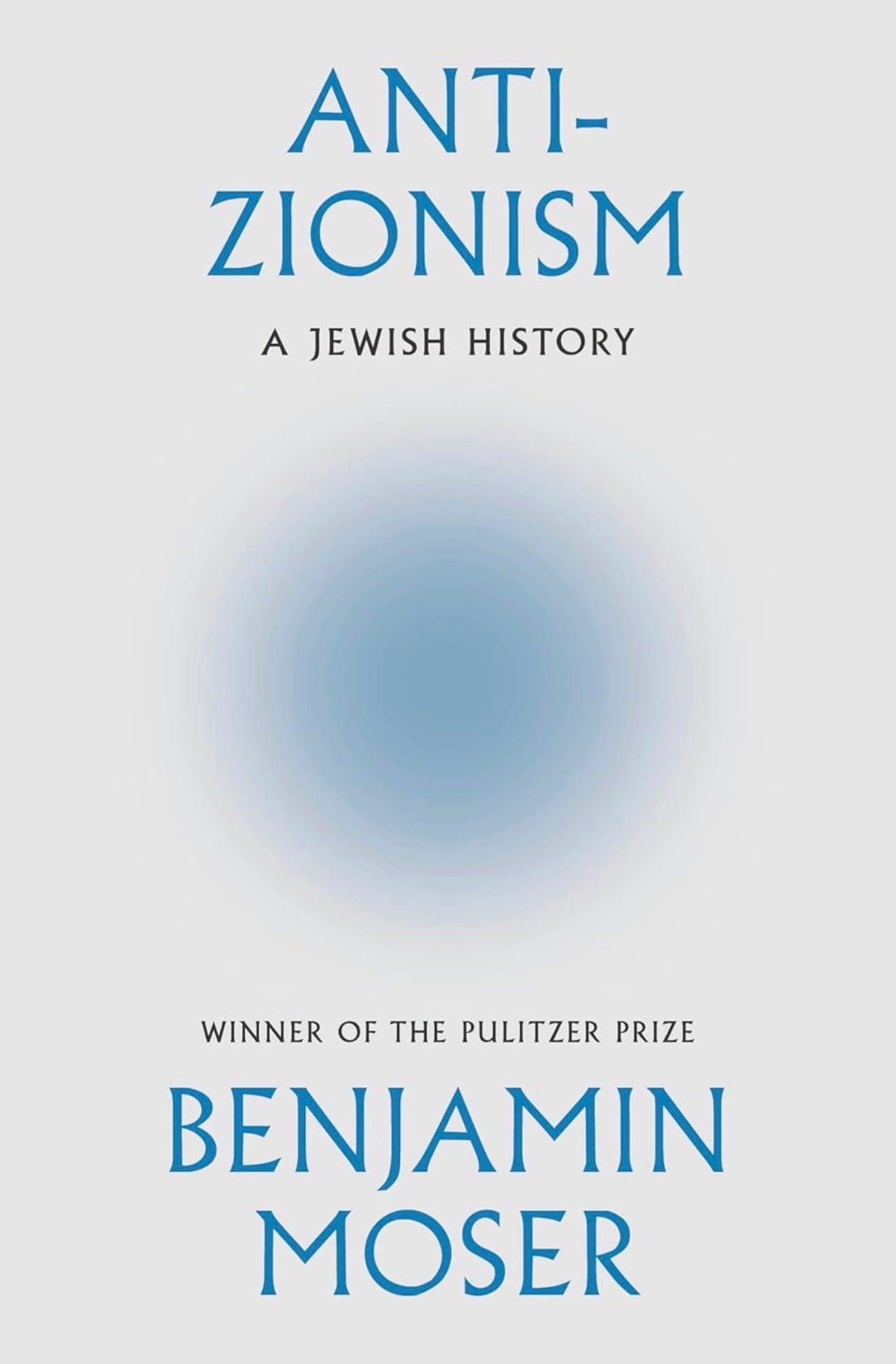 For more than a century, Zionism has presented itself as the natural expression of Jewish identity and the inevitable culmination of Jewish history. But what if some of its most persistent and principled opponents were themselves Jews? In Anti-Zionism: A Jewish History, Benjamin Moser uncovers a largely forgotten tradition of Jewish opposition to Zionism, challenging the idea that Judaism and political Zionism are inseparable. His book, Anti-Zionism is really a Jewish history Israel would rather forget.
Pulitzer Prize-winning biographer Benjamin Moser has written a book that challenges one of the central assumptions underpinning the modern Israeli state: that Zionism represents the collective political aspirations of the Jewish people. Rather than approaching the subject primarily through Palestinian resistance, Moser examines the Jewish intellectuals, religious scholars, activists and political figures who rejected Zionism from its earliest days.
His central argument is straightforward but has huge consequences. Zionism was never universally accepted among Jews. Indeed, some of its most determined critics warned that transforming Judaism into a nationalist political project would undermine Jewish religious traditions, encourage ethnic exclusivity and ultimately produce conflict with the indigenous Palestinian population.
The book is structured around twelve chapters examining Jewish dissenters across different historical periods and political traditions. Through their experiences, Moser reconstructs a history that has disappeared from popular accounts of Israel’s origins.
Zionism Was Never the Jewish Consensus
One of the book’s most important contributions is its examination of the divisions that accompanied the emergence of political Zionism in the late nineteenth century.
Theodor Herzl, widely regarded as the founder of modern political Zionism, believed that European antisemitism made the establishment of a Jewish state necessary. Yet his solution was deeply controversial among Jewish communities.
Many Jews considered themselves Europeans and citizens of their respective countries and rejected the suggestion that they belonged to a separate political nation. Others feared that Zionism would reinforce the antisemitic argument that Jews could never truly belong in European societies.
Moser examines figures such as Edwin Montagu, the British Jewish politician who opposed the Balfour Declaration of 1917. Montagu feared that establishing a Jewish national home in Palestine would undermine the position of Jews elsewhere by encouraging the perception that their real national allegiance lay outside their countries of citizenship.
This reveals an important historical contradiction: a movement claiming to represent Jewish interests was opposed by Jews who believed it threatened their security and identity.
Jewish Religious Opposition to Zionism
Another revealing dimension is the religious opposition to Zionism.
Moser explores Rabbi Aaron Samuel Tamares, who rejected the transformation of Judaism into an ideology centred on territorial sovereignty and state power.
For Tamares, Jewish religious identity could not be reduced to nationalism. The moral obligations of Judaism were more important than the pursuit of political domination.
This criticism challenged the philosophical foundations of Zionism. If Jewish identity was primarily religious, ethical and communal, why should it require an ethnically defined state?
Such objections also demonstrate why it is historically inaccurate to treat Jewish opposition to Zionism as exclusively a contemporary phenomenon associated with the political left.
Jewish anti-Zionism emerged from religious, liberal, socialist and other traditions, often for fundamentally different reasons.
The Jews Who Challenged Israel
Some of the book’s most compelling material concerns those who opposed Zionism or challenged Israeli state policies after Israel’s establishment in 1948.
Hannah Arendt, the influential Jewish political philosopher, warned about the dangers of nationalism and the political consequences of constructing a state around exclusive ethnic identity.
Her criticisms attracted intense hostility, particularly following the publication of Eichmann in Jerusalem.
Moser also examines the experiences of lawyer Felicia Langer, who defended Palestinians and documented abuses within Israel’s occupation system, and historian Avi Shlaim, whose work challenged conventional narratives about Israel’s history and explored the experiences of Jews in the Arab world.
These individuals illustrate a recurring theme: criticism of Zionism or Israeli policy could carry substantial personal and professional consequences, even for Jewish critics.
Perhaps the most dramatic example is Jacob Israel de Haan, a Dutch Jewish writer and anti-Zionist activist assassinated in Jerusalem in 1924. His murder demonstrates that the struggle over Zionism’s legitimacy was not simply intellectual; it could become violent.
The Question of Antisemitism
The book’s greatest contemporary significance lies in its challenge to the claim that anti-Zionism is inherently antisemitic.
Moser’s historical examples demonstrate that Jewish opposition to Zionism has existed throughout the movement’s history. This makes it difficult to sustain any argument that rejection of Zionism automatically constitutes hostility towards Jews.
However, antisemitism can exist within anti-Zionist movements, just as criticism of Zionism can arise from principled objections to nationalism, colonialism or ethnic discrimination. The important distinction is between hostility towards Jews as a people and opposition to a particular political ideology.
Moser’s contribution is to show that these categories cannot simply be collapsed into one another without erasing substantial parts of Jewish history.
The book’s principal strength is its recovery of historical voices frequently excluded from mainstream narratives.
Moser is particularly effective in demonstrating that Jewish identity has never been politically uniform. His biographical approach also makes complex ideological disagreements accessible to a wider readership.
Anti-Zionism: A Jewish History is more than a study of Jewish intellectual dissent. It is an examination of how nationalism can come to dominate the historical identity of an entire people.
Its most important revelation is that the apparent consensus surrounding Zionism was neither inevitable nor historically universal.
For readers trying to understand the ideological foundations of Israel, the relationship between Judaism and nationalism, and the continuing struggle over Palestine, Moser offers an important corrective.
The book raises a question that extends well beyond Israel: when a state claims to speak for an entire people, what happens to those who reject its political project?
Moser’s answer is that their history is often marginalised, their legitimacy questioned and their voices forgotten.
By recovering those voices, he reminds readers that Jewish history is considerably older, richer and more diverse than the political movement that eventually established Israel.
The book’s enduring contribution is its insistence that Judaism and Zionism are not synonymous — and that challenging a state or its founding ideology doesn’t mean rejecting the people in whose name it claims to act.