

|
Getting your Trinity Audio player ready...
|
Welcome to The Geopolity’s What We’re Watching (3W), our daily look at the interconnected worlds of Geopolitics, Economics and Energy. Curated from the world’s leading sources of information, our analysis and commentary is designed to help you make sense of the events driving the major developments in the world.
There have been two major developments regarding the US – Israel Alliance War on Iran since 3W’s last update.
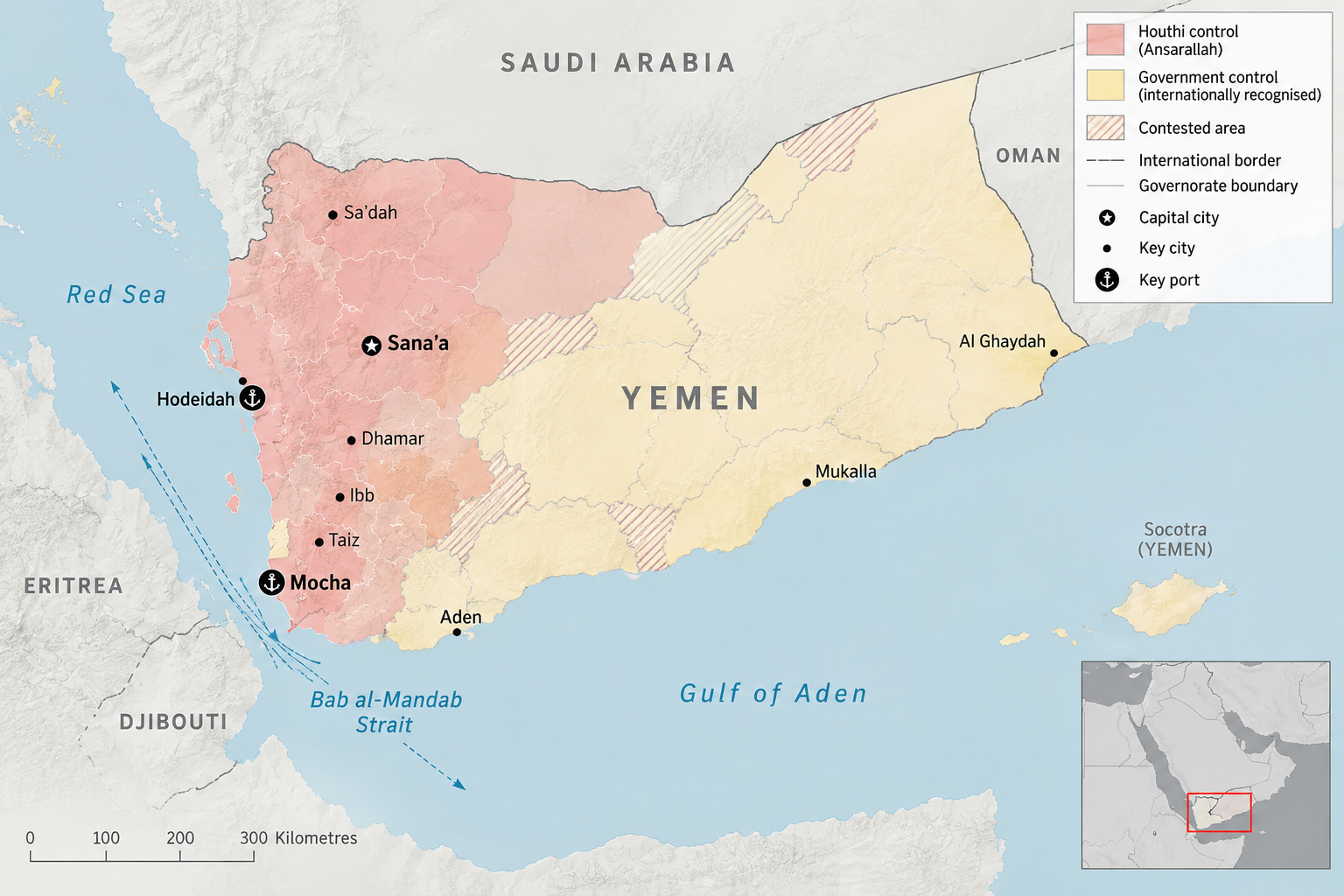
First, the Houthi’s, or Ansarallah as they prefer to be called, on Thursday launched a major offensive in Yemen through which they brought what is essentially the entire Yemeni Red Sea coastline under their control. “The Houthis committed everything they had – waves upon waves of fighters … along with their available ballistic missiles and weapons,” a senior Yemeni source attached to their military forces told CNN. Houthi fighters arrived in the port city of Mocha to find Yemeni battalions that were severely depleted – their rosters were filled with “ghost names” receiving salaries, and the actual strength of the army was only about 20% of what it was on paper. On Friday, Ansarallah then captured another key coastal asset, Perim Island, at the mouth of the Red Sea. The island splits the Bab al-Mandeb Strait in two, giving Ansarallah total control over the key shipping route.
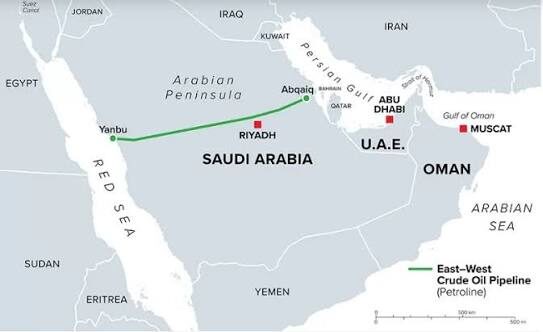
Second, also on Thursday the East – West Pipeline in Saudi Arabia, through which the Saudi’s can transport up to 7 million barrels per day of crude oil to the Red Sea port of Yanbu, and thereby bypass the Strait of Hormuz, was attacked, severely damaged, and forced to cease operations. Pump stations, which are located next to the pipeline itself, were hit by drones that originated from Iraq, writes CNN. Iraq itself said it has discovered the launching pads for the drones involved in the attack, writes the official Iraqi News Agency.
At first glance, these two events appear to be a major victory for Iran in its conflict with the US – Israel Alliance. As we at 3W have noted over the past weeks, the US has sought to undo some of the leverage Iran had over the Alliance, by establishing an “Omani Route” through the Strait of Hormuz, and as part of this effort escalated its military attacks on Iran. According to the US itself, the impact of this tactic was “massive” with tens of millions of barrels of oil passing through the Strait. While that is almost certainly an exaggeration, even independent analysts did notice an increase in tanker traffic. Whatever advantage the US scored in this manner, one could argue it was undone by the two developments mentioned above. The Saudi’s ability to bypass the Strait of Hormuz has been closed, and Iran has extended its effective control to the Bab Al Mandab.
In this new situation, Al Jazeera writes that on Monday Iran will be meeting the Arabian Gulf states to discuss a traffic arrangement for the Strait of Hormuz. Iran’s foreign ministry in a statement on Friday said the meeting is intended to “promote better understanding among the countries of the region and help strengthen shared regional security”. 3W notes that the timing of the two developments mentioned above was perfect for this meeting to support Iran achieving its aims. The idea that the Gulf countries can somehow export their products, or organize their broader security, without having to consider Iran, has been delivered an almost fatal blow. And Iran should be expected to use this new realization to push for a deal with the Arabian Gulf countries under which they can start exporting their products through the Strait of Hormuz again, in return for the payment of “management and service fees” and agreeing to establishment of a new Gulf Security Arrangement which brings Iran in and pushed the US – Israel Alliance out.
In light of this assessment, the question should be asked, why did the US not respond when events were unfolding?
Regarding Yemen, for example, Saudi Crown Prince Mohammed bin Salman spoke twice on Thursday with US president Trump and urged him to strike the Houthis to prevent their advance, writes CNN. But, Trump declined to intervene. This refusal to intervene could not have been because of a lack a forewarning. Senior Yemeni official said they had “warned CENTCOM repeatedly over the past few days, including yesterday, that the situation was becoming critical”, CNN adds. When the US White House later issued a formal statement, it was cold and distant, as if the US was uninterested. “The United States is focused on protecting our core national security interests—such as ensuring freedom of navigation in the Red Sea—while empowering our regional partners to take the lead in managing and resolving regional security challenges,” the White House said. “We are in continuous dialogue with Saudi Arabia and the Republic of Yemen Government regarding regional stability”.
This lack of apparent US interest is surprising, in the 3W view, since some 18 months ago US president Trump launched an open war against Ansarallah to ensure freedom of navigation through the Red Sea, in particular the critical Bab al Mandab, Wikipedia reminds us.
Regarding the attack on the East – West Pipeline Trump displayed a similarly uninterested attitude. When asked about it by reporters, in particular its potential impact on global oil markets, Trump simply said that everything will “work out fine”, writes CNN – despite the global price of oil jumping to about $110 a barrel in response to the events, writes The New York Times.
To explain this somewhat strange attitude, it could be that Trump wants to keep US forces focused on the Strait of Hormuz, and for that reason is not interested in other develoopments, 3W recognizes. It could also be that the incompetence of the US leadership has reached such levels that Trump and the (real) decision makers around him do not properly realize the importance of the Yemen and East West Pipeline developments, and the strategic advantage this would be handing to Iran. But, 3W notes, it could also be that these developments are aligned with a plan by the US – Israel Alliance.
At 3W we have noted before that whenever the US tries to de-escalate, Israel intervenes to ensure the war continues. We also noted that there have been multiple unexplained cases of attacks on assets in countries that refused to actively participate in the US – Israel Alliance War on Iran. For example, when Saudi Arabia’s energy infrastructure was attacked
Back in March of 2026, Iran formally denied responsibility. “Iran has no link to this attack, and the Saudi government should investigate the source of these attacks,” the IRGC then said in a statement, wrote Anadolu Ajensi at that time, adding that the spokesman for the Khatam al-Anbiya Central Headquarters, the unified combatant command headquarters of the Iranian Armed Forces, accused the US and Israel of carrying out these attacks. Similarly, when at the end of July Saudi Arabia’s energy infrastructure was again attacked, just as today by drones from Iraq. Iran formally denied responsibility, wrote The Tribune Express at that time. At that time, the attack was ascribed to the Iran-linked militias in Iraq, who were then accused of having operated in coordination with Iran, but these groups formally denied having anything to do with the most recent attacks on the East West Pipeline, writes CNN. These circumstances surrounding the attacks on Saudi Arabia are peculiar since Iran has taken full responsibility for its attacks on the UAE, Bahrain, Qatar, Kuwait and Jordan – often, as the world later learns, providing more accurate descriptions of the facts than the countries that were targeted.
Considering the fact that that Israel operates secret bases on Iraqi territory, in the 3W view all this means that a second glance should recognize the possibility that Saudi Artabia got squeezed over Thursday and Friday because the US – Israel Alliance wanted it to get squeezed – in order to get something from the Saudis.
3W notes, for example, that although the US did not do anything militarily, it did send the commander of its US Central Command, admiral Brad Cooper, to Saudi Arabia for “coordination”, writes Axios.
Furthermore, Iraq’s pro-US prime minister Ali al-Zaidi has ordered members of Iraq’s security establishment removed from their posts in response to the event. Al-Zaidi fired the operations commander of Maysan province, which borders Iran, as well as its chief of police, writes Bloomberg and The National. 3W notes that this really means the event has been jumped upon by Al-Zaidi to execute his plan to purge the Iraqi government institutions of elements sympathetic to Iran.
3W highlighted back in July the highly suspicious drone attack on gas vessels at Egypt’s Mediterranean port of Damietta. Though no entity took responsibility and Iran vehemently denied it launched the strikes, the whole event was highly suspicious when the US-Israel alliance regime change had failed.
Lastly, the Israeli military declared Ansarallah’s control over the southern entry point to the Red Sea a bigger threat to Israeli national security than Iran’s control over the Strait of Hormuz, and Israeli prime minister Netanyahu contacted the Saudi’s to offer Israeli military support for Saudi Arabia in its conflict with the Yemeni, writes The Jerusalem Post.
In conclusion, therefore, at 3W we recognize the possibility that the developments of the past few days are part of an Iranian strategy, brilliantly executed, which will increase Tehran’s leverage in negotiations with the Arabian Gulf countries.
But, we do not discard the possibility that Saudi Arabia is really dealing with a plan by the US – Israel Alliance, designed to make sure Riyadh supports the Alliance more actively, in a more committed manner. Or in other words, to ensure the all the Arabian Gulf countries continue the fight against Iran. Such that Israel’s “first ring” countries, the Arab states bordering it, are used in a war against the “second ring” countries Iran and Turkey, leaving all of the Middle East weakened and dominated by Israel.