

|
Getting your Trinity Audio player ready...
|
Welcome to The Geopolity’s What We’re Watching (3W), our daily look at the interconnected worlds of Geopolitics, Economics and Energy. Curated from the world’s leading sources of information, our analysis and commentary is designed to help you make sense of the events driving the major developments in the world.
This week started with the usual bluster by the US in the direction of Iran.
First, on Monday, US Treasury Secretary Scott Bessent tried to breathe new life into the plan to strangle Iran economically, saying that the US would cut Iranian airlines off from international operations. Bessent announced secondary sanctions on companies that provide Iranian airlines with aviation services from Wednesday onward, writes Al Jazeera. Bessent told the CNBC broadcaster that when Iranian carriers land at an airport, “you cannot provide them with fuel, you cannot provide them with landing services, you cannot sell them tickets, or you will be knocked out of the dollar system.”
Then on Tuesday at the United Nations, US president Trump again threatened that he could also simply “annihilate” Iran militarily, if Iran does not agree to a deal to end the war, writes Reuters. “Will a deal be made with Iran that lets them rebuild and create a far greater country than it ever was before?… Or do I annihilate the Islamic Republic and do it quickly, never giving them a chance to kill and destroy people and countries again?”, Trump said.
Iran responded to both threats, of economic and military warfare, with defiance.
Mohsen Rezaei, secretary of Iran’s Supreme National Security Council, in an interview with Iranian state TV warned that Tehran will ensure neighbouring countries that co-operate with the US by stopping Iranian flights will not be able to use their airports at all, writes The National.
Iran’s Armed Forces dismissed Trump’s comments at the UN as “propaganda”, saying their response is “full readiness to inflict more severe, crushing, and unpredictable blows on the aggressors”, writes Reuters.
Iran’s president Masoud Pezeshkian said at the UN that Iran will never “bend the knee”, calling Trump’s speech “a sign of a bullying mentality”, writes the BBC. Holding up pictures of some of the more than 175 civilians, two thirds of them children, who were killed in missile strikes on a primary school in Minab at the start of the US – Israel Alliance War on Iran, Pezeshkian said, “The US president described us as terrorists. We have been the victims of terrorism.” He further said, “Our innocent people have been the targets of cowardly attacks and aggressions imposed on our country. And we defended ourselves with utmost strength.”
Nevertheless, Pezeshkian also said Iran remains open for a negotiated settlement of the now 7 months old conflict, the BBC further writes. “We are ready for dialogue and diplomacy and negotiations without accepting the language of force”, Pezeshkian said, making clear that the US blockade would have to end as part of any deal. “It cannot be the case that everyone benefits from the Strait of Hormuz while we are denied access to shipping through this waterway,” he said. He also reiterated that Iran would not give up its right to have a civilian nuclear programme and that it would not seek to develop nuclear weapons. “We say it clearly: no nuclear weapons and no limitations on peaceful nuclear technology.”
In this regard, Iran presented the US with a road map to end the conflict. The plan includes a regionwide ceasefire, the gradual reopening of the Strait of Hormuz and an end to the US blockade of the country, writes The National. Iran communicated its proposal during a meeting with US officials on Tuesday, in which Qatar, Pakistan and Egypt acted as mediators. The meetings started on Tuesday with Iranian Foreign Minister Abbas Araghchi speaking with US president Trump’s special envoys Steve Witkoff and Jared Kushner. That meeting was followed by another attended by experts and diplomats from both sides. Iran proposed a regionwide ceasefire of up to 60 days, a phased reopening of the Strait of Hormuz and an end to the US blockade, the National adds. Iran also wants the US to agree to a timeline for negotiations to end the conflict while the proposed ceasefire is in force.
Iran’s security chief, Mohsen Rezaei, said Tehran had not changed its conditions for talks with the US, The National further writes. Speaking to Iranian state television late Wednesday, Rezaei, secretary of the Supreme National Security Council, said “We decided that our conditions would be communicated to the Americans. There is no new discussion and no new condition; it is the communication of our conditions.” He said the conditions had to be implemented before Hormuz could reopen. “Until our conditions are fulfilled, the Strait of Hormuz will not be opened and we will not negotiate,” Rezaei said. Additionally but separately, on X Rezaei said, “We will force the US to respect the rights of the Iranian people and comply with the conditions communicated to it; otherwise, the Strait of Hormuz will not be opened”.
The New York Times confirms the Iranian proposal is essentially the same as the Memorandum of Understanding (MOU) the US and Iran both signed in June.
3W notes that all this means the standoff between the US and Iran, that has been in place since the US reneged on its commitments under the MOU, continues. And while the US talks as though it has the upper hand in this standoff, in reality, we at 3W believe, time is on the side of Iran.
One reason is that the advance of AnsarAllah in Yemen not only adds to the problems facing the US and its allies, but also increases Iran’s control over key international water ways. After taking the Red Sea coastline of Yemen last week, AnsarAllah are now battling Yemen’s Saudi-backed forces for control of the strategic Kahboub mountain range in the country’s south-west, writes The National. Victory in this battle would give AnsarAllah a major tactical advantage as the mountains provide high ground overlooking areas along the Bab Al Mandeb strait and Dhubab. In other words, a victory would firmly secure AnsarAllah’s control over Yemen’s Red Sea coast.
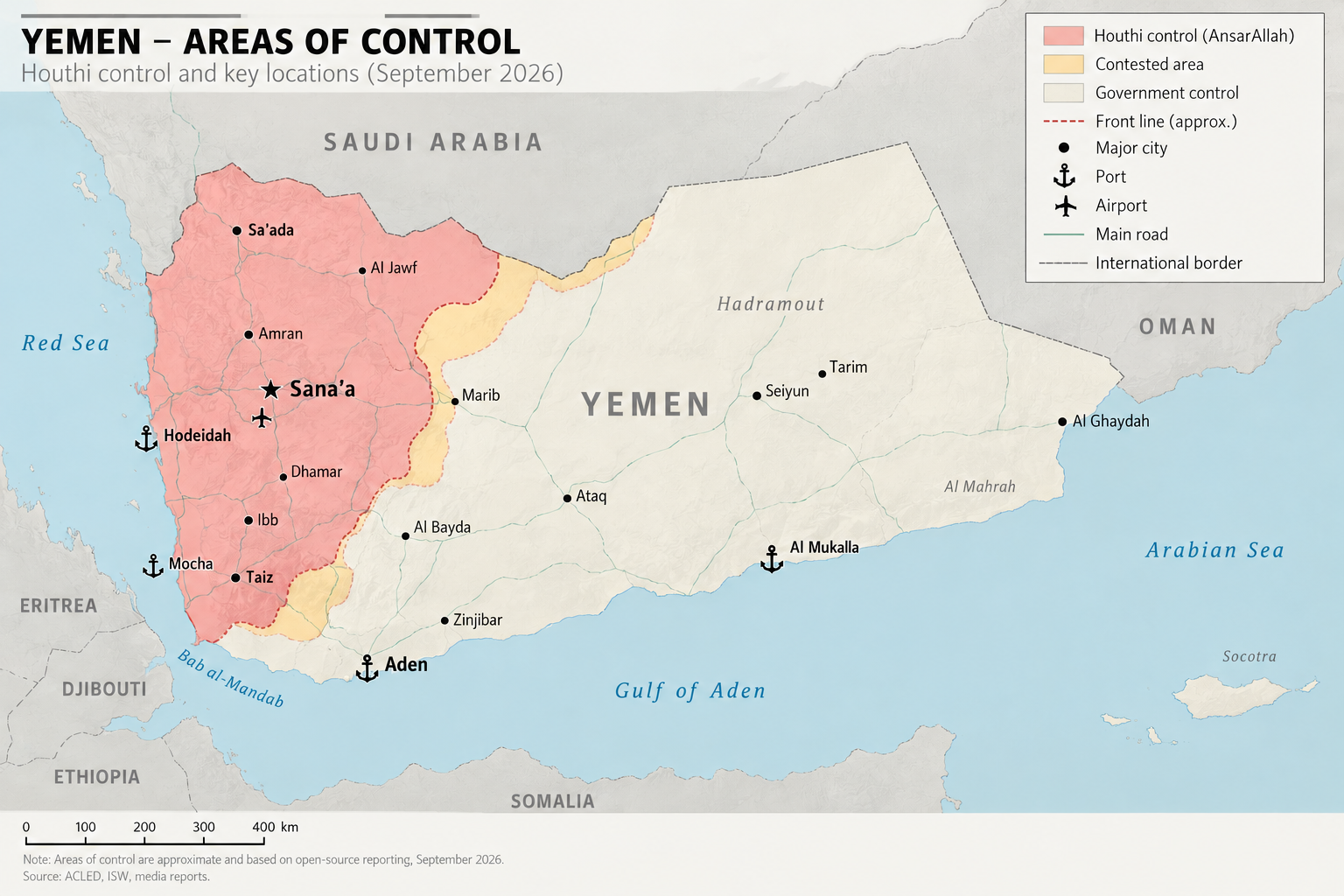 Regarding this point, we at 3W wish to make clear that this opinion does not contradict with what we said last Sunday regarding the AnsarAllah advance in Yemen. Then, we said the US – Israel Alliance is choosing not to intervene, despite begging by Saudi Arabia’s crown prince Mohammed Bin Salman, because it wants to see pressure on Saudi Arabia increased, such that Riyadh will more willingly fall in line with the US – Israel Alliance agenda. We at 3W continue this is the plan on the side of the Alliance, but it does not mean that AnsarAllah is doing what it is doing under Alliance direction or support. To the contrary. AnsarAllah operates in coordination with Iran, and with support from Iran, and as such its advance in Yemen is clearly a strategic win for Iran. The US has not intervened because it simply cannot, as Axios confirmed. Trump wanted to attack AnsarAllah, but his advisors made clear that the US military cannot fight on two fronts in the Middle East. In other words, regarding Yemen, the US is simply trying to “make the best of a bad situation”.
The US has not intervened because it simply cannot. Trump wanted to attack AnsarAllah, but his advisors made clear that the US military cannot fight on two fronts in the Middle East. In other words, regarding Yemen, the US is simply trying to “make the best of a bad situation”.
The second reason we at 3W believe that Iran remains the dominant side in the current standoff is that the Strait of Hormuz also remains firmly under its control. This we believe because Iran maintains the ability to strike vessels that attempt to sail through without Iranian permission. On Wednesday Iran struck such a vessel, the Antigua and Barbuda-flagged Cape Dao, writes The South China Morning Post. It was attacked 2.5 nautical miles off the country’s coast “causing a fire in the engine room and leading to the death of one crew member”. The twenty-seven other crew members were evacuated by the Omani navy.
The third reason is that the US has failed to isolate Iran. In fact, just as the Ukraine War failed to weaken the Russia – China relationship, the War on Iran has effectively strengthened Iran’s relationship with China. The Wall Street Journal writes that over the first six months of 2026, 1,300 shipments of military equipment arrived in Iran from China. The Wall Street Journal writes further that China has also stepped up to become the primary trading partner for AnsarAllah in Yemen.
The fourth reason is that domestically, the War on Iran is clearly hurting Trump. An estimate from Brown University found that the war in Iran has cost US consumers more than $100 billion in higher energy prices, writes Axios. The resulting pain for consumers is now so great, that Trump is considering a ban on the export of diesel from the US, Axios writes separately. While the US oil industry has pushed back against the idea, fearing for their profits, writes The Financial Times, 3W notes that this would indeed be an extraordinary move by the US. And another self-defeating one. Recall that the US has urged countries around the world to support its sanctions on Russian and Iranian energy with the message that the US would step in to ensure continued, stable energy supplies. If the US were now to impose an export ban on diesel, and thus deprive its “allies” of essential diesel supplies. this would be another reminder to the world that the US promises are all lies.
The resulting pain for consumers is now so great, that Trump is considering a ban on the export of diesel from the US,
For all these reasons the US is currently undertaking significant, but partially behind the scenes, diplomacy with the countries of the Middle East.
CIA director John Ratcliffe on Sunday travelled to Egypt to meet and align with Egyptian president El Sisi, writes The National. “The American administration is keen to continue to work and closely co-ordinate with Egypt to achieve security and stability in the Middle East,” Ratcliffe was quoted as saying after the meeting.
US president Trump then hosted a meeting with senior representatives of 12 Middle Eastern countries on the sidelines of the UN conference in New York this week, writes The Times of Israel (ToI). The White House said the meeting was with the Gulf Cooperation Council, which is made up of Saudi Arabia, the United Arab Emirates, Qatar, Bahrain, Kuwait and Oman, but top officials from Jordan, Egypt, Turkey, Iraq, Lebanon and Syria were also in attendance. According to ToI, the meeting was all about the US – Israel Alliance plans for the Middle East. Trump thanked the countries in attendance for their support in the War on Gaza, and reiterated that the Alliance plans include the India–Middle East–Europe Economic Corridor, which is designed to economically connect the GCC to Israel.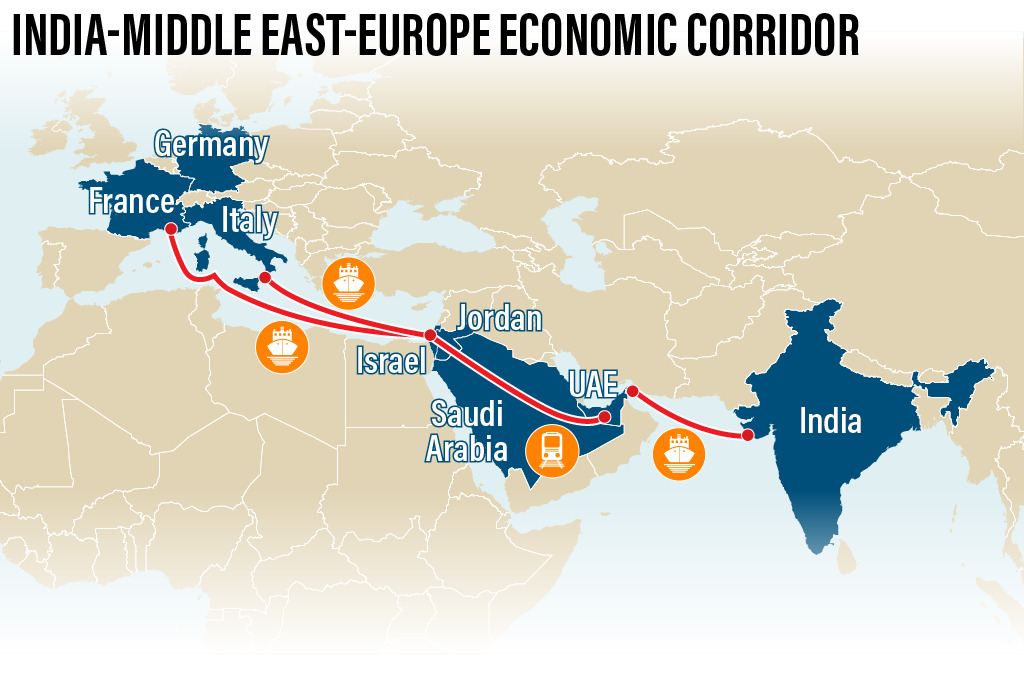
In our 3W view these diplomatic activities indicate that the US wants to ensure it keeps the Middle Eastern countries on its side, now that the War on Iran is not going as intended. As Seymour Hersh revealed in the summer of 2025 already, the plan was for the February 2026 bombing campaign to trigger a popular uprising in Iran, after which the US – Israel Alliance would move in to install a puppet ruler similar to Rodriguez in Venezuela. This hasn’t happened, and that, in-and-off-itself, is enough to prove the US – Israel Alliance plan has failed.
The plan was for the February 2026 bombing campaign to trigger a popular uprising in Iran, after which the US – Israel Alliance would move in to install a puppet ruler similar to Rodriguez in Venezuela. This hasn’t happened, and that, in-and-off-itself, is enough to prove the US – Israel Alliance plan has failed.
CNN notes that the Gulf countries are essentially panicked. The US – Israel Alliance War on Iran not only made them targets for military action, it also exposed the hollowness of the US promises that it would militarily defend the ruling elites of these Arabian Gulf countries. (While over in Europe, Belgium is warning the other EU members that that the US under Donald Trump is no longer a reliable ally, writes The Financial Times.)
In this light we 3W see the report that the US has proposed investing $5 billion in a new fund that would help Middle East countries rebuild energy infrastructure. The Wall Street Journal writes that this is a “tacit acknowledgement” by the US that its War on Iran is giving the countries of the Gulf region valid reasons to rethink their relationship with the US.
The announcement, also at the UN, that Microsoft has entered into technology framework agreements with UAE, Kuwait, Qatar and Saudi Arabia plays a similar role, in our 3W view. Under these agreements Microsoft promises to invest up to $10 billion in the Arabian Gulf region to expand cloud and AI infrastructure, subsea and terrestrial connectivity to strengthen and speed up internet connections, and “launch a new Middle East digital resilience initiative”, writes The National. All this is essentially “corruption money” for the Gulf region elites, to keep them in the US camp although in the current situation the interests of their nations really require them to break with the US – Israel Alliance – and provides them the opportunity to do so.
The Financial Times explains why independent thinking and action by the Arabian Gulf countries, and indeed every other nation in the world, is critical right now. FT looks at the way the US is treating Japan, and notes that “Traps of diminished sovereignty are being laid”. Where previously Japan has been coerced (by tariffs and other menaces) into ceding money, comfort and dignity, Trump’s demand that US-allies quit the International Criminal Court effectively calls on Japan to ditch its core philosophy on international institutions and participation in them. In other words, Trump wants Japan to yield a key bit of “Japaneseness”, FT says.
In plain terms, 3W notes, the US is pushing hard to make Japan a vassal, rather than an ally. And this, we say, will be the fate of all nations who fall in the trap of accepting the US perspective on the world, and consequently seek US “support” to deal with it. Those will be burned to the ground in the service of US interests.
This is the reality, and it explains, in the 3W view, why Bloomberg now promotes the idea that the Saudi Arabia should continue to remain aligned with the US “because there are simply no other options”. This is propaganda disguised as advice. Nations always have options, even if they may all be difficult and painful. 3W notes, however, that the fact that the “US option” needs to be presented as the only option, really makes clear it is the worst option. If it had anything substantial going for it, namely, that would have been highlighted by Bloomberg. Only because it doesn’t, Bloomberg tries to make us believe there are no other options.