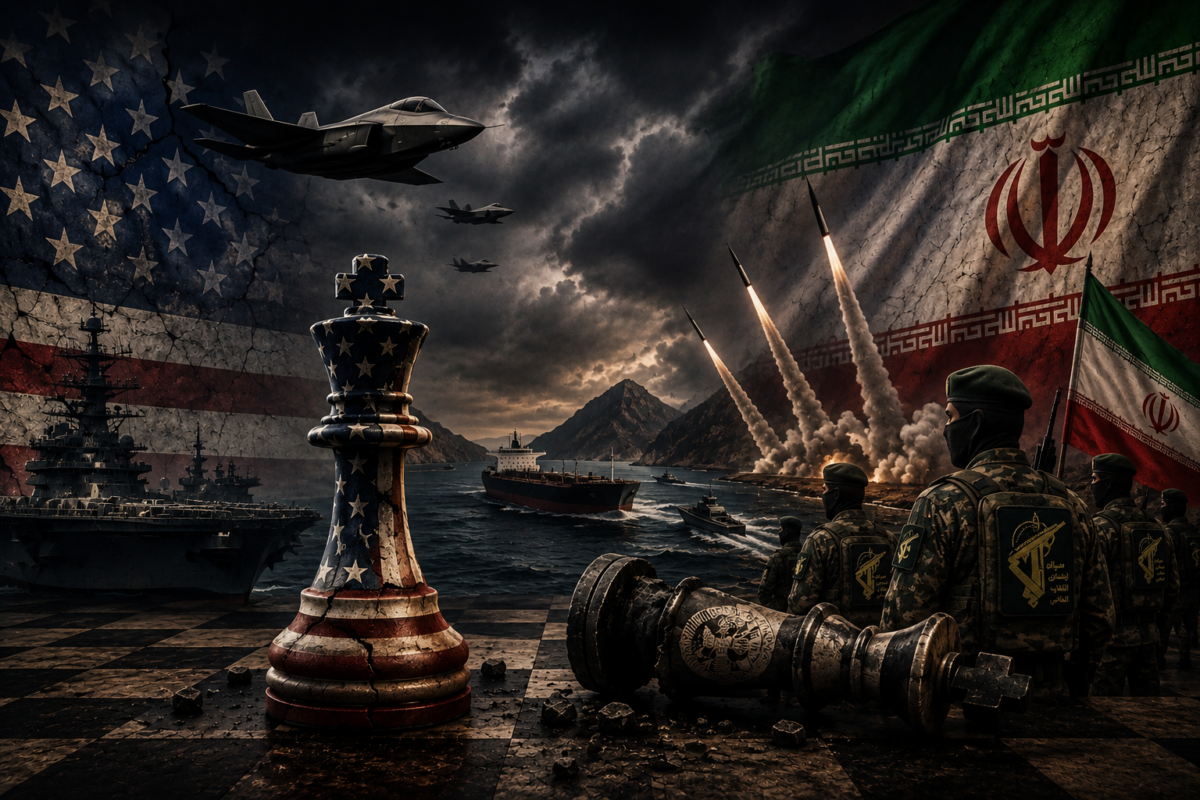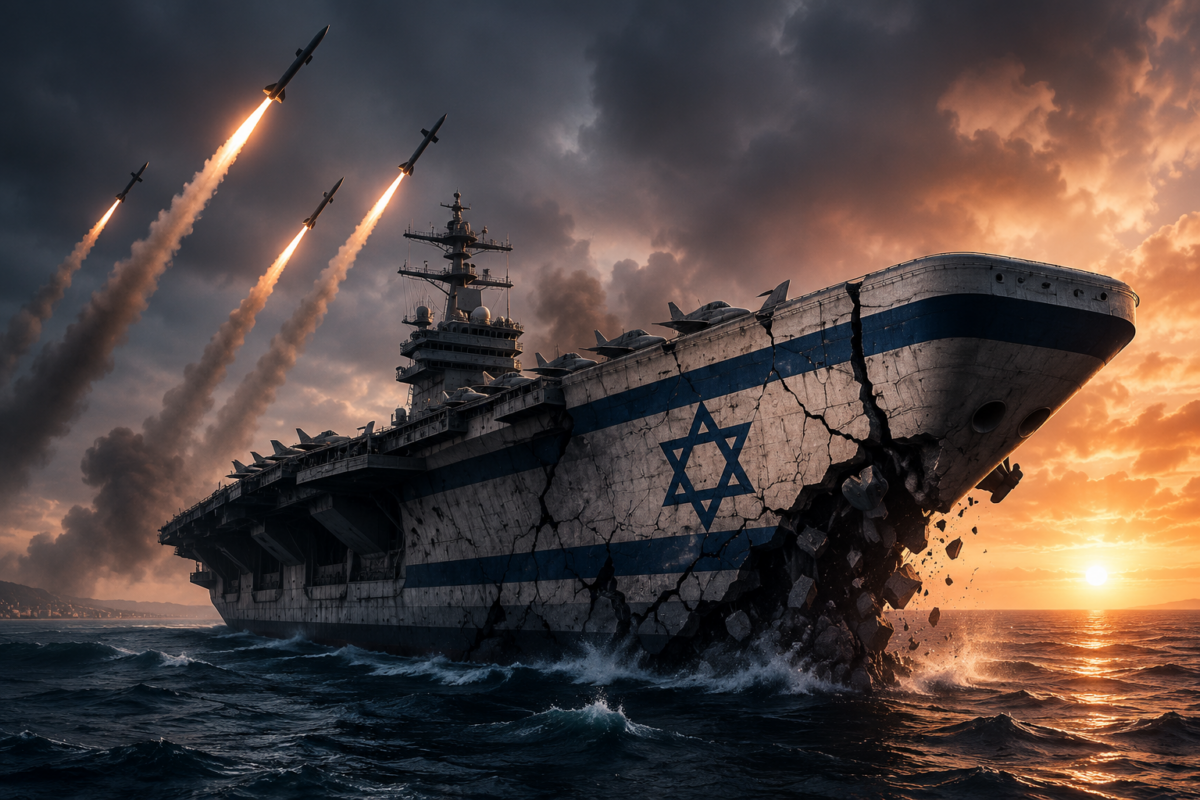


The US–Israeli alliance’s war on Iran began on the night of the 28th February 2026. Ten weeks on, the conflict has not unfolded according to any of the plans—or even the contingency scenarios—drawn up by the Trump administration and Israel. Instead, the war has exposed a series of hard truths that will carry lasting geopolitical consequences.
1. The US cannot be Trusted in Talks – Oman’s foreign minister, Badr bin Hamad Al Busaidi, who acted as a key mediator in US–Iran talks, confirmed that Iran had agreed during indirect negotiations not to stockpile enriched uranium. “If the ultimate objective is to ensure forever that Iran cannot have a nuclear bomb, I think we have cracked that problem through these negotiations,” he said, describing it as a breakthrough without precedent. Yet, despite this, the US–Israeli alliance launched strikes that very night.
This was not an isolated incident. In June 2025, during direct US–Iran talks, Israel launched strikes—with the United States joining despite ongoing negotiations. Earlier still, Washington ripped up the 2015 JCPOA, even as Iran complied with its terms.
The current war was effectively agreed during Israeli Prime Minister Netanyahu’s visit to the White House in December 2025. In the weeks that followed, senior Israeli intelligence and military officials travelled repeatedly to Washington, coordinating what became Operations Epic Fury and Roaring Lion. For two months, the US negotiated while preparing for war—lulling Iran into complacency and reinforcing the perception that American diplomacy cannot be trusted.
For two months, the US negotiated while preparing for war—lulling Iran into complacency and reinforcing the perception that American diplomacy cannot be trusted
2. Was President Trump Duped by Israel? – The path to war has been clouded by confusion, misinformation, and political theatre. What has become clear, however, is Israel’s central role in shaping the decision.
Reporting from the New York Times describes a sustained Israeli effort, led by Prime Minister Benjamin Netanyahu, to convince President Donald Trump to approve a major assault on Iran. This culminated in a classified White House briefing on the 11th February 2026, where Israeli officials promised near-certain victory, intelligence suggesting regime collapse, and a fleeting strategic window.
US intelligence officials reportedly dismissed these claims as exaggerated, describing them as a familiar pattern of “overselling.” But Israel’s position aligned with Trump’s own hawkish instincts, outweighing scepticism from figures such as Vice President JD Vance.
The result was a decision driven by persuasion, instinct, and confidence in US military dominance. This should be worrying to everyone in the US, as US personnel lives have been put on the line due to the feelings of the President. Even the US State Department later framed the war as collective self-defence on behalf of Israel—raising deeper questions about who ultimately shaped American policy and why.
3. The Decapitation Illusion – The US–Israeli strategy relied heavily on a decapitation strike, removing Iran’s leadership to trigger regime collapse. This confidence stemmed from past operations, including US actions in Venezuela, where leadership targeting contributed to political destabilisation. Iran proved to be fundamentally different.
Iran is not held together by a single individual. It is a layered system, with the Islamic Revolutionary Guard Corps (IRGC) acting as its backbone. Rather than collapse, the system absorbed the attack and responded.
The expectation that decapitation would trigger mass protests and defections has proven misplaced. The intelligence underpinning this was deeply flawed, bringing back memories of Iraq’s WMDs.
The expectation that decapitation would trigger mass protests and defections has proven misplaced. The intelligence underpinning this was deeply flawed, bringing back memories of Iraq’s WMDs
4. Shock and Awe, Without Victory – Another pillar of the strategy was a classic “shock and awe” campaign—overwhelming, high-intensity strikes designed to paralyse Iran psychologically.
Targets included nuclear facilities, missile sites, air defences, naval assets, command centers, and energy infrastructure. The expectation was clear: replicate Baghdad 2003 and force a rapid collapse. Ten weeks later, that outcome has not materialised.
The regime remains intact. The war has settled into a costly stalemate. Iran, unlike Iraq, is larger, more decentralised, and more resilient. No protests have taken place that the US believed would occur and what the US-Israel assault has done is strengthen the regime. The complete opposite to what was meant to take place.
5. The Power of Asymmetric Warfare – After 10 weeks of war Iran’s asymmetric war plan has humbled the mighty US military machine. Iran has avoided conventional confrontation and instead waged an asymmetric campaign that has exposed vulnerabilities in US power.
By targeting US radar systems across the Middle East, Iran has degraded American situational awareness, blinding its “eyes and ears.” This has made it harder to counter the sustained barrage of missiles and drones.
Swarm drone attacks on US bases and Israeli territory have overwhelmed air defence systems. Israel has been the biggest victim of this and it’s also the reason why Israel has not once mentioned its Iron Dome system in the war, as it failed to halt Iranian drones and missiles. The scale and persistence of these attacks have raised serious questions about the effectiveness of even advanced systems.
Iran has shown that technological superiority does not guarantee control.
Israel has not once mentioned its Iron Dome system in the war, as it failed to halt Iranian drones and missiles
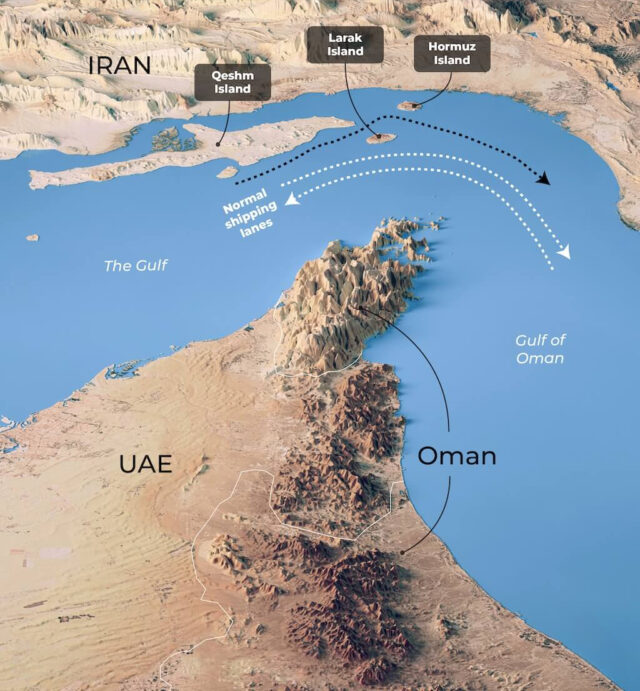 6 .Iran’s Real ‘Nuclear Weapon’ – The most consequential move of the war has not been nuclear, it has been geographic.Iran’s closure of the Strait of Hormuz has shaken the global economy. As one of the world’s most critical chokepoints, its disruption has sent shockwaves through energy markets and global trade. Iran has shown unconventional warfare is how you cripple a much more capable military.
Chokepoints are narrow water ways that the global economy depends upon, and the blockage of any such bottleneck affects the whole world. For years, US think tanks warned this was Iran’s ultimate fallback. Yet both Washington and Tel Aviv discounted the likelihood it would happen.
Now that it has, the US faces a dilemma: escalate dramatically or accept the economic consequences. Whilst successive US administrations have for long targeted Iran’s nuclear programme, they should have planned for the day Iran used its real nuclear bomb, the closure of the world’s most critical chokepoint.
7 .What happened to US security guarantees? – For decades, US power in the Gulf rested on a simple bargain: security guarantees in exchange for political alignment and military basing. Ten weeks into the war, that system is under strain.
Gulf states, despite vast investments in US defence systems, have found themselves exposed. Reports that the US has struggled with interceptor shortages have only deepened concerns. Gulf nations have spent hundreds of billions of dollars in US military platforms and equipment, but none of this mattered in the end. A Saudi political analyst highlighted, “America has turned its focus to protecting Israel, leaving the Gulf states hosting its bases exposed to Iranian missiles and drones.”
The credibility of US security guarantees, long a pillar of its regional influence, has been undermined. The US is now looking much like the Soviet Union. When the Berlin Wall came down in 1989 and Moscow was unable to protect its most important republic, it proved the USSR was finished. Two years later the Soviet Union collapsed and today the US is the new USSR.
The credibility of US security guarantees, long a pillar of its regional influence, has been undermined
8. The End of the Petrodollar? – Since the 1970s, the petrodollar system has been central to American global power.
The US in 1974 struck a deal with Saudi Arabia where the monarchy agreed to price its oil exports in dollars after the US abandoned the WW2 Bretton Woods agreement of maintaining the link with gold backing its dollars. With the Vietnam war leading to runaway money printing the US abandoned backing its currency with gold and by doing so left little reason for the world to maintain dollar reserves. With the world largest oil producer at the time taking payment in dollars this gave the nations of the world another reason to maintain their dollar reserves.
The US promised the Saudi monarchy and in time the rest of the Gulf monarchies security guarantees if they used their excess dollars to purchase US debt and US military platforms. The US has now undermined the petrodollar, by failing to uphold its side of this agreement. This is America’s Berlin Wall moment, as it undermined one of the core pillars of the US empire.
9 .Will Iran become America’s Ukraine? – The US played a central role in sustaining Ukraine against Russia, turning the conflict into a costly, drawn-out war for Moscow. Now, the roles may be reversing.
Russia and China see an opportunity. Reports suggest Moscow has provided intelligence and military support, while Beijing has contributed targeting data and diplomatic backing. Whether this escalates further remains uncertain. But the logic is clear: a prolonged conflict in Iran offers rivals a chance to drain US resources and attention.
10. America’s Information war has been an episode of the Simpsons – Unlike the Iraq War, where years were spent building public support, this conflict began abruptly. As the war has dragged on, US messaging has struggled to keep pace. Contradictory statements, shifting justifications, and increasingly erratic communication have undermined credibility.
The Trump administration in this war expected a Venezuela style blitzkrieg victory. As this failed to materialise, US officials have struggled to justify its actions and prove its winning.
President Trump has been forced to issue bizarre social media posts. Trump’s social media posts are so contradictory that every day you are required to check he still means what he said the day before. Secretary of War, Pete Hegseth has been framing the conflict as a spiritual struggle rather than merely a political one. He has described the war as a “crusade”. Alongside this, Secretary of State Marco Rubio has been doing intellectual gymnastics that the US is and is not defending Israel at the same time.
America’s information war lacks coherence at a time when clarity is most needed. But it’s been poor because the Trump administration needs Americans to suspend all their intellectual capabilities as what is taking place is not remotely close to a US victory.
11. BONUS – America’s Empire Problem – The US now faces the problem all empires face of having to be present in all places at the same time to maintain its empire: imperial overstretch. This all costs and this cost can therefore not be spent on education, health or infrastructure. The US now spends in excess of $1 trillion a year in interest payments on its debt alone. US officials now admit they are so overstretched having to deal with so many issues across the world. Trump has now added to the list of ever-growing global issues. With domestic unrest growing over the US administration being so focused aboard this is what has led to the beginning of the end of all empires in history.
Ten weeks into this war, the question is no longer just about Iran. It is about whether the United States can sustain its global role, or whether this conflict marks the beginning of a broader shift in the international order.