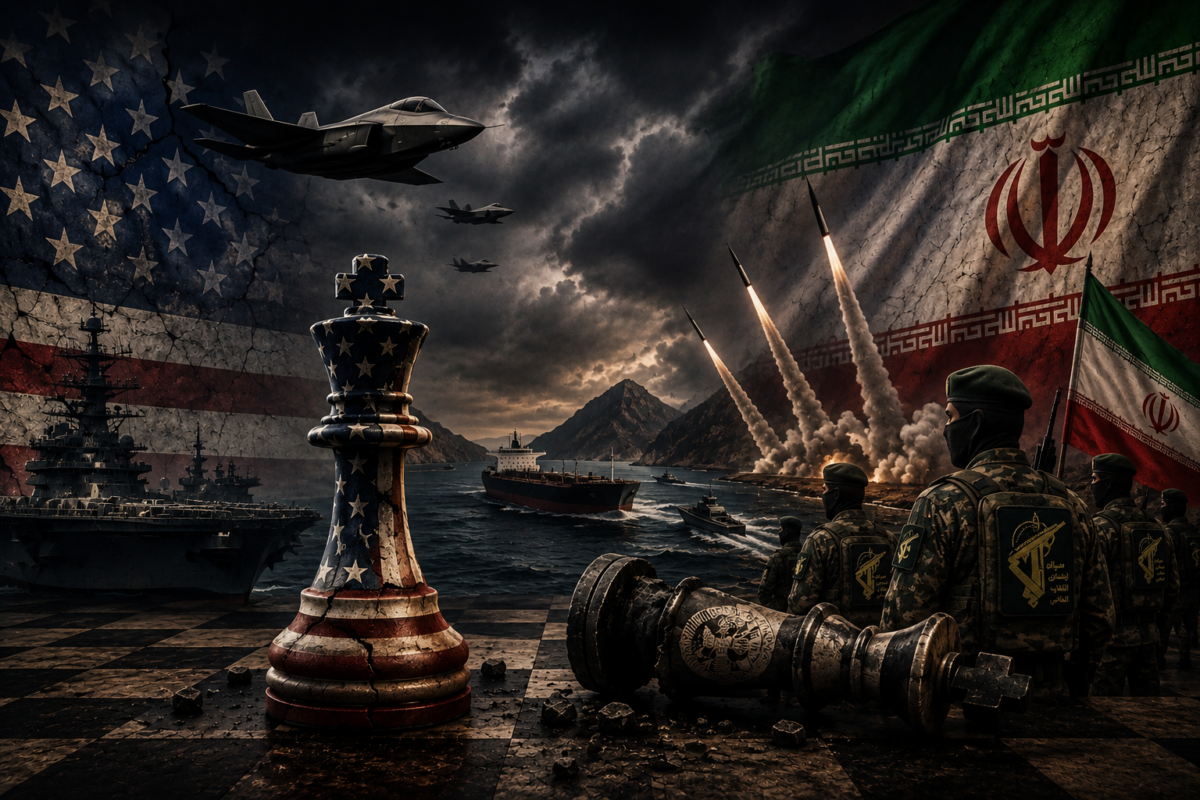


Empires rarely recognise the moment when their power begins to erode. The signs usually appear first on distant frontiers—in wars that were expected to be quick victories but instead reveal deeper vulnerabilities. For the Soviet Union it was Afghanistan. For the United States, the war with Iran may prove to be a similar moment. Missile strikes on American bases, shaken Gulf alliances, Israel under siege and the disruption of global energy flows are exposing cracks in the geopolitical order Washington has built over the past seventy years.
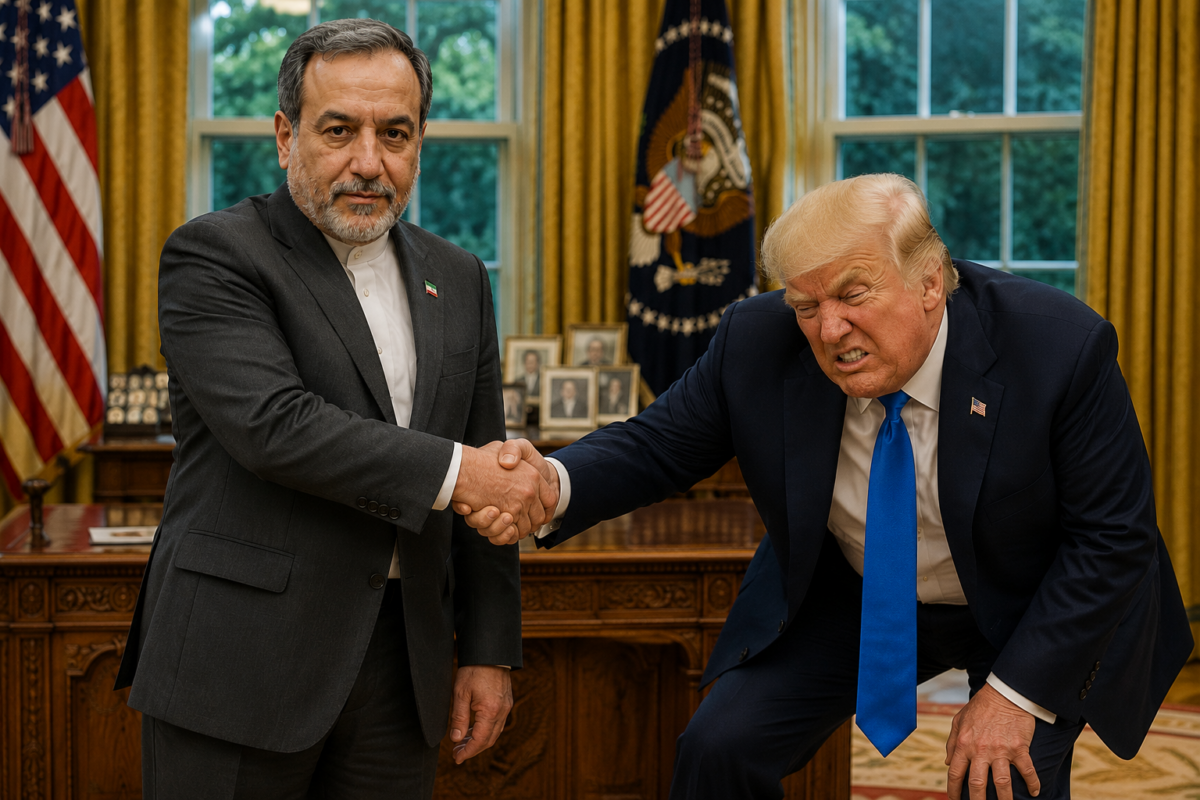
In response to US President Donald Trump’s proposal to begin talks, Iran’s foreign minister replied bluntly: “We don’t talk to devils during Ramadan.” The remark captured the mood surrounding the latest Middle East war. Three weeks into the U.S.–Israeli campaign against Iran, the conflict has not only begun badly for Washington and Tel Aviv, it has raised profound questions about the war’s objectives, its trajectory and how long the fighting may continue.
The swift capitulation many in Washington expected—something akin to Venezuela’s political collapse under economic pressure—has not materialised. Instead, the war has begun to expose deeper structural weaknesses in America’s global position. Military alliances, security guarantees and economic arrangements that the United States has relied upon for decades are now showing signs of strain. While the ultimate outcome of the conflict remains uncertain, the war is already revealing fractures across the economic, political and security architecture underpinning American hegemony.
Afghanistan Again
The US–Israeli alliance has carried out extensive strikes across Iran and pursued a sweeping assassination campaign, culminating in the killing of Iran’s Supreme Leader, Ali Khamenei. Washington appears to have calculated that removing the regime’s central figure would trigger internal collapse in Tehran. Instead, Iran responded with a massive retaliatory campaign, launching swarms of missiles and drones against U.S. bases and radar installations across the region.
Within days, key American surveillance systems were degraded, forcing the United States to rely on radar installations further afield in Turkey and Cyprus. U.S. military facilities in Iraq, Qatar, Kuwait, the United Arab Emirates and Jordan were struck, with images of burning installations circulating widely across global media. Despite America’s long-held advantage in missile defence, Iran exploited a fundamental vulnerability: numbers. Cheap drones and relatively rudimentary missiles were launched in such quantities that U.S. defensive systems struggled to cope. The strategy of overwhelming sophisticated but limited interception systems has exposed a potential weakness in America’s military dominance.
Despite America’s long-held advantage in missile defence, Iran exploited a fundamental vulnerability: numbers
The Drone Revolution
The war with Iran is also highlighting a deeper transformation in modern warfare. For decades the United States relied on overwhelming technological superiority to dominate its adversaries. Precision weapons, stealth aircraft, satellite surveillance and advanced missile defence systems allowed Washington to fight wars where the technological gap between it and its opponents was immense.
But the proliferation of drones and low-cost missile technology is changing this equation. Iran’s strategy has relied on launching large numbers of relatively inexpensive systems rather than a handful of highly sophisticated ones. This approach dramatically reduces the cost of attacking while forcing the defender to expend expensive interceptor missiles.
A drone costing a few thousand dollars can require a missile interceptor worth hundreds of thousands—or even millions—to destroy it. When launched in large swarms, these systems can overwhelm even advanced air defence networks. In effect, Iran has adopted a strategy of asymmetric saturation, turning the economics of modern warfare against the United States.
This model has already appeared in other conflicts. In Ukraine, both Russia and Ukraine have used drones to devastating effect. In Gaza, relatively simple weapons have challenged Israel’s armoured vehicles. Iran’s campaign represents the further evolution of this trend: a state-level application of swarm warfare designed to degrade technologically superior adversaries.
A drone costing a few thousand dollars can require a missile interceptor worth hundreds of thousands—or even millions—to destroy it. When launched in large swarms, these systems can overwhelm even advanced air defence networks
Gulf Monarchies left in the Cold
For decades, the rise of Iran has deeply unsettled the Gulf monarchies. In response, they turned increasingly toward Washington for protection. Historically aligned with Britain, the Gulf states gradually shifted toward a security relationship with the United States as a way to preserve regime stability while modernising their armed forces. The arrangement was straightforward. The United States would sell advanced military platforms and establish bases across the region, while also providing implicit security guarantees against external threats.
The relationship proved immensely beneficial for Washington. American defence companies gained lucrative markets while the US military entrenched itself across the Gulf. For the monarchies, the alliance appeared to provide a powerful deterrent against regional rivals, particularly Iran.
Yet as missiles and drones began striking Gulf territory, that security guarantee appears to not have been delivered upon. Gulf leaders have privately voiced frustration with Washington’s response, accusing the United States of prioritising the protection of its own personnel and Israel rather than defending allied states. Missile interceptor stocks across the region have been rapidly depleted while Iranian strikes continue.
At the same time, the United States has kept its aircraft carriers at a distance from the conflict zone to reduce the risk posed by Iran’s expanding missile arsenal. The decision, while militarily understandable, has reinforced the perception that Washington is reluctant to expose its most valuable assets to Iranian fire. For many in the Gulf, this has raised uncomfortable questions about the reliability of the American security umbrella.
The erosion of confidence in American protection is likely to have long-term geopolitical consequences. For decades the Gulf monarchies relied on the United States as the cornerstone of their security strategy. Hosting American bases and purchasing US military equipment were seen as the price of maintaining regime security. But if the United States is perceived as unwilling—or unable—to defend its partners against Iranian retaliation, Gulf states will need to reconsider this arrangement.
For many in the Gulf, this has raised uncomfortable questions about the reliability of the American security umbrella
Iran’s Real Nuclear Option
Iran’s closure of the Strait of Hormuz has added a further strategic shock. The narrow waterway handles a vast share of global oil shipments as well as Liquified Natural Gas (LNG). For decades analysts have described its closure as Tehran’s ultimate strategic lever—a move likely to be deployed only if Iran felt existentially threatened.
Despite this widely understood risk, Washington appears to have entered the conflict assuming a best-case scenario rather than preparing for the worst. Now the United States finds itself seeking assistance from the very allies it has often criticised. After repeatedly castigating NATO and European governments for weakness—at one point describing Britain’s leadership as second-rate—the Trump administration has now sought their support in reopening the Strait.
The economic consequences are already visible. Oil prices have surged and fears of a global recession are growing. For decades the United States has presented itself as the guarantor of global energy flows and maritime security. Yet the disruption caused by Iranian missiles and naval pressure has challenged that perception.
For decades the United States has presented itself as the guarantor of global energy flows and maritime security. Yet the disruption caused by Iranian missiles and naval pressure has challenged that perception
Is the Petrodollar Coming to its End?
The war is also exposing deeper vulnerabilities in one of the foundations of American global power: the petrodollar system. When Washington ended the dollar’s convertibility into gold in 1971, policymakers feared the world might abandon the dollar as a reserve currency. The solution came through a strategic partnership with Saudi Arabia, which was emerging as the world’s dominant oil exporter. In exchange for American security guarantees, Riyadh agreed to price its oil exclusively in dollars.
Other Gulf producers followed suit, creating a system in which global oil sales reinforced demand for the US dollar. Oil revenues were recycled into American debt markets while Gulf states simultaneously purchased vast quantities of US military equipment. The arrangement cemented the dollar’s status as the world’s reserve currency and tied the Gulf monarchies closely to the American security order.
Today that arrangement is facing its most serious test. As Gulf States face Iranian missile and drone strikes while American forces maintain distance, doubts are growing about the value of the long-standing bargain. Recycling oil revenues into US debt and weapons purchases increasingly looks less like a strategic partnership and more like a one-sided dependency.
Recycling oil revenues into US debt and weapons purchases increasingly looks less like a strategic partnership and more like a one-sided dependency
The Myth of Israeli Invincibility
Israel’s long-cultivated image of military invincibility has also taken significant blows. Since its creation, Israel has relied heavily on psychological deterrence—projecting overwhelming strength in order to make resistance appear futile. This strategy was evident during the Nakba of 1947–48, when hundreds of Palestinian villages were destroyed and up to 900,000 Palestinians were expelled or forced to flee their homes.
Over time, this doctrine evolved into a strategic culture centred on decisive military dominance. Yet recent events have begun to erode that perception. During the Gaza war, social media was flooded with footage of Israeli armoured vehicles—including the once-feared Merkava tanks—being struck by relatively simple anti-tank weapons used by Palestinian fighters.
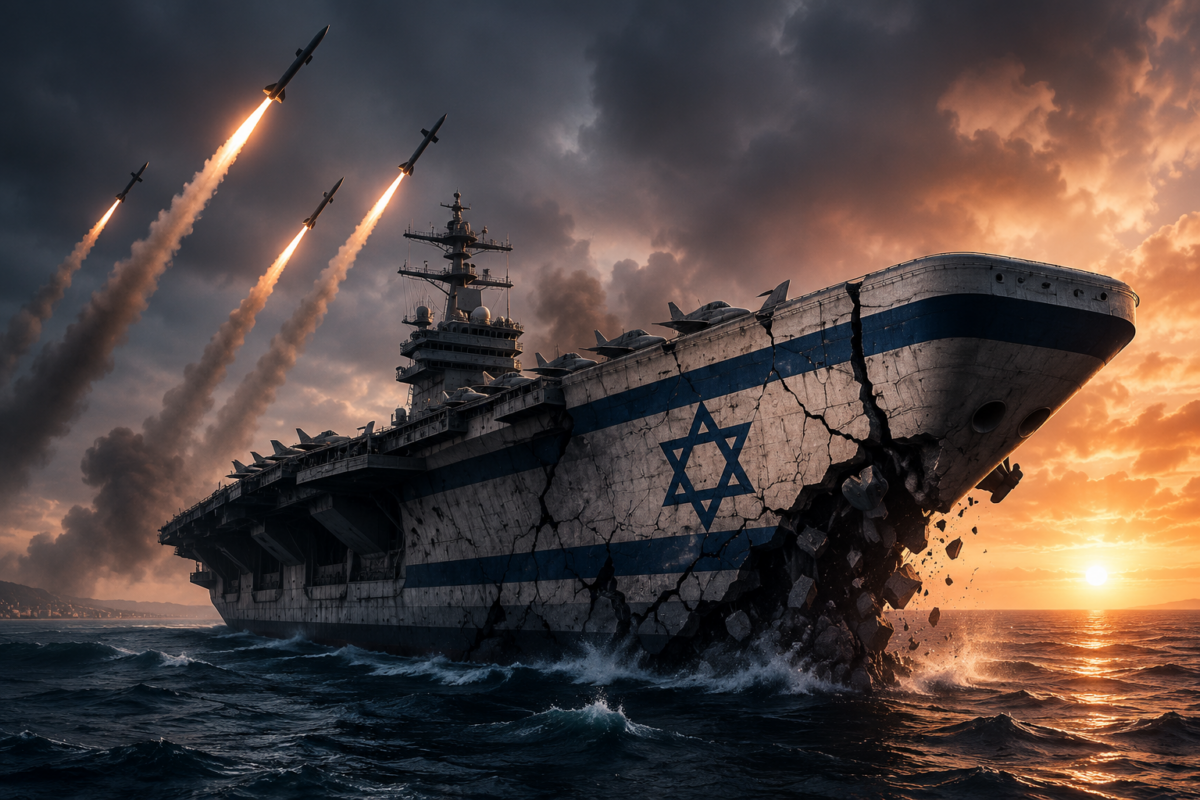
Now, as Iranian missiles and drones reach Israeli cities, the limits of Israel’s defensive systems are increasingly visible. The much-celebrated Iron Dome has struggled under the pressure of sustained attacks. Israeli civilians are once again spending extended periods in bomb shelters, an image that contrasts sharply with the aura of invulnerability Israel has long cultivated.
Taken together, these developments are striking at the credibility of both pillars of the US–Israeli alliance. The aura of overwhelming military superiority—carefully constructed over decades—is beginning to show cracks.
The aura of overwhelming military superiority—carefully constructed over decades—is beginning to show cracks
Conclusion
Wars often reveal far more than battlefield outcomes—they expose the underlying balance of power shaping the international system. The current conflict with Iran is increasingly revealing structural weaknesses in the geopolitical order that has sustained American influence for decades. Security guarantees are being questioned, the economic foundations of the petrodollar system face new pressures, and the technological edge that once defined US military dominance is being challenged by cheaper and more adaptable weapons. Whether Washington can restore confidence among its allies—or whether this moment marks the beginning of a broader shift toward a more fragmented and multipolar world—remains uncertain. What is clear is that the war with Iran may prove to be a defining test of American power in the twenty-first century.