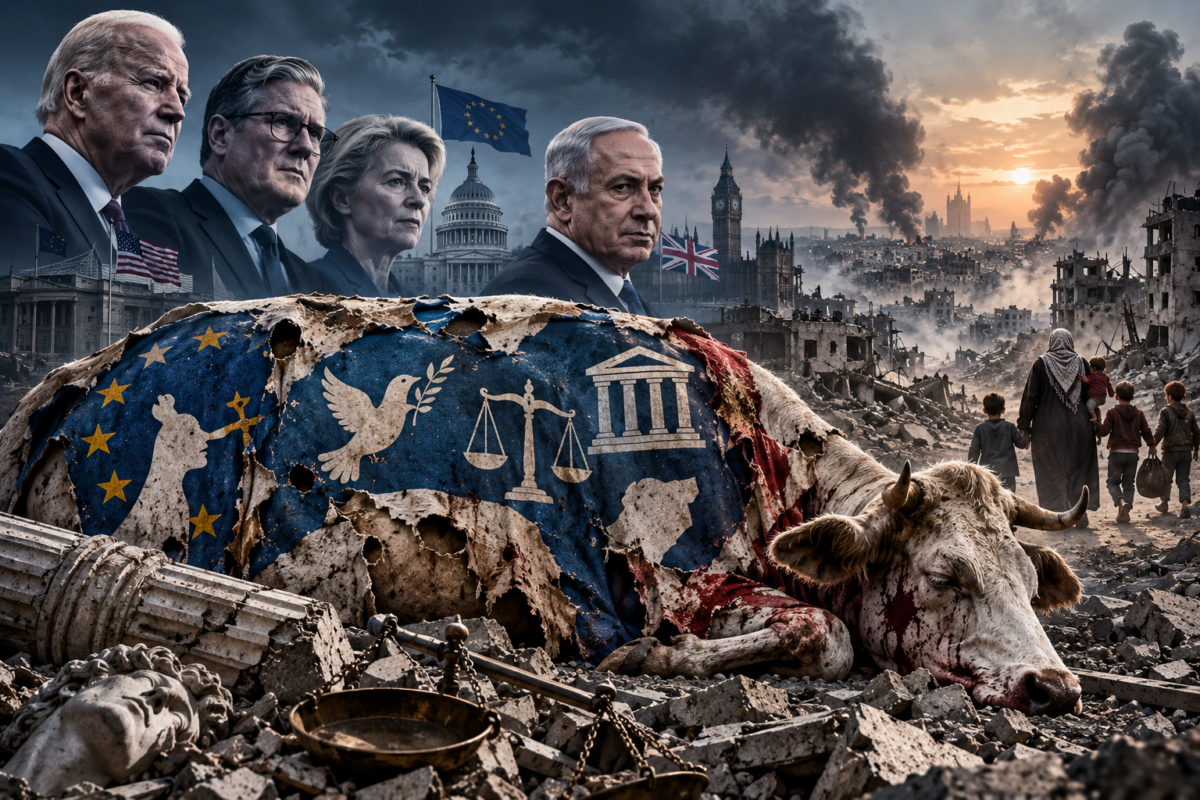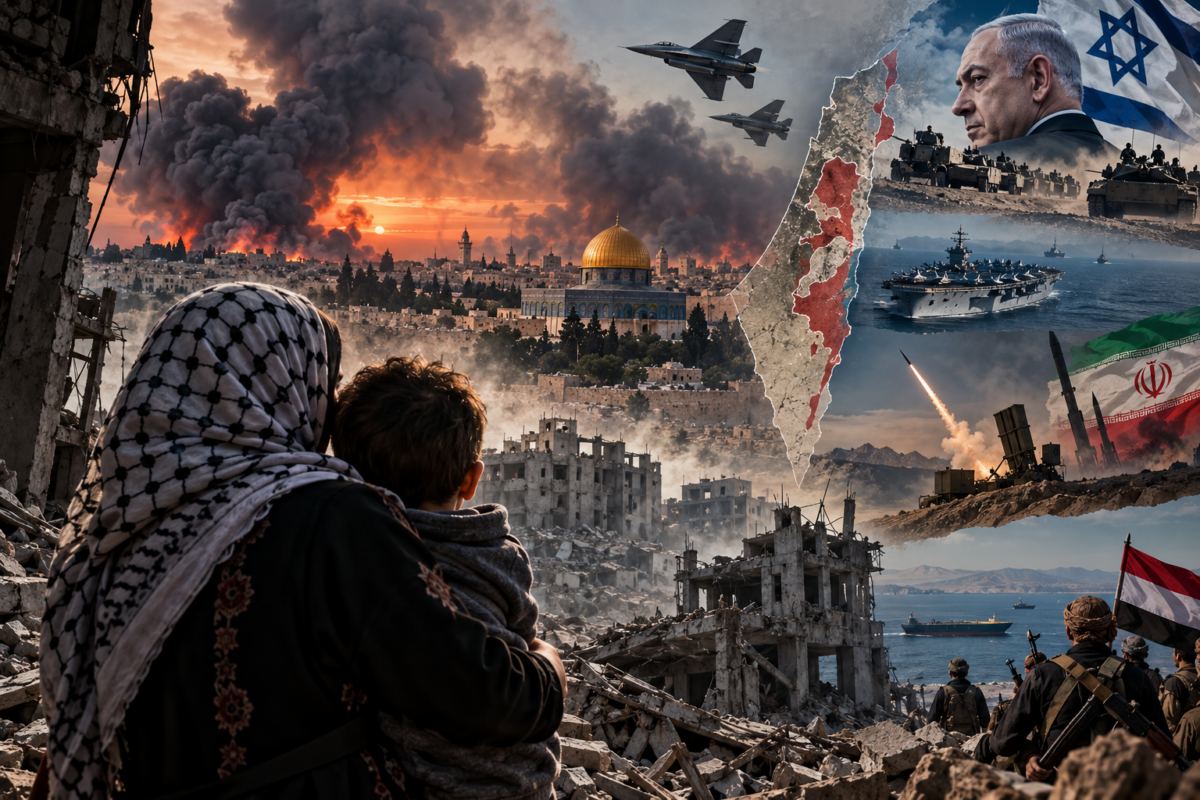


In his State of the Union address, US President Donald Trump lashed out at Tehran’s “sinister” nuclear ambitions, laying out Washington’s justification for potential military action against Iran. Trump explained to Americans why he is contemplating strikes, just eight months after claiming that US operations had “obliterated” three critical Iranian nuclear facilities and left “the bully of the Middle East” with no option but to seek peace.
“We are in negotiations with them,” Trump said. “They want to make a deal, but we haven’t heard those secret words: We will never have a nuclear weapon.”
This bellicose language stands in contrast to the long and complex relationship between Washington and Tehran — a relationship that, despite public hostility, has involved periodic cooperation on regional issues for decades.
Firepower
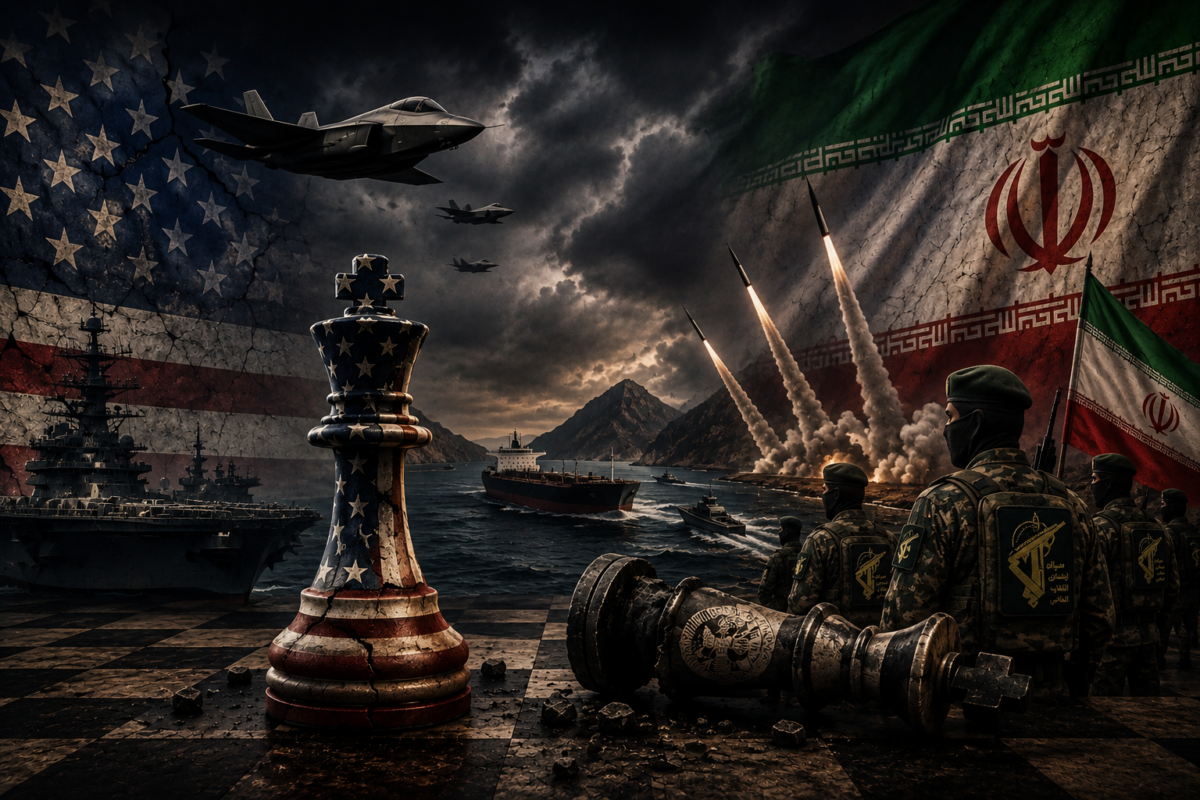
For weeks, the United States has been amassing significant military assets in the Middle East in what appears to be preparation for possible strikes. The USS Abraham Lincoln carrier strike group is positioned off the coast of Oman. The USS Gerald R. Ford, America’s newest and largest aircraft carrier, is in the Mediterranean and only days away from the operational theatre. Together, the two carrier groups carry thousands of personnel and dozens of fighter aircraft.
The US has also deployed additional fighter jets, as well as THAAD and Patriot air defence systems, to bases across the region.
Dozens of refuelling and transport aircraft have crossed the Atlantic. Data from Flightradar24 shows 39 airborne tankers repositioned closer to the potential theatre of operations. A further 29 heavy-lift aircraft, including C-17 Globemaster IIIs, have conducted flights into Europe. Becca Wasser, a military strategy expert at the Center for a New American Security, told the Financial Times: “The build-up cannot be sustained indefinitely due to the high costs. This is such a massive build-up that it almost speaks to the fact that there needs to be strikes, or else this is going to be one of the costliest bluffs in US history.”[1]
Meanwhile, Iran’s Revolutionary Guards conducted naval exercises in the Strait of Hormuz, followed by joint Iranian–Russian naval drills in Iran’s southern waters.[2]
With the firepower currently in place — and more arriving — the US has the capability to strike hundreds of targets within a compressed timeframe. The scale of the deployment points to a sustained air campaign lasting between two weeks and a month. Such an operation would require enormous quantities of ordnance and continuous aerial resupply. General Dan Caine, Chairman of the Joint Chiefs of Staff, has cautioned that limited munitions stockpiles and insufficient allied support could increase risks to US forces.
With the firepower currently in place — and more arriving — the US has the capability to strike hundreds of targets within a compressed timeframe
Talking to Nowhere
The US demands on Iran are sweeping and effectively require capitulation. As talks continue in Geneva, Washington wants Tehran to abandon its nuclear programme, shut down its long-range ballistic missile capabilities, and end support for regional proxy groups.
Discussions between US and Israeli officials have made clear that Israel insists on these maximalist conditions, even though Trump has at times signalled openness to a narrower agreement focused solely on enrichment limits. Each time such flexibility is suggested, Israeli officials move swiftly to Washington to reinforce their broader demands.
What the US–Israel alliance is asking Iran to do is equivalent to asking the United States to dismantle its own military-industrial complex. If Iran were to comply fully, it would be left strategically exposed. Given Washington’s history of withdrawing from agreements and Israel’s explicit objective of crippling Iran’s regional posture, Tehran would view such concessions as existentially dangerous.
Frenemies
What makes the current tensions perplexing is that, despite public portrayals of enmity, the US and Iran have maintained periods of tacit cooperation.
In 1979, Washington’s posture during the Iranian Revolution contributed to the clerical leadership consolidating power. President Jimmy Carter later confirmed in his memoirs that he sent a general to ensure the Iranian military preserved equipment and infrastructure during the upheaval rather than intervening decisively.
In 1981, the US supplied Iran with spare parts and military equipment after Iraq invaded. Following the US invasion of Afghanistan in 2001, Iran secured northern Afghanistan, enabling US forces to concentrate on insurgent strongholds in the south. Tehran allowed humanitarian transit through its territory and reportedly shared targeting intelligence.
The consistent opponent of any US–Iran accommodation has been Israel
In Iraq, Iran encouraged its allied groups to participate in the US-constructed political process. Since then, pro-Iranian factions have played dominant roles in Baghdad’s political order.
Even during the 12-day war with Israel in 2025, communication channels remained open. The US signalled it did not seek full-scale war and reportedly notified Iranian officials of intended strike locations, which were subsequently evacuated. Steve Witkoff informed Iran’s foreign minister of B-2 bombers entering Iranian airspace, describing the operation as a one-off strike. Iran later launched retaliatory strikes on the US Al-Udeid base in Qatar but provided advance warning. President Trump publicly thanked Iran for the notice, stating: “I want to thank Iran for giving us early notice, which made it possible no lives were lost, and nobody was injured.”
In 2015, the two sides agreed to the Joint Comprehensive Plan of Action (JCPOA), under which Iran accepted limits on its nuclear programme in exchange for sanctions relief. After heavy Israeli lobbying, Trump withdrew from the deal in 2018.
US intelligence assessments have repeatedly concluded that Iran has not resumed a formal weapons programme, despite ongoing disputes over enrichment levels.
The consistent opponent of any US–Iran accommodation has been Israel, which argues that its security requires Iran’s strategic weakening. During the Iraq and Afghanistan wars, Israel’s lobbying failed to disrupt US–Iran cooperation, as Tehran played a role in stabilising post-invasion political orders. Today, however, the broader global context has shifted, and Washington now views Iran through a different strategic lens.
the broader global context has shifted, and Washington now views Iran through a different strategic lens
The China–Russia Factor
Iran occupies some of the most strategic geography in the world. It straddles the Persian Gulf, and all exported oil and gas from the Gulf must pass through the Strait of Hormuz — the narrow chokepoint connecting the region to global sea lanes. 20% of global daily oil consumption and LNG flows transit this corridor, making it arguably the most critical energy artery on earth.
Strikes on Iran would threaten this corridor. The country most exposed to disruption would be China. Around 50% of China’s oil imports originate from the Persian Gulf, with Iran supplying 15% of that total. A prolonged conflict would severely affect China’s energy security, with limited short- to medium-term alternatives.
In the context of intensifying US–China rivalry, conflict with Iran would add another front to great-power competition.
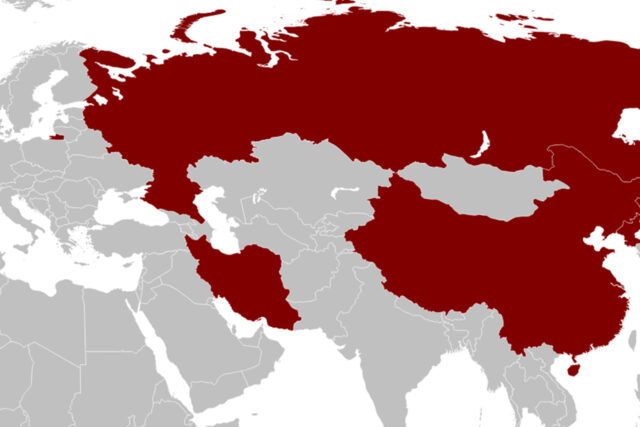
Iran also borders Russia via the Caspian Sea. Instability in Iran would therefore directly affect Russia’s southern flank. From Washington’s perspective, destabilising Iran could weaken both Moscow and Beijing and fracture the axis the three states seek to project — an alignment already tested in Venezuela, where the US challenged the axis despite rhetorical backing from Moscow and Beijing.
Yet outcomes are far from guaranteed. Israel’s desire to strike Iran could draw the United States into another prolonged entanglement. If Washington succeeds decisively, China and Russia would face significant strategic setbacks. If, however, the US becomes bogged down in another quagmire, it could provide Moscow and Beijing with an opportunity to stretch American power and reshape the global balance of power.
[1] https://www.ft.com/content/a7da6a98-3368-4853-922a-b9f8451682a3
[2] Iran and Russia hold joint military drills amid Iranian tensions with US