


At the close of the Second World War, the United States accounted for more than 50% of global GDP. It was effectively rebuilding Europe through the Marshall Plan while simultaneously helping to revive Japan and confronting the Soviet Union and Communist China on multiple fronts. The United States, in effect, constituted the centre of the world’s economy.
Consequently, over the following 70 years, access to the US market became one of the principal factors underpinning the economic development of many nations, including China. For many countries, the United States also represented an essential, high-value market for their goods and services. The American consumer was king: wealthy enough to buy, consume and replace the enormous volume of goods produced by the rest of the world.
So, when Donald Trump decided to tear up one of the most important relationships in the Western Hemisphere and renegotiate the United States’ multifaceted relationship with its northern neighbour, many expected Canada to capitulate quickly. Geographical and political realities appeared to make Canada effectively tied to its economically much larger neighbour.
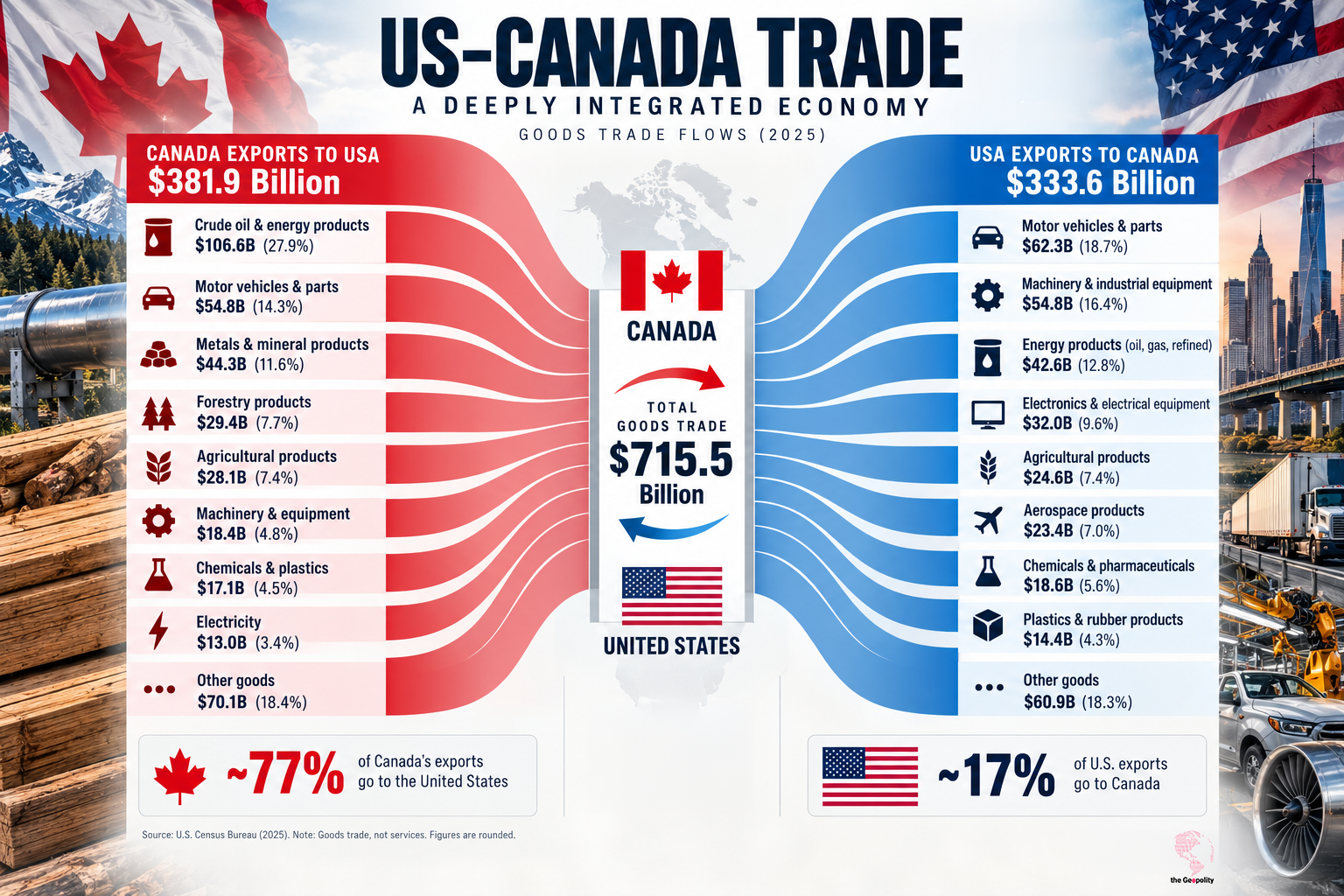
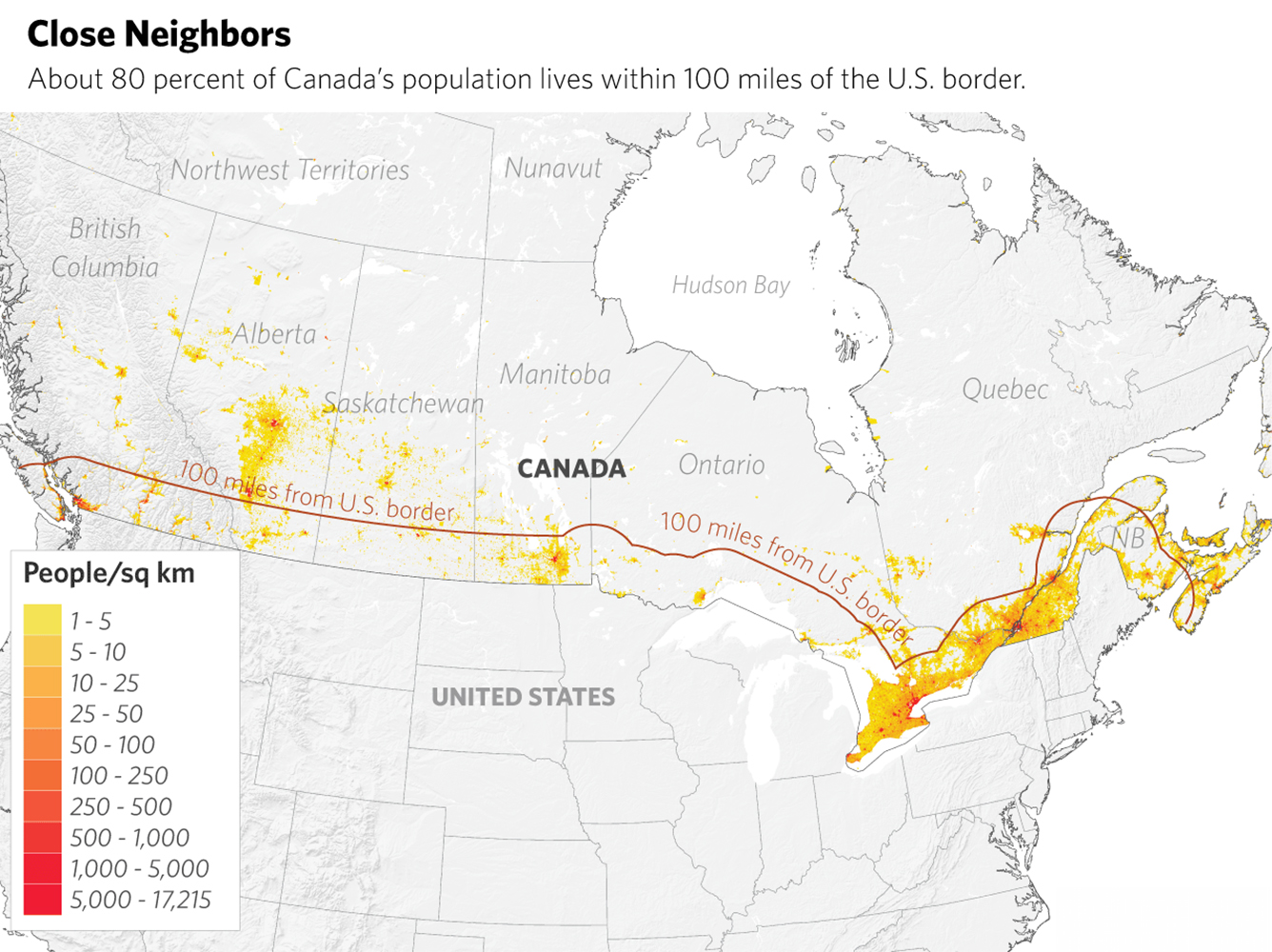
As with Mexico, where economically important population centres mirror US cities across the border, Canadian cities and industries are deeply integrated with their American counterparts. They share economic, cultural and physical ties across rivers and international boundaries. Canadian exports are primed for the US. The infrastructure for energy, mineral and manufactured goods exports are all pointing south with limited alternative capacity for shipment by sea.
Yet Canada did not capitulate. Trade negotiations collapsed, and the United States imposed tariffs of up to 50% on a range of Canadian imports, reportedly affecting more than $20 billion in trade. Canada responded with reciprocal measures, beginning on 8 September 2026.
The United States targeted Canada with steel and aluminium tariffs ranging from 15% to 50%, tariffs on copper ranging from 15% to 50%, and a 10% tariff on softwood and timber. Plywood, wood pulp and paper products faced tariffs ranging from 25% to 50%.
Canada’s reciprocal measures target several critical sectors of bilateral US trade, including 50% tariffs on steel, aluminium, cosmetics and personal-care products, alongside tariffs ranging from 15% to 50% on dairy, agricultural products, pulp, paper, wood, appliances and electronics.
International relations are complex, and factors that initially appear unrelated can converge to create the foundations for entirely new relationships.
Canada’s resolve to resist US demands has been reinforced by the disruption caused by the war in Ukraine
Europe to the Rescue
Canada’s resolve to resist US demands has been reinforced by the disruption caused by the war in Ukraine. Historically, the principal destination for Canadian energy exports was the United States. Abundant and relatively cheap Russian oil and gas, combined with well-developed distribution networks, made Canadian energy exports to Europe economically unattractive and largely unnecessary.
War, however, can overturn economic calculations. Strategic considerations can take priority over cost.
For Europe, securing reliable energy supplies has become increasingly important, with price sometimes becoming a secondary consideration. Consequently, the economic and political interests of Canada and the European Union are beginning to converge.
Although Canadian oil and gas exports to European markets remain constrained by a lack of suitable export infrastructure, and would previously have been prohibitively expensive, Canada and Europe have nevertheless begun establishing a series of bilateral agreements.
The Ksi Lisims LNG deal, signed in May 2026, represents Canada’s first long-term LNG export agreement with Europe. It commits Canada to supplying Germany with 1 million tonnes of LNG annually for 20 years from a proposed British Columbia facility, which is expected to begin operations in the early 2030s.
A second major agreement followed in July 2026, when German utility Uniper agreed to purchase up to 2 million metric tonnes of LNG annually from a Nisga’a Nation-led West Coast project beginning in 2032.
The EU and Canada have also established a Critical Minerals Partnership in 2026, under which Canada will work with the European Investment Bank to develop mineral resources and facilitate the export of critical and rare-earth minerals to Europe.
These European agreements provide Canada with capital and financial commitments that can help fund the infrastructure required to develop new export routes. In doing so, they begin to mitigate one of Canada’s principal vulnerabilities: its extractive industries have historically been oriented towards the United States, leaving the country with limited infrastructure for exporting many of its resources to other markets.
These European agreements provide Canada with capital and financial commitments that can help fund the infrastructure required to develop new export routes. In doing so, they begin to mitigate one of Canada’s principal vulnerabilities
The transformation is not confined to energy and natural resources. It is also becoming evident in defence.
Under the SAFE Instrument agreement signed in 2026, Canada became the first non-European country to participate in the EU’s €150 billion defence procurement initiative. The agreement allows Canadian firms to participate in defence procurements financed through the EU’s €150 billion Security Action for Europe (SAFE) loan programme.
More significantly, Canadian companies receive preferential, non-discriminatory access to eligible defence contracts, giving them treatment and opportunities broadly equivalent to those available to European companies. The agreement also allows Canadian firms to fulfil eligible contracts with up to 80% Canadian content.
This is a significant development. Canada has traditionally been heavily oriented towards the United States for defence procurement, making the opening of the European defence market to Canadian industry particularly notable.
Although there have been allegations and counter-allegations from both sides, from the Canadian perspective the principal reason the Canada-US trade negotiations collapsed appears to have been Prime Minister Mark Carney’s rejection of last-minute American demands that were perceived as threatening Canadian economic sovereignty.
Among the reported concerns were provisions that would have restricted Canada’s ability to negotiate independent trade agreements with other countries, including European states. For Canada, accepting such restrictions would have meant sacrificing precisely the strategic diversification that it increasingly regards as necessary.
The United States is also far from happy with Canada’s decision to improve its trade relationship with China.
Following a series of disputes during 2025, Prime Minister Mark Carney made a state visit to China on 16 January 2026 and held a bilateral meeting with President Xi Jinping. Afterwards, Carney announced that Canada would reduce tariffs on up to 49,000 Chinese electric vehicles per year, cutting the rate from 100% to 6.1%.
In exchange, China agreed to reduce tariffs on Canadian canola oil from 85% to 15% by 1 March. Beijing also agreed not to implement anti-discrimination tariffs on Canadian canola meal, lobsters, crabs and peas from 1 March until the end of 2026.
Following the announcement of the Canada-China trade agreement, US Secretary of Transportation Sean Duffy warned that Canada would regret relaxing its restrictions on Chinese electric vehicles.
Diversification
The significance of these developments extends beyond individual trade agreements. Canada is demonstrating that, although it cannot realistically escape the economic, political and military gravity of the United States, it can broaden the range of countries with which it maintains substantial economic and strategic relationships.
For decades, Canada’s economic geography was largely determined by its southern neighbour. The United States was so dominant that alternative relationships often made little economic sense. Geography, infrastructure and sheer market size reinforced this dependence.
That calculation is now beginning to change.
The United States remains overwhelmingly important to Canada, and Canada is unlikely to completely escape the American orbit. However, Canada is widening that orbit, incorporating Europe, China and other international partners into its economic and political calculations.
The United States may regard access to Canadian minerals, energy resources, agricultural products and markets as strategically important. But the balance of economic power has changed dramatically since the immediate post-war period. The United States once represented more than half of global economic output; today, measured by purchasing-power parity, its share is closer to 14%.
That does not make the United States unimportant. Far from it. The American economy remains enormous, wealthy and globally influential. But its dominance is no longer so overwhelming that tariffs imposed by Washington are necessarily fatal to countries seeking alternative markets.
Canada presents an especially interesting case.
The traditional assumption has been that Canada needs the United States more than the United States needs Canada. Yet Canada’s importance as a supplier of oil, gas, minerals, agricultural products, electricity and other essential commodities means that the dependency runs in both directions.
The United States cannot easily replace Canadian supplies without significant economic and strategic costs. Nor can Canada simply walk away from the American market.
This mutual dependence is the key point.
A Venezuela-style takeover is clearly not a realistic option, leaving Washington with a much more conventional choice: negotiation.
At some point, the United States will have to come to terms with a Canada that is more assertive, more economically diversified and increasingly willing to pursue its own strategic interests.
Canada may never leave the American orbit. But it is demonstrating that it does not have to remain entirely within it.