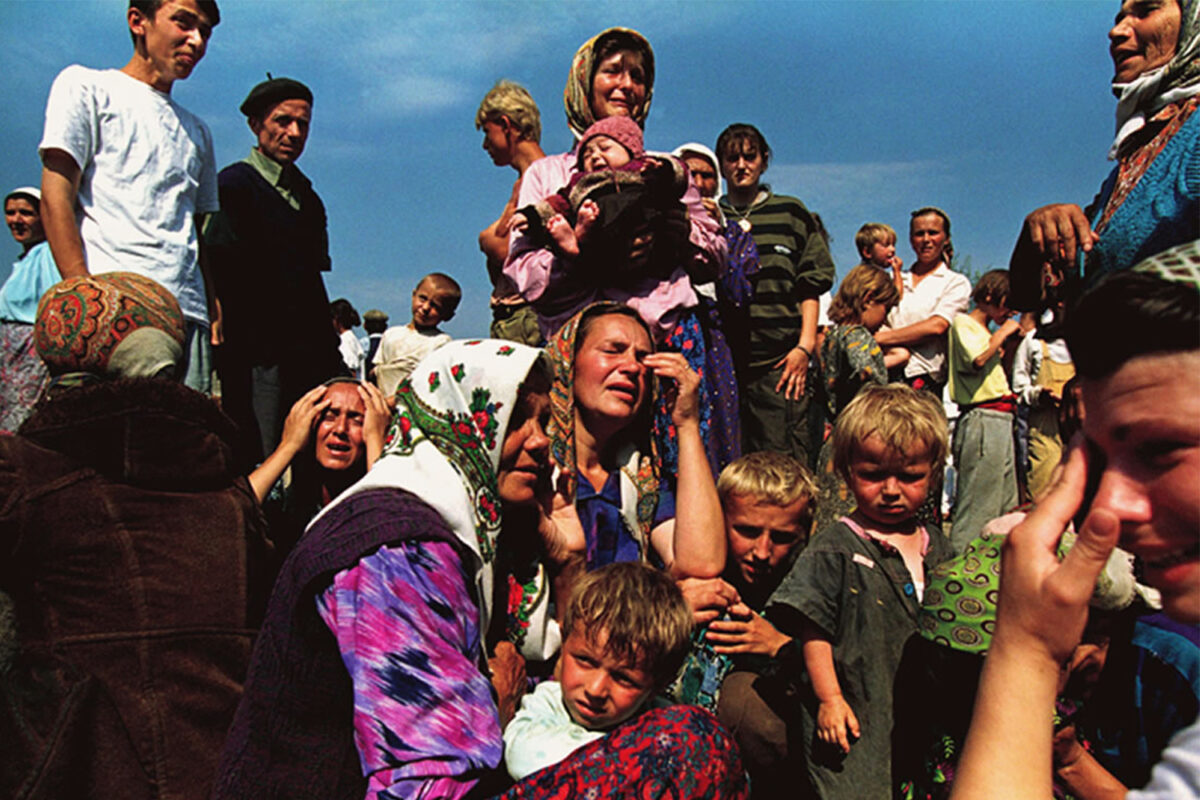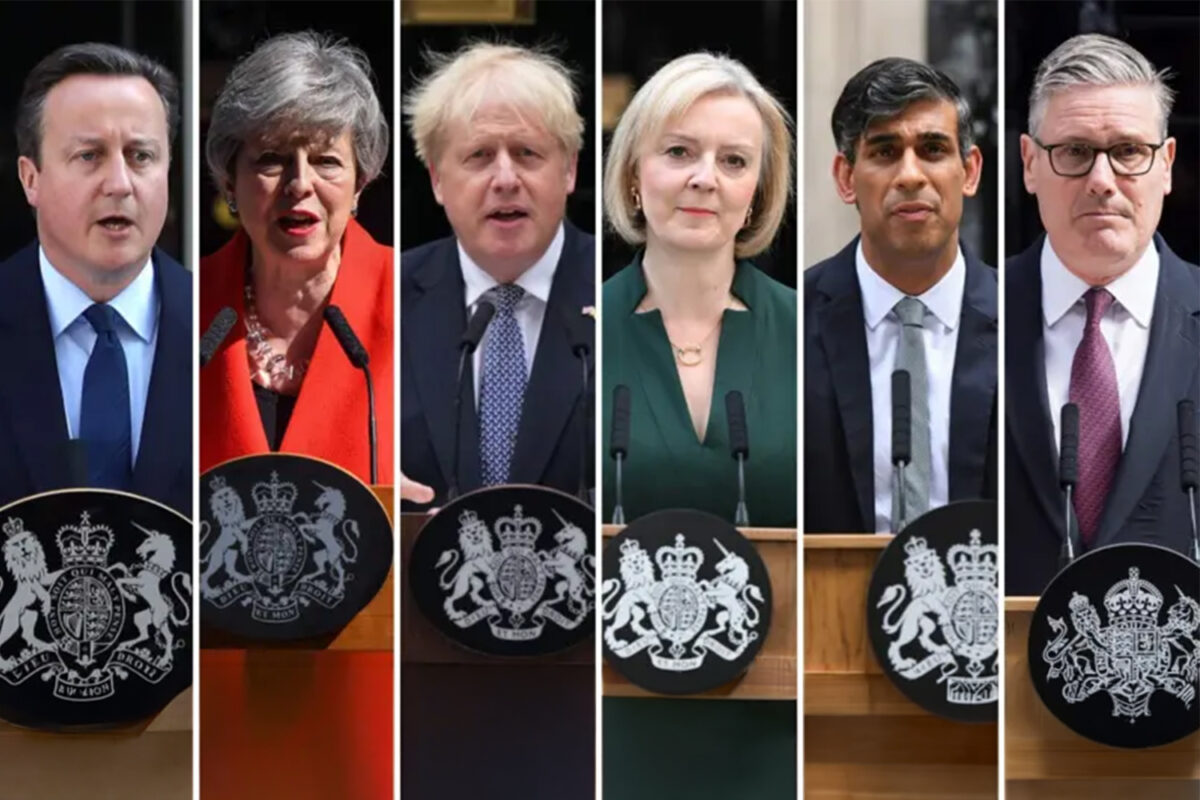


Tens of thousands of people marched through central London on Saturday 16th may in a far-right rally staged by Tommy Robinson. Police in the British capital deployed 4,000 officers in what they called their biggest public order operation in years.
The European Far Right have had there best electoral years since the Second World War. In elections in the EU, Austria, Germany, France and beyond, far or hard right parties all did exceedingly well. European far-right groups have long been on the rise and have been a permanent feature of European politics, despite being on fringes most of the time. Currently their popularity is due to the deep anxieties over wealth inequality, immigration and identity.
For much of post-war history in Europe mainstream political parties across Europe were able to keep the far-right on the fringes of public opinion as they coalesced around what was considered mainstream politics and economics. But in times of economic downturns, as mainstream and centralist parties struggled to solve such issues, this gave the right the chance to enter mainstream discourse. But this usually resulted in a few far-right politicians entering their respective parliaments or as minority partners in coalitions. As Europe opened its gates to immigration, a necessity due to declining workers after WW2, this led to the arrival of many from South Asia, Africa and the Caribbean to Europe.
The rise of Japan and China and other industrial locations meant much of European industry either moved abroad or came to an end due to not being able to compete with such nations. This led to tensions in some countries as the political leaders blamed immigration for the loss of such industries, rather than not being able to compete with the likes of China. This became a regular feature with politicians blaming immigration for problems such as unsustainable social security budgets, public sector’s rising costs and the problems in healthcare. After 9/11 and the subsequent terrorist attacks across Europe, European leaders blamed immigration from the Muslim world as a security threat.
The global financial crisis in 2008 saw many European governments impose austerity measures that severely undermined trust in mainstream political parties and institutions, creating fertile ground for populist parties across the ideological spectrum. Since then, confidence in the EU as a block, national political leaders and the social-political systems generally have been falling. This is due to them failing to tackle the rising costs of living. Confidence in democracy is today at rock-bottom. The 2014-16 refugee crisis accelerated this trend, with many Europeans perceiving the surge of refugee flows from North Africa and the Middle East as a threat to national identity and public safety. This trend is now gathering further pace on the back of a popular backlash against rising levels of migration, a sense of identity loss amid rapidly changing demographics in Europe, a perceived cultural hegemony from the liberal left, rising costs of living, and growing costs for households and businesses associated with the green energy transition.
The global financial crisis in 2008 saw many European governments impose austerity measures that severely undermined trust in mainstream political parties and institutions, creating fertile ground for populist parties across the ideological spectrum
Against this backdrop, far-right parties once pushed to the margins of the political landscape have found fertile ground across Europe and begun entering governments across Europe — either at the head of ruling coalitions as seen in Italy or as junior partners as was the case in Finland and Sweden. While far-right parties in Spain, Denmark and Poland failed to garner enough support in recent elections to enter their countries’ governments, they still performed strongly in those ballots — a trend set to continue.
Right-wing politics in Europe is today is a broad and diverse spectrum — ranging from mainstream conservative parties to populist-nationalist and even far-right movements. While each country has its own traditions and priorities, several core ideas run through most of Europe’s right-wing politics. Some areas of agreement currently include:
- Stop the boats
- Multiculturalism has gone too far
- Curtail Muslim migration
- Expel illegal refugees
- End mass immigration
The right is also divided among themselves in terms of ideology and differences take place over:
- Islam doesn’t belong in Europe
- There must be mass deportations
- Stop all immigration
- Europe is only for white Christians (whiteness)
- The method for change is at the ballot box versus agitation and civil war
Ethno-nationalists or white supremacists believe in a white Europe and national sovereignty and would send all non-white residents back and thus reverse mass migration of the post war era. Their stance is ideological and based on the belief that the white race is under threat and will be displaced by immigration and a faster reproducing immigrant population. If immigration is not stopped and reversed there will be race wars and blood on the streets of Europe because different races cannot co-exist, as the white race is superior.
Nationalists on the other hand do not believe in a white only Europe but insist that everyone legally in Europe adopts their identity. This would be assimilation, not just integration of immigrants. The experiment of multiculturalism for them must end. Mass immigration must end, and the White European population should be given priority in housing and public services.
Then there is the ideological far-right. Their method for change is protest, agitation, race riots, civil strife and even internal civil war as opposed to change via the ballot box. They are authoritarian and would ultimately force mass deportations to bring their nation into being. They see the left-wing ideology as the main obstacle to their goal rather than migrants themselves.
The political far-right is characterised by the way they want to achieve change, via the ballot box. They reluctantly accept some immigration as a necessary evil. There should be quotas, limits and restrictions on immigration and foreigners should only be allowed into Europe if they serve an economic benefit.
When Ideology Meets Reality
Europe is a highly diverse place and each nation on the continent has had different experiences and has different political traditions to their neighbours. This is why the right across Europe are extremely divided and disagree on many things.
In northern Europe, far-right parties tend to be more libertarian and fiscally conservative, while in the south they often support more protectionist policies and oppose the spending limits posed by EU fiscal rules. Moreover, depending on their country’s unique history or geography, far-right parties may be staunchly pro-NATO or favor more positive relations with Russia. Besides resulting in potentially very different policy outcomes at the national level, this heterogeneity makes it difficult for different far-right parties across Europe to coordinate action and form a coherent policy platform at the EU level — especially given that their ideology is typically rooted in nationalism, which inherently clashes with the concept of a supranational body like the European Union that demands compromise and collective decision-making.
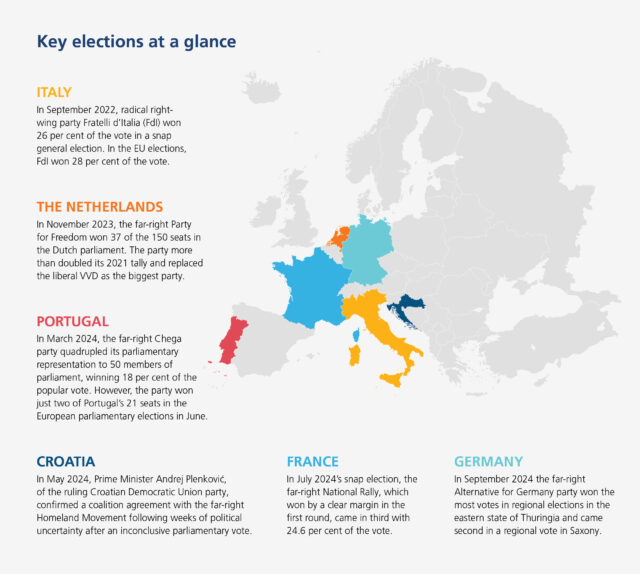
What appears more evident is that far-right parties tend to temper many of their most radical ideas once they take power. In Italy, geopolitical and economic constraints have forced Prime Minister Giorgia Meloni’s far-right government to embrace a more pragmatic approach and abandon the more radical, eurosceptic stances and economically unsustainable proposals that led to her Brothers of Italy party’s victory in the 2022 election.
Similarly in the Netherlands the far-right Party for Freedom won the national election in 2023 and was then forced to water-down several policies. It maintained its rhetoric on immigration, which in the end triggered a breakdown of the coalition and then their loss in the November 2025 election.
When the Far-Right Becomes Mainstream
Mainstream political parties across the world have failed in solving a number of social issues, which has then allowed the right to present their one-dimensional solutions as credible policies. Mainstream parties have had an open-door policy to immigration as they needed workers and as the demographics of white Europeans continues to fall. None of the countries experiencing demographic decline have been able to solve this challenge and knock on effects of this.
What appears more evident is that far-right parties tend to temper many of their most radical ideas once they take power
Mainstream parties have supported policies that have aided rich and large Corporations, and this has created wealth inequality. This inequality is then blamed on immigration, something the right have long advocated, but this prognosis is incorrect from its origin. Despite this the right promotes this idea of wealth inequality being the result of immigration rather than government policy being in line with the rich elite.
When it comes to identity politics, mainstream parties have justified the loss of whiteness in order to pander to the right. As this deflects from questions on mainstream political parties’ performance, they promote such an idea, which has led to European citizens turning against immigrants.
Much of the ideas of the far right are based on emotion and emotive issues that are based on flimsy evidence. While this allows far right parties to do well at polls, many rarely get to power, but the constant demonisation and deflection to immigration, means many turn against immigrants and this creates tension in Europe, which is given so much attention by the continent’s media that many cannot see beyond immigration. The underlying problems remain unresolved and will continue to do so.