

|
Getting your Trinity Audio player ready...
|
Welcome to The Geopolity’s What We’re Watching (3W), our daily look at the interconnected worlds of Geopolitics, Economics and Energy. Curated from the world’s leading sources of information, our analysis and commentary is designed to help you make sense of the events driving the major developments in the world.
On Monday, the US launched Operation Freedom to force open the Strait of Hormuz. Shortly after the start of the operation, Iran fired cruise missiles at US navy ships and drones at the commercial vessels involved in it, writes Axios. In addition, Iran attacked the United Arab Emirates port city of Fujairah, through which the UAE can export and import while bypassing the Strait of Hormuz, writes Al Jazeera. Iranian authorities also released a map of what they said was an expanded maritime area now under Iranian control which included Fujairah.
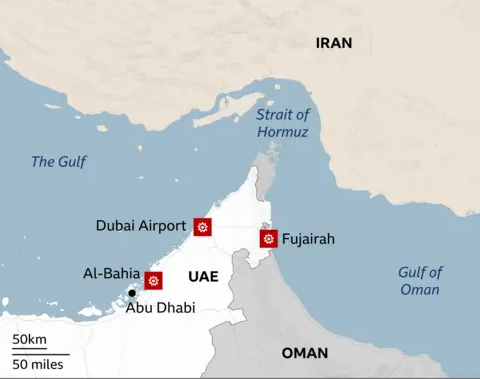 This left the US with a stark choice to make, writes The Wall Street Journal: Give Iran what it wants in negotiations or escalate further through military means in order to force Iran into submission.
On Tuesday, it appeared as though the US chose the prior option. US secretary of state Rubio suddenly reappeared on the scene to announce that the US War on Iran is over because the US has won. “Operation Epic Fury is concluded”, Rubio said according to The New York Times, adding “We achieved the objective of that operation”.
A little later the same day, US president Trump said he had formally suspended Operation Freedom, writes Axios. Probably well aware this could appear to be an admission of defeat, Trump pushed a narrative that the pause was not because it had failed to defeat Iran militarily, or because the US realized it does not have the capability to force an opening of the Strait, but due to progress in the negotiations with Iran on an agreement to end the war. “Based on the request of Pakistan and other Countries … and, additionally, the fact that Great Progress has been made toward a Complete and Final Agreement with Representatives of Iran, we have mutually agreed that, while the Blockade will remain in full force and effect, Project Freedom will be paused for a short period of time to see whether or not the Agreement can be finalized and signed,” Trump wrote on social media.
According to Axios on Tuesday, the deal would involve Iran committing to a moratorium on nuclear enrichment, in return for which the US agrees to lift its sanctions and release billions in frozen Iranian funds. Both sides will also lift their restrictions around transit through the Strait of Hormuz. This would be done gradually over a period of 30 days, during which the details of the targeted end-state would be worked out by the negotiating teams of both sides.
But then on Wednesday, Trump was threatening Iran again, writes The Associated Press. “If they don’t agree, the bombing starts, and it will be, sadly, at a much higher level and intensity than it was before,” he wrote on social media. This statement indicated the US had made a 180-degree turn within 24 hours, going from seeking a truly negotiated settlement because it realized it has no military option to defeat Iran, back to being convinced it has a military option to defeat Iran and thereby force it to submit to US – Israel Alliance demands, notes The Associated Press.
John Mearsheimer notes the US has so far achieved none of the objectives it defined for its War on Iran. There has been no regime change
Almost as if to make the point that the military solution remained the focus of the US, the US military then said it shot at and disabled an Iranian oil tanker as it tried to breach the US blockade of Iran’s shipping, writes The Associated Press.
But then later during the day on Wednesday, Trump raised the prospect of a negotiated settlement again. “They want to make a deal. We’ve had very good talks over the last 24 hours, and it’s very possible that we’ll make a deal,” Trump told reporters according to Reuters.
In the background, however, the US is reportedly pushing the United Nations to adopt a resolution that would give the US legal cover to attack Iran again if it does not unilaterally and unconditionally reopen the Strait of Hormuz. The resolution also demands that Iran “immediately participate in and enable” United Nations efforts to establish a humanitarian corridor in the strait to enable the delivery of vital aid, fertilizer and other goods, writes The Times of Israel. Because the proposed resolution was drafted under Chapter 7 of the UN Charter it could be enforced militarily.
In response to all these developments on the US side, Iran appears to be consistent in its position. Iranian lawmaker Ebrahim Rezaei, a spokesperson for parliament’s powerful foreign policy and national security committee, described the proposed peace deal text as “more of an American wish-list than a reality”, writes Reuters. Iran’s parliament speaker Mohammad Baqer Qalibaf appeared to mock the reports that a deal is at hand, writing on social media in English that “Operation Trust Me Bro failed.”
As to the other key stakeholders, first Israel, its prime minister Benjamin Netanyahu held several calls with Trump and his advisers on Wednesday to discuss the negotiations, writes Axios. “There is full coordination between us, there are no surprises. We share common goals, and the most important goal is the removal of the enriched material from Iran — all the enriched material — and the dismantling of Iran’s enrichment capabilities,” Netanyahu said in a statement. Axios also writes that Netanyahu’s close friends on the side of Trump, Witkoff and Kushner, are the ones leading the negotiations. Israel then struck Beirut in Lebanon, for the first time since agreeing to a ceasefire with Hezbollah last month, writes Reuters. The Lebanon ceasefire has underpinned the current US – Iran truce, as a halt to Israeli strikes in Lebanon were a key Iranian demand.
One possibility is that the US – Israel Alliance is trying to trick Iran again into a sense of security, before launching a surprise attack
As to China, it asked Iran’s foreign minister Abbas Araghchi to travel to Beijing on Tuesday for discussions with his Chinese counterpart Wang Yi. “A comprehensive ceasefire is urgently needed,” said Wang, writes The Financial Times based on a state media readout of his meeting on Wednesday with Araghchi. Wang also said China supported Iran in “safeguarding its national sovereignty and security” and appreciated Tehran’s “commitment not to develop nuclear weapons”. 3W notes these Chinese statements are all aligned with the Iranian narrative. 3W also notes that Chinese companies continue to ship hundreds of containers filled with “dual use goods” to Russia and Iran, writes The Wall Street Journal based on Chinese customs data. For a time, Chinese exporters intentionally mislabeled some shipments to skirt US and European sanctions, but in many instances they no longer bother. This makes clear, in the 3W view, that the Chinese support for Iran is solid.
3W asks the obvious question: How to make sense of this all?
Speaking on the Glenn Diesen substack, John Mearsheimer notes the US has so far achieved none of the objectives it defined for its War on Iran. There has been no regime change. Iran nuclear and ballistic capabilities have not been seriously affected. And Iran’s alignment with Hezbollah in Lebanon, the Houthi’s in Yemen, and the Kataib Hezbollah in Iraq remains intact. If anything, over the course of the past 60 days or so the US position has weakened. The Strait of Hormuz under Iranian control, and the US military bases across the Gulf region either destroyed or severely damaged. This means, 3W notes, the US is not currently in a position to demand anything from Iran. To get to a deal, it will either need to escalate in a significant manner, or lower its demands.
To get to a deal, it will either need to escalate in a significant manner, or lower its demands
Operation Freedom did not change the current status quo. The US navy was forced to withdraw, and Iran attacked Fujairah without the US – Israel Alliance being able to do anything about it. In addition, according to NBC, the operation angered Saudi Arabia and Kuwait, with the Saudi’s apparently going as far as notifying the US that it had suspended the US military’s ability to use its bases and airspace to carry out the operation. If true, this would mean Operation Freedom further weakened the US position – and thus further weaken the likelihood of a negotiated settlement with Iran on the basis of US demands.
This does not mean a negotiated settlement in which Iran makes significant compromises is impossible at this stage, 3W would note that strategically, Iran should not compromise at all. It should demand a complete end to sanctions, return of the billions of dollars owned by Iran which the US seized from bank accounts around the world, US agreement to Iranian tolling of traffic through the Strait of Hormuz as compensation for damages caused by the war, and security guarantees, in return for opening of the Strait of Hormuz. But, Iran also has partners, who have interests. And China’s strategic calculation might be that longer term it is in Iran’s and China’s interest to be seen as supportive of efforts to prevent collapse of the global economy. While China might also fear a more aggressive US if Iran indeed forces upon the US acceptance of a humiliating defeat. These considerations could be why Trump said he believes a negotiated settlement is now possible.
But, 3W notes, if Iran were indeed being nudged by China into a compromise solution, one should be seeing the US offering compromises as well. Because it is unimaginable that China would demand from Iran that it unconditionally accept the US demands, since this would go against Iranian and Chinese interests. Is there any indication that the US is compromising? In this regard, 3W firstly notes, based on the Axios report mentioned above, that is Witkoff and Kushner who are leading the US negotiation team, who were also leading the negotiations that were used by the US and Israel to perform surprise attacks on Iran in July 20925 and February 2026. This does not communicate “this time it’s different and the negotiations are now really serous”. Secondly, apparently the US is asking Iran to commit to not operating underground nuclear facilities anymore. Everything is to be above ground – where the US – Israel Alliance can more easily attack it, of course. Thirdly, the US is continuing its efforts to get UN backing for a military attack against Iran. And fourthly, neither the US nor Israel have performed any “gestures of goodwill” to communicate good intentions for this round of negotiations. In fact, they did the opposite, with the US attacking an Iranian vessel and Israel expanding its military operation in Lebanon to Beirut again!
All this makes us at 3W conclude that there are no serious negotiations taking place. So what is taking place, then?
One possibility is that the US – Israel Alliance is trying to trick Iran again into a sense of security, before launching a surprise attack. This would be the third time the Alliance tries this strategy. As before, it is doomed to fail. But earlier this week 3W noted already that the World War I idea of “just one more push for success!” is actively being promoted by Israel’s supporters in elite US circles.
Another possibility is that the US is trying to buy time. Since it has no real military options to dramatically change the status quo, it could try to make the current conflict about the Strait of Hormuz. In this case the US would tell the world the Strait is closed not because of anything the US or Israel did, but purely because Iran is evil – it was “unprovoked Iranian aggression that led to the closure of the Strait that is bringing down the entire world economy!”. With UN backing, the US could potentially gather international force that could potentially enable an impactful military escalation. The National writes France on Wednesday moved its Charles de Gaulle aircraft carrier from the Mediterranean to the Red Sea in a bid to show the US and Iran it was willing to help solve the Hormuz crisis. Note, 3W adds here, The Nation is speaking of a “Hormuz Crisis”, rather than something more factually correct such as “the fallout from the unprovoked war of aggression by the US and Israel and against Iran which was actively supported by our country”.
Either way, all indications are the War on Iran is not yet over. The US and Israel have not yet given up.