

1. Iran Should Have Struck First – In military strategy, the advantage often lies with the side that moves first. When a state faces a threatening strategic environment, striking first allows it to choose the time and place of conflict and shape the course of the war. Military history is filled with examples of weaker powers defeating stronger adversaries by seizing the initiative and striking before the opponent could fully mobilise.
Iran faces a dilemma similar to that once faced by Germany. When Germany unified in 1871 it emerged at the centre of Europe surrounded by rivals. France and Russia posed existential threats on both Germany’s western and eastern borders. Although the First World War began in 1914, the famous Schlieffen Plan had already been developed in 1895 to deal with this strategic predicament. For nearly two decades Germany refined its plans in anticipation of a two-front war so that when the political moment arrived it could act decisively.
In the weeks leading up to the current war, the United States was visibly assembling military assets in the Middle East. At the beginning of 2026, as Iran was facing domestic unrest, US President Donald Trump declared that American forces were “locked and loaded.” The worst-case scenario for Tehran was always the outbreak of war. Yet rather than acting pre-emptively, Iran appears to have assumed a best-case scenario.
This miscalculation mirrors Russia’s early approach in Ukraine, where Moscow initially planned for a quick collapse of Ukrainian resistance rather than preparing for a prolonged war. That assumption cost Russia early momentum. Whether a similar misjudgement will prove equally costly for Iran remains to be seen
2. Washington Rarely Negotiates in Good Faith – When the US–Israel alliance launched its strikes on the morning of 28 February 2026, the attacks came after weeks of negotiations between Washington and Tehran. Iran and the United States had been engaged in talks over Iran’s nuclear programme since April 2025. This was not the first time diplomacy coincided with military action. In April 2025, while negotiations were underway, Israel launched attacks on Iran that were soon followed by US involvement.
Iran has experienced this pattern before. In 2015 Tehran agreed to the Joint Comprehensive Plan of Action (JCPOA), under which it accepted significant restrictions on its nuclear programme and allowed international monitoring. Despite Iran’s compliance, the Trump administration withdrew from the agreement in 2018 under heavy Israeli pressure.
In October 2025, President Trump signalled he was once again willing to negotiate with Iran. Talks eventually began through both direct and indirect channels in Muscat and Geneva. However, the positions of the two sides differed dramatically. Washington demanded that Iran abandon not only its nuclear programme but also its missile capabilities and regional alliances.
The night before the US-Israel attacks, Oman’s foreign minister revealed details of Iran’s latest offer. Tehran was reportedly prepared to stop stockpiling enriched uranium and negotiate a comprehensive agreement within months. Just hours later, the military campaign began.
According to Axios, the attack plan had already been agreed during Israeli Prime Minister Benjamin Netanyahu’s visit to the White House in December 2025. In the following weeks Israeli intelligence and military officials travelled repeatedly to Washington to coordinate what became known as Operation Epic Fury and Operation Roaring Lion.
For Tehran, the lesson is clear: negotiations did not prevent war — they may simply have provided cover for it. Iran was lulled into complacency, once again believing the US was negotiating in good faith.
Iran was lulled into complacency, once again believing the US was negotiating in good faith.
3. America’s Information War is Worse than Israel’s – Since the war began, US officials have offered a series of contradictory explanations for the conflict. President Trump initially suggested the campaign could last around four weeks, describing it as a limited military operation. Yet at the same time he openly called on the Iranian population to rise up and overthrow the regime.
US Secretary of Defence Pete Hegseth attempted to distance the administration from regime-change ambitions, insisting the war was not intended to topple Iran’s government. Meanwhile Secretary of State Marco Rubio warned that the “hardest hits are yet to come,” suggesting an escalation of the campaign.
These contradictions reflect a broader attempt to conceal the true strategic objectives of the war. Polling consistently shows that the American public is deeply sceptical of another large-scale military intervention in the Middle East.
Like Israel’s information war during the Gaza war, a mixture of hubris and arrogance has led officials to believe they can shape the narrative regardless of inconsistencies. Israel’s propaganda war has now all been debunked.
Israel’s former minister of defense Yoav Gallant published an explanation of Israel’s Middle East strategy on Substack. The ultimate objective of the US – Israel Alliance actions since October 7 is to “rearrange the balance of power”, he said. In his piece Gallant speaks as though Iran is already defeated, and he warns that Turkey will try to take up the space in the Middle East that Iran’s defeat has left open. Therefore the talks and Iran’s nuclear programme are really just a cover for more strategic aims in the region.
the talks and Iran’s nuclear programme are really just a cover for more strategic aims in the region
4. Iran Failed to Learn from Previous Assassinations – Israel and the United States have once again demonstrated their ability to assassinate senior Iranian officials and military leaders. The assassination of Supreme Leader Ayatollah Ali Khamenei exposed significant weaknesses within Iran’s security apparatus. Investigations by both the Financial Times and New York Times have revealed how this was achieved. Using both human and signals intelligence Israel spent years hacking Tehran’s traffic cameras and penetrating mobile phone networks to monitor the movements of Iran’s Supreme Leader Ali Khamenei and his security detail ahead of his assassination. Tehran’s traffic cameras had been hacked for years, with footage encrypted and transmitted to servers in Tel Aviv and southern Israel.
Iran’s intelligence failures reflect several systemic failures across intelligence, security culture, technology, and organisational structure. As well as infiltration of its security services, corruption, factional rivalries and weak counter-intelligence. These problems have been visible for years—from the killing of nuclear scientists in the 2010s to the assassination of senior figures and sabotage operations inside Iran.
Iran’s intelligence failures reflect several systemic failures across intelligence, security culture, technology, and organisational structure. As well as infiltration of its security services, corruption, factional rivalries and weak counter-intelligence
Iran’s security system is fragmented between several organisations: the Islamic Revolutionary Guard Corps, the Ministry of Intelligence, the Basij militia and various military intelligence units. These bodies often operate competitively rather than cooperatively, creating gaps in information sharing and slow responses to threats. Many successful assassination attempts have relied on predictable routines, weak personal security protocols and compromised communications.
Although these operations are unlikely to cause state collapse, they create an image of vulnerability and a perception that the regime is under siege — a perception that can itself have destabilising effects.
5. Iran’s Missile Strategy Has Proved Effective – Despite Israel’s formidable air-defence systems, Iran’s missile and drone attacks have demonstrated surprising effectiveness.
Because Iran has struggled to develop a modern conventional military it has for long focused on developing asymmetric capabilities, which has substituted modern platforms with one of the largest missile arsenals in the world. Iran possesses thousands of ballistic and cruise missiles, giving it the ability to launch large salvos.
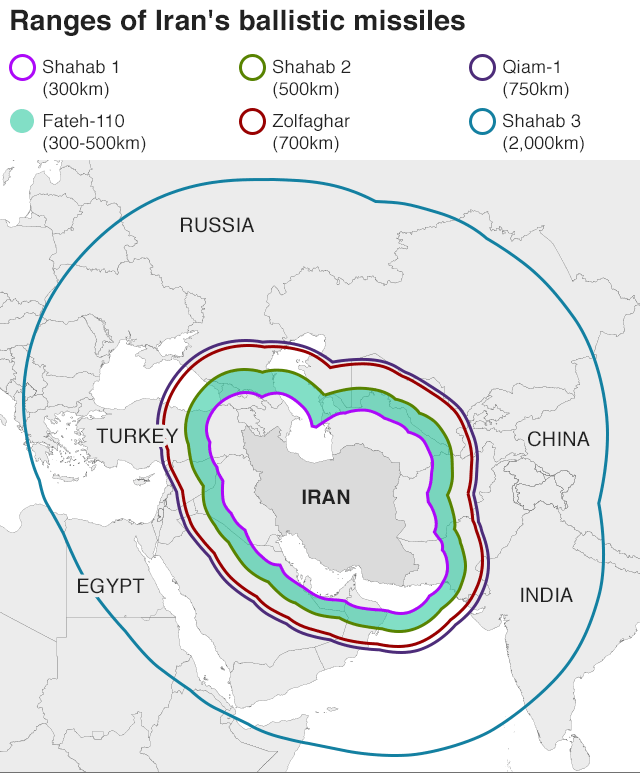
According to the Center for Strategic and International Studies, Iran possesses missile systems that have the range to reach Israel. These include the Sejjil and Ghadr, each capable of reaching around 2,000 kilometres; the Emad with a range of roughly 1,700 kilometres; the Shahab-3 at 1,300 kilometres; the Khorramshahr with a similar 2,000-kilometre reach; and the Hoveyzeh cruise missile with a range of around 1,350 kilometres. Much of this arsenal is stored in hardened underground facilities, the so-called “missile cities” that Iranian media frequently showcase.
Iran’s drone programme has also become a significant force multiplier. Systems such as the Shahed loitering munitions are inexpensive yet capable of overwhelming sophisticated air-defence systems when deployed in large numbers. Swarms of low-cost drones can overwhelm sophisticated air-defence systems, forcing defenders to expend interceptors that may cost millions of dollars against targets worth only a fraction of that sum.
Whilst Iran’s strikes have not caused anything close to the damage the US and Israel are causing, Iran’s attacks are designed to achieve political and psychological goals that are measured by demonstrating reach, showing deterrence capability and proving Israel cannot stop every missile. For Iran, even limited damage is a strategic victory. Iran’s air assault success comes from volume, cost asymmetry, improved precision, underground infrastructure, and saturation tactics rather than technological superiority.
Iran’s air assault success comes from volume, cost asymmetry, improved precision, underground infrastructure, and saturation tactics rather than technological superiority.
6. Gulf States Discover the Limits of US Protection – For decades Gulf states have invested billions in US weaponry in exchange for security guarantees. The current conflict has tested those assumptions.
When the Iranian Foreign Minister Abbas Araghchi was asked by NBC Nightly News anchor Tom Llamas why Iran was attacking its neighbours Araghchi explained: “We have not attacked our neighbors. We have not attacked Muslim countries. We have attacked American targets and American bases, American installations, which are unfortunately located in the soils of our neighbors.”
Drones and cruise missiles hit Saudi Aramco facilities at bqaiq and Khurais cutting about 5% of global oil supply. Whilst the Ras Tanura refinery was targeted and was stopped by interceptors but debris caused fires. In the UAE Iran targeted the Al Dhafra Air Base, a major US base and the Al Minhad Air Base. The missiles were intercepted, but debris caused civilian damage and casualties. In Qatar and Kuwait Iran also targeted radar systems and US military facilities.
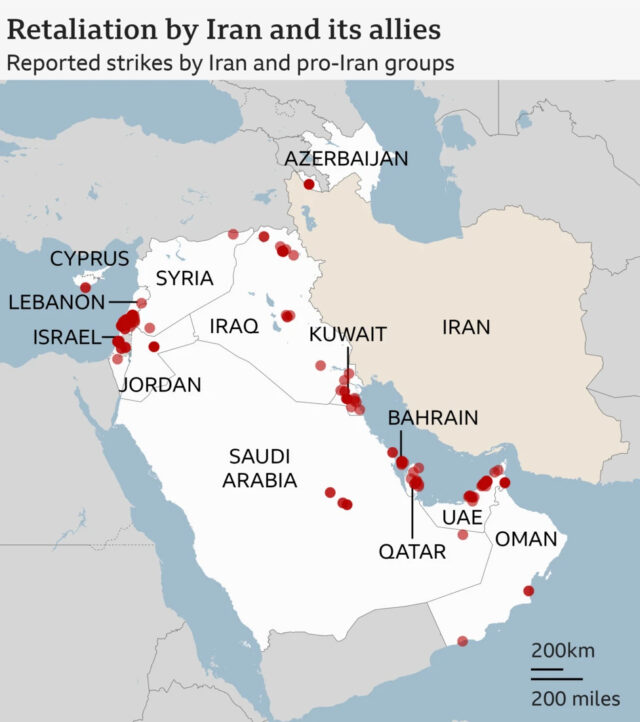
Iran has been successful as many of its weapons fly very low to the ground, which radar struggles to detect. The Abqaiq oil attack used low-flying drones and cruise missiles that evaded radar coverage.
Iran has been launching hundreds of drones and dozens of missiles and any defence systems have limited interceptors. Recent attacks over the Gulf involved over 1,400 drones and 380 missiles, eventually some weapons get through simply because defenders run out of interceptors. This is why the Gulf states have been complaining about declining interceptors.
All of this has been possible as Iran deliberately attacked the radars that guide missile defences. Damage to radar sites in the Gulf weakened the detection network, as without radar tracking, interceptors cannot engage targets.
Iran has successfully raised the economic and political cost of war for Washington and Israel by targeting economic and critical military and civilian infrastructure through an air assault strategy that relies on volume, cost asymmetry, underground infrastructure and saturation tactics.
Iran has successfully raised the economic and political cost of war for Washington and Israel by targeting economic and critical military and civilian infrastructure through an air assault strategy that relies on volume, cost asymmetry, underground infrastructure and saturation tactics
By striking radar installations and overwhelming interceptor systems, Iran has raised the economic and political cost of the war for both Washington and its regional partners. It’s no wonder Gulf officials are going on record that they feel abandoned by the US who shifted its defence focus away from Gulf partners in order to protect Israel.
7. The Strait of Hormuz: Iran’s Strategic Trump Card – On 2 March 2026, Iran declared the Strait of Hormuz closed. This narrow waterway is one of the most critical energy chokepoints in the world. Roughly one-third of global seaborne oil exports pass through the strait. The waterway is only about 21 miles wide at its narrowest point and lies between Iran and Oman. It serves as the main export route for oil from Bahrain, Iran, Iraq, Kuwait, Qatar, Saudi Arabia and the UAE.
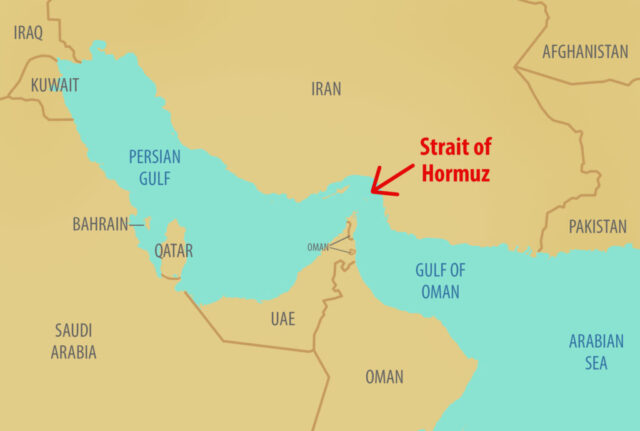
This route is also the most efficient and cost-effective route through which producers can transport their oil to consumers in East Asia. Any disruption to shipping immediately affects global energy markets. Oil prices began rising within days of Iran’s announcement.
Beyond oil, the strait also carries petrochemicals, fertilisers and other critical commodities. Even temporary disruption can cause major supply-chain shocks. The Gulf nations export oil and import food, the IMF estimates that even a 10% rise in energy prices increases inflation and reduces economic growth globally.
Closing the Strait of Hormuz is therefore one of Iran’s most powerful geopolitical weapons — but also its most dangerous. A prolonged closure could trigger direct US military intervention.
8. Opening the Hornet’s Nest – In all of America’s wars in the 21st century she made use of numerous proxy groups and regional nations in order to emerge victorious. In Iraq and Afghanistan this became critical as the US got bogged down in decades long occupations. In Iraq the US organised, armed and funded the Kurds who eventually got a semi-autonomous region in northern Iraq. In Afghanistan the US invasion was through the Northern Alliance who helped the US overthrow the Taliban. In Syria the US backed a number of groups who entered Syria when the uprising began during the Arab Spring.
US announcements that they are in talks with the Kurds of Iran in order to arm them so they can lead an insurgency against Tehran is an ominous sign of things to come.
Iran’s population is highly diverse with nearly 50% of Iran being Persian and with the remainder made up of minorities. Azerbaijani’s constitute 24% of Iran’s population and reside mostly in Iran’s North-West region on the border with Azerbaijan. The Azheri’s have separatist movement in the Ardabil province who want to join with Azerbaijan. The Kurds constitute 10% of Iran’s population and have for long been mistreated by Tehran. Masah Amini who died in police custody in 2022 was Kurdish. 10% of Iran’s population is sunni with the largest amongst being the Bolochi’s who reside in the Sistan-Baluchistan region in Iran’s South-East next to Pakistan. This restive area has for long had armed separatist movements, which has caused instability in the region and great mistrust with Tehran. The Arabs constitute 5% of Iran’s population and reside in Iran’s oil rich region of Khuzestan.
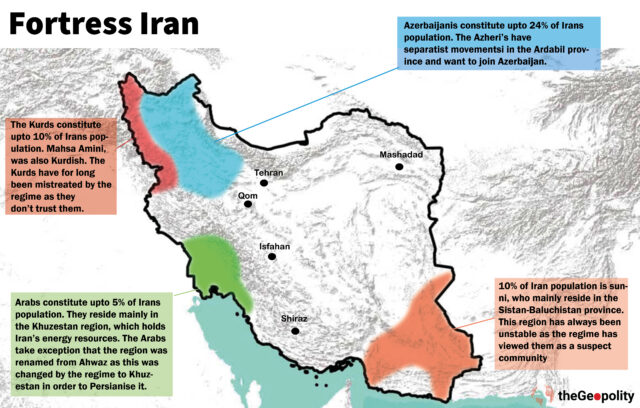
There are plenty of factions who do not like the regime in Tehran; many of Iran’s regions have also experienced tensions with the central government. External support for separatist movements could therefore create internal instability for Tehran.
However, such strategies carry significant risks. Proxy conflicts often produce long and unpredictable wars, as seen in Syria.
9. Where are China and Russia? – Despite rhetoric about a strategic axis between Iran, Russia and China, both powers have so far limited their support largely to diplomatic statements. After the 12-day war against Iran in June 2025, China offered only diplomatic rhetoric in support of Iran. Similarly, in the Chinese Ministry of Foreign Affairs’ official press conference remarks, the harshest language that the ministry was willing to use was in its condemnation of the assassination of Iran’s supreme leader, Ayatollah Ali Khamenei, rather than of the overall campaign against Iran.
China gets nearly half its oil from the Middle East and maintains relations with all the Gulf states and not just Iran. Whilst China has offered Iran strategic relations and strategic arms
Chinese strategists have watched in horror at Iran’s tendency to negotiate and capitulate to Western demands. As a result China has been more than happy to present Iran as a strategic partner without having to physically deliver.
Russia also condemned the western attack on Iran and called for respecting Iran’s sovereignty. Russia has reportedly provided overt and limited intelligence support to Iran during the current conflict. This reportedly includes information about US military deployments and data on US ships and aircraft in the region. Russia has historically proven an extremely unreliable partner for Iran, this includes at the UN, when sanctions are imposed and in its battles with the US.
The much-discussed anti-Western axis appears, at least for now, to exist more on paper than in practice.
Russia has historically proven an extremely unreliable partner for Iran, this includes at the UN, when sanctions are imposed and in its battles with the US
10. Getting in Bed with the Devil was Always a Strategic Mistake – Despite public portrayals of enmity, the US and Iran have maintained periods of tacit cooperation. In 1979, Washington’s posture during the Iranian Revolution contributed to the clerical leadership consolidating power. President Jimmy Carter later confirmed in his memoirs that he sent a general to ensure the Iranian military preserved equipment and infrastructure during the upheaval rather than intervening decisively.
In 1981, the US supplied Iran with spare parts and military equipment after Iraq invaded. Following the US invasion of Afghanistan in 2001, Iran secured northern Afghanistan, enabling US forces to concentrate on insurgent strongholds in the south. Tehran allowed humanitarian transit through its territory and reportedly shared targeting intelligence.
In Iraq, Iran encouraged its proxies to participate in the US-constructed political process. Since then, pro-Iranian factions have played dominant roles in Baghdad’s political order. Even during the 12-day war with Israel in 2025, communication channels remained open. The US signalled it did not seek full-scale war and reportedly notified Iranian officials of intended strike locations, which were subsequently evacuated. Steve Witkoff informed Iran’s foreign minister of B-2 bombers entering Iranian airspace, describing the operation as a one-off strike. Iran later launched retaliatory strikes on the US Al-Udeid base in Qatar but provided advance warning. President Trump publicly thanked Iran for the notice, stating: “I want to thank Iran for giving us early notice, which made it possible no lives were lost, and nobody was injured.”
In 2015, the two sides agreed to the Joint Comprehensive Plan of Action (JCPOA), under which Iran accepted limits on its nuclear programme in exchange for sanctions relief. After heavy Israeli lobbying, Trump withdrew from the deal in 2018.
Iran is now paying the price for sleeping with the devil
Despite these periods of cooperation, US policy has ultimately shifted toward confrontation. For the US there are no permanent allies and it used Iran in its time of need and when it was in its strategic interests to do so. This now means absolutely nothing to the US who is now hell bent on bringing Iran to its knees. Iran saved the US disaster in Iraq and the US has for long praised Iran’s role in Afghanistan. If Iran did not intervene it’s very likely the US would have bled to death and many of its senior leaders would today likely still be alive. Iran is now paying the price for sleeping with the devil.
11. BONUS – Can Iran win? – Iran is unlikely to “win” this war in the classic sense of defeating the US and Israel outright. A more realistic definition of victory for Tehran would be to preserve the regime, keep its core apparatus intact, avoid strategic collapse, impose enough economic and political costs to make the campaign unsustainable for its enemies, and emerge with a negotiated end-state that leaves Iran still standing and relevant. That matters because the war has already entered its second week, with expanding Israeli strikes, leadership turmoil in Tehran, and widening damage across Iran, with thousands of sites being hit.
So Iran’s best path is not battlefield conquest but strategic denial. It needs to deny Washington and Tel Aviv a clean victory. That means four things at once: keep enough missile and drone capability alive to retain deterrent value, stop internal fragmentation during the leadership transition, avoid actions that trigger a larger anti-Iran coalition, and turn the diplomatic narrative toward illegality, escalation risks, and global economic disruption. Iran cannot match US-Israeli airpower symmetrically; it can only make the war longer, costlier, and politically harder to sustain. European criticism of the war’s legality, alongside Chinese and Russian calls for a ceasefire, shows Tehran already has an opening on the diplomatic front.
Iran can ‘win’ only by not losing decisively. Its best route is survival, calibrated economic leverage, elite cohesion, and diplomatic pressure for a ceasefire on terms that leave the regime intact. If it overreaches militarily, it probably accelerates defeat. If it endures, fragments the coalition against it, and makes the war too expensive and too politically messy for its adversaries, that is the nearest thing available to victory.