


As the US-Israel Alliance war on Iran passes its third week, the resignation of America’s counterterrorism director – Joe Kent has confirmed that pro-Israelis were able to push a war “agenda” on President Trump. The administrations information war has struggled as the war aims are moving further away from being realised and official explanations have become more and more fantastical.
Donald Trump entered politics with no political experience. As a result, he needed to build a base of support as the Republican party didn’t take him seriously. From the start, he relied on white, working-class voters who felt the US system no longer worked for them. Trump presented himself as outside the traditional political spectrum, utilising the racism card as such people for long harboured prejudices against people of colour. Trump presented himself as a political wrecking ball who defends “real Americans” from coastal elites, the media, and global institutions. Trump succeeded in creating a strong base called “MAGA,” an acronym for “Make America Great Again.”
When Trump launched strikes on Iran in June 2025 the lack of cohesion in Trump’s base became clear as many questioned why the US was fighting Israel’s war, ‘America first’ meant ‘America first,’ even before Israel. Whilst others in the MAGA base supported the president’s actions as it aided Israel. What this episode revealed was that the MAGA base is more an emotional coalition built around grievance-based identity politics, distrust of institutions, and who believe in the personal authority of Trump himself.
Trump’s MAGA base constitutes a number of elements who all support him for different reasons and their expectations of him wildly differ. The question thats now emerging is no longer whether MAGA dominates the Republican Party—but whether MAGA can hold itself together under the weight of its contradictions.
Unlike traditional political movements, MAGA was born without a coherent ideological foundation. Instead, it grew out of five core sentiments:
- Economic despair among working-class whites
- Cultural anxiety and demographic fear
- Distrust of institutions and expertise
- Resentment toward globalisation and foreign entanglements
- A longing for a strongman who “fights for us”
These emotions created a durable political identity. Trump did not need policy consistency—he offered validation. In doing so, he built a movement unified not by principles, but by perceived betrayal and collective resentment.
MAGA became an identity, not a platform. And this is precisely why it is fracturing—because identity-based movements fracture when the central figure begins making contradictory decisions.
Evangelical Christians – The evangelical Christian community constitutes about a third of the American population. They are among the staunchest supporters of Israel, due to theological reasons and are among America’s most powerful lobbyists and donors. They believe that the existence of Israel hastens the return of their messiah. Evangelicals were impressed by Trump’s decisions during his first term, such as moving the US embassy to Jerusalem, recognising the annexation of the Golan Heights and his efforts in the Abraham Accords. Nearly 80% of them voted for Trump in the 2024 elections. Trump’s position on Israel is what makes them a major part of the MAGA base.
They believe that the existence of Israel hastens the return of their messiah
Traditional Conservatives – The traditional conservatives have historically been Republican supporters. Traditional conservatives, especially amongst the elderly switched to Trump and believe America first means tariffs, reshoring, scepticism of free trade, hostility to China, and the protection of US manufacturing. Key figures include Peter Navarro, Steve Bannon, JD Vance, and some segments of the Rust Belt electorate. They all believe in the strategic alliance between America and Israel, and they see the relationship as being in America’s interest.
America First (Isolationists) – This segment constitutes those who were won over by Trump’s America first narrative and had lost confidence in the direction of the US. They demanded non-interference in foreign conflicts, refraining from providing aid to other countries, and requiring the president to focus on America’s domestic issues, such as infrastructure and student loans. This younger, more online demographic aligned with Tucker Carlson (who has now turned again Trump), Marjorie Taylor Greene (who has also now fallen out with Trump), Megyn Kelly and libertarian influencers, and new-right personalities. This is the group that is now criticising Donald Trump.
The Alt-Right – This segment is a broad spectrum of people and groups from racist right-wingers, such as the Ku Klux Klan (KKK), neo-Nazis and QAnon. It also includes disaffected right-wing libertarians, anti-vaxxers, “deep state” sceptics, conspiracists and online influencers.
What unites the alt-right is the deep distrust of government, intelligence agencies, media, and corporate elites. Trump’s anti-establishment narrative and support for conspiracies is why they all joined the MAGA base. This segment is smaller than the others, and some of them are anti-Semitic, hate Jews, and demand an end to Jewish influence in American politics.
As Trump’s second term got into full swing his MAGA base appears to be getting further and further away from each other. Trump’s MAGA base is now in the midst of a civil war that has spilled out in the open. There are three issues that are causing the split.
Trump’s MAGA base is now in the midst of a civil war that has spilled out in the open
Immigration – The MAGA constituents have always been divided over immigration. There are two main camps, those that are hardliners who want zero immigration along with lots of deportations. Then there is the second camp who want less immigration and especially an end to illegal immigration, but still believe some legal immigration is necessary for both economic reasons and to protect America’s status as the world’s hegemon.
In the first camp, there are people like Tucker Carlson, who has called for Trump to “shut down all immigration until unity is restored,” as well as the late Charlie Kirk, who was originally in favor of legal immigration, but changed his mind. In the second camp, there are the tech billionaires like Elon Musk and Mark Andre who believe legal immigration is a good way of bringing talent into the US and a key advantage in America’s geopolitical battle against China.
The flash point for this divide has long been the H-1B visa for high-skilled workers, which became a particularly hot topic in December 2024 when Elon Musk came out in favor of it, triggering a furious backlash on Twitter. But Trump reopened the debate again in his interview with Laura Ingram on 12th November 2025. When Trump defended the visa on the grounds that you’ve got to have talent, in an astonishing exchange, Ingram replied by saying that we’ve got plenty of talent in America, to which Trump replied, “No, you don’t.”[3] The US president called his own people talentless and this went down especially badly with MAGA, who generally think that immigration is at best an unsustainable stop gap to America’s economic and demographic shortcomings.
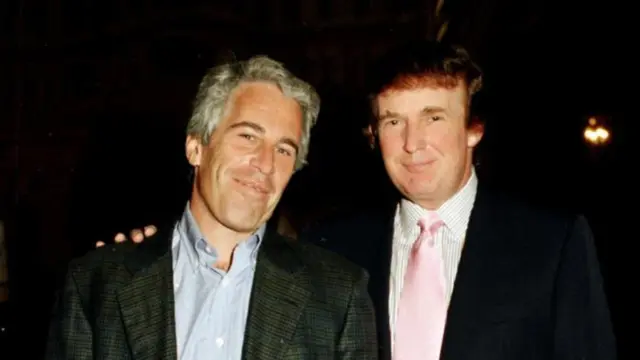 Jeffery Epstein – The Epstein saga has created a huge cleavage in Trump’s MAGA base. Jeffrey Epstein was an American financier and convicted sex offender with connections to the elites in the US. He was arrested on federal charges of sex trafficking minors in July 2019, but died in his cell a month later. His death was officially ruled a suicide, but the circumstances were suspicious as the cameras around Epstein’s cell apparently malfunctioned. The two guards who were supposed to be on suicide watch failed to check his cell and falsified records to imply otherwise, and his lawyer and brother claimed that there was no indication that Epstein was suicidal. This led to widespread suspicion of a cover up.
During the campaign, Trump promised to release the Epstein files. However, despite Trump’s attorney general, Pam Bondi suggesting that Epstein’s client list was on her desk, Trump has instead spent months telling MAGA to look the other way and trying to reframe the story as a Democrat hoax. This didn’t really work, and ever since then, the story has trickled along.
Democrats on the House Oversight Committee forced House Republicans to release tens of thousands of new emails from Epstein, obtained by the committee after it subpoenaed Epstein’s estate in November 2025. In these new emails, Epstein is quoted as saying, “Of course Trump knew about the girls…” and describes Trump as both dangerous and the worst person he knew. Unsurprisingly, this didn’t go down well with MAGA, who hoped Trump would be the one who would bring down the corrupt establishment rather than be part of it. Nor does this story look likely to go away anytime soon.
Foreign policy and Israel – The MAGA base is predicated on the US ending its forever wars and focusing on US domestic issues. But since Trump came to the White House in January 2025, all MAGA has seen is Trump’s adventurous foreign policy. The biggest issue is Israel. Most of MAGA resent Trump’s enthusiastic support for Israel and see the Israel lobby as a core part of the much-hated establishment. This has split the MAGA and was further aggravated by Trump’s focus on Venezuela. The interview between Tucker Carlson and Nick Fuentes, a self-described white nationalist who spends a lot of time railing against organised Jewry shows that MAGA has moved against Israel. The fact that Carlson was willing to sit down with Fuentes and not push back against him shows how far apart MAGA is from Trump.
With the genocide in Gaza going into its third year in October 2025 there has been a shift in Trump’s MAGA base towards support for Israel. According to the Washington Post the percentage of Republicans under the age of 50 who view Israel favourably was 63% in 2022, and now stands at 48% and 52% unfavourable.[4] Many polls throughout 2025 showed declining support for US policy on Israel.
A split has emerged amongst Trump’s supporters regarding his policy towards Israel, particularly his unconditional support for the massacres and starvation taking place in Gaza, which has shocked many. Some, such as Tucker Carlson, raise topics on his platform about the Gaza war and the starvation of people, that many media outlets in the US would never have done in the past.
Trump has anti-Israel supporters as part of his base and with the anti-Israel opinion growing and spreading throughout the US, this will force the hand of Trump. With Trump constantly changing his positions, lying and undertaking contradictory policies, for the first time since its creation, MAGA is no longer a single organism. It is becoming a battlefield of competing visions for America’s political future.