

|
Getting your Trinity Audio player ready...
|
Welcome to The Geopolity’s What We’re Watching (3W), our daily look at the interconnected worlds of Geopolitics, Economics and Energy. Curated from the world’s leading sources of information, our analysis and commentary is designed to help you make sense of the events driving the major developments in the world.
Earlier this week, at 3W we set out our view that the US – Israel Alliance is engaging in negotiations with Iran without sincerity. The objective of the Alliance is not to find a true and lasting agreement with Iran that resolves the main differences between the parties, but to buy time for the preparations of a new phase in the effort to destroy Iran’s ability to be a regional player.
Today, before we enter into our analysis of developments since, we wish to note that it cannot be ruled out that an agreement will eventually be reached. For this to take place, the US must distance itself from Israel. Because the Israeli interest is in preventing a lasting deal. It wants the US to remain militarily engaged in the Middle East, based on Israeli plans. And this requires continued conflict, not peace and stability. Due to the strength of the Israeli Lobby inside the US we see this as an unlikely outcome in the short term, but momentum certainly is building inside the US for the view that time has come for a strategic reset of the US – Israel relation. While not necessarily noticeable in conventional US media channels such as the New York Times, The Wall Street Journal, CNN, CNBC, and such, whose editorial policies remain quite clearly very much aligned with the Israel Lobby, this momentum is quite clearly visible in alternative media such as the Tucker Carlson and Judging Freedom podcasts, and also the work of prominent analysts of international affairs such as John Mearsheimer and Trita Parsi and many others.
If this latter movement continues to grow it will eventually reach the US institutions as well – if it has not already. Some argue that the election of Zahran Mamdani as mayor of New York City is an example of this reaction to the absolute Israeli dominance in US politics over the past years. The recent Republican primaries in the state of Kentucky, where the Israel Lobby stepped in with massive amounts of money to ensure Thomas Massie was defeated by a unquestionable pro-Israel candidate, provides further support to this view that a storm is brewing inside US politics over the subject of Israel.
the US must distance itself from Israel. Because the Israeli interest is in preventing a lasting deal. It wants the US to remain militarily engaged in the Middle East, based on Israeli plans. And this requires continued conflict, not peace and stability
At 3W we see the sudden and aggressive entry by the Zionist billionaire Larry Ellison into the US media area, through his acquisition of Paramount, Warner Brothers and TikTok, as evidence that the Israel Lobby is fully aware of the risk and has a plan to fight back. Recall in this regard Israeli prime minister Netanyahu’s speech from 2025 about how important it will be for Israel to control social media and use it as a “weapon”.
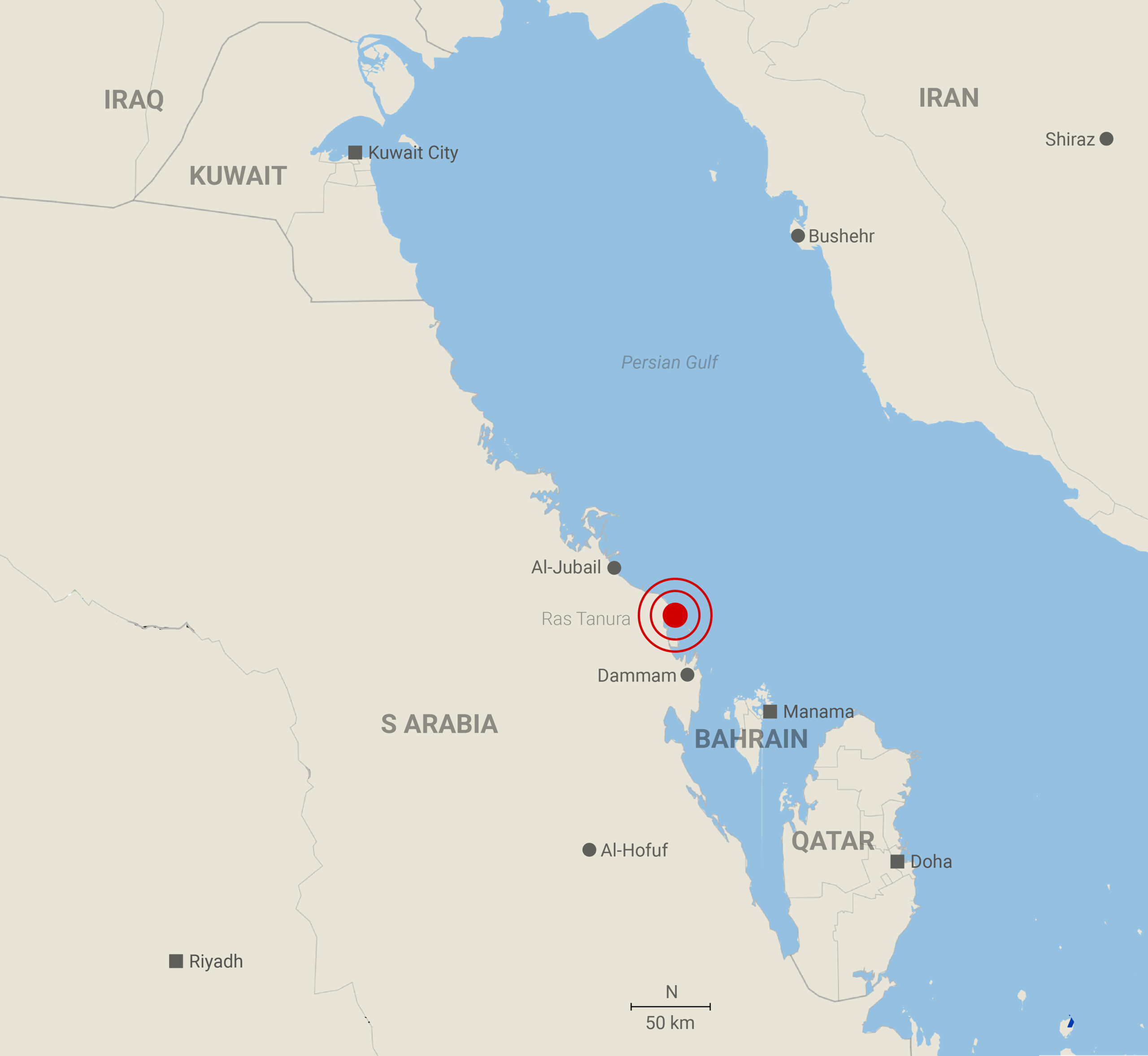
While all this plays out in the background, in a sign that the most recent diplomatic developments have led to some sort of normalcy returning to the Strait of Hormuz, Saudi Aramco resumed oil loading operations at its Ras Tanura terminal in the Gulf after an almost four-month halt, writes The National. Ras Tanura, on Saudi Arabia’s Gulf coast, hosts one of the world’s largest oil export terminals and a major refining facility. The port handles a significant share of Saudi crude exports, with cargoes typically heading to markets in Europe and Asia, including China, Japan and South Korea.
In response to this development oil prices further declined and are now back to the level where they were before the US – Israel Alliance launched its “war of aggression” against Iran, writes The National. Brent dated is now back at $71 per barrel. At 3W we believe this greatly misreads the current situation – it is impossible to factually argue the oil market is as stable and well supplied now as it was before the war, after all, and thus oil prices should be and eventually will again be much higher, in our assessment.
oil prices further declined and are now back to the level where they were before the US – Israel Alliance launched its “war of aggression” against Iran
On Thursday there was a reminder that the war is not yet over. Iran attacked a cargo ship that attempted to pass through the Strait close to the Omani coast, writes The New York Times. The US is pushing for ships to use this “Omani channel”, and provided a naval escort to the cargo ship for this purpose. Iran for that reason warned ships in the area to only use the channel through the Strait that runs to its territorial waters. “This (Omani) route is unacceptable and extremely dangerous,” the Revolutionary Guards’ Navy said early on Thursday in a statement carried by Tasnim, an Iranian news agency tied to the Guards. “We warn all vessels to strictly refrain from any movement outside the designated routes,” it added, warning that action would be taken against vessels that did not heed its instructions. When the US operation then nevertheless went underway, Iran launched drones to attack and damage the cargo ship. After that attack, the US naval operation was halted and shipping through the Omani channel came to a halt again. This development confirms the 3W assessment from Thursday, which is that the US is trying to use the current phase in order to weaken Iran’s control over the Strait, by opening a “secure channel” close to the Omani coast, something which Iran appears well aware of.
US president Trump accused Iran of violating the ceasefire agreement by firing at the cargo ship, writes Bloomberg. Not much later the US military attacked sites on the Iranian coast line, writes Reuters. US Central Command said aircraft struck missile and drone storage locations and coastal radar sites. Iran said a projectile struck the area around a pier in Sirik in southern Iran, and that Iranian naval forces responded by striking US military targets in the region.
Clearly, therefore, the optimism that dominates the oil market at present is unwarranted, we at 3W conclude. And this brings back into focus the main reason why the US – Israel Alliance was forced to go down this path of faking willingness to compromise with Iran – the closure of the Strait of Hormuz is a major threat to the global economy. Global civil unrest hit a six-year high in the second quarter of 2026, as increasing oil prices pushed up the cost of living, writes Reuters. In particular protests are surging in developing markets, it notes. Kenya to Indonesia and Bolivia have seen protests in recent weeks linked to energy price hikes and the rising cost of living. India, Mexico, Brazil, Argentina, Colombia and Turkey are seen as among those among those most at risk of civil unrest in the near future as impact of the War on Iran ripples through the global economy. Ethiopia, Tanzania, Rwanda, the Democratic Republic of Congo, Nigeria and South Africa are also seen as countries to watch.