
At the end of a recent three-day conference in Ghana, African and Caribbean countries called for a formal apology and reparations from countries that benefited from the transatlantic slave trade. This follows a landmark UN resolution in March 2026 which recognised transatlantic slavery as the “gravest crime against humanity”. This article is adapted from a forthcoming geopolity booklet – ‘the Geopolitics of Europe.’ The booklet is part of a series of 7 booklets looking at the geopolitics of the world – Europe, Africa, the Middle East, Asia pacific, South Asia, Central Asia and the America’s. The series will be published in 2027.
Slavery was a central component of many ancient civilisations, including those of Europe. At its peak, between 10 and 30 per cent of the population in parts of the Roman world were enslaved. Following the fall of the Western Roman Empire in the 5th century, large-scale chattel slavery declined in Western Europe and was gradually replaced by serfdom, a semi-free labour system that tied peasants to the land.
The modern era of slavery emerged during Europe’s age of exploration. In the 15th century, Portugal and Spain established sugar plantations on Atlantic islands before expanding into the Americas. To make these colonies profitable, indigenous populations were enslaved and, increasingly, labour was imported from Africa.
Millions of Africans were kidnapped from their homes, transported to slave forts along the African coast, and crammed into the holds of ships bound for the Americas. English privateers such as John Hawkins were among the first Britons to profit from this trade in the 1560s. By the late 17th century, Britain had overtaken Portugal, Spain and the Netherlands to become the dominant slave-trading power.
Tens of thousands of ships undertook the infamous Middle Passage, the Atlantic crossing that transformed human beings into commodities. During the 18th century alone, British vessels transported roughly half of all Africans carried into slavery across the Atlantic.
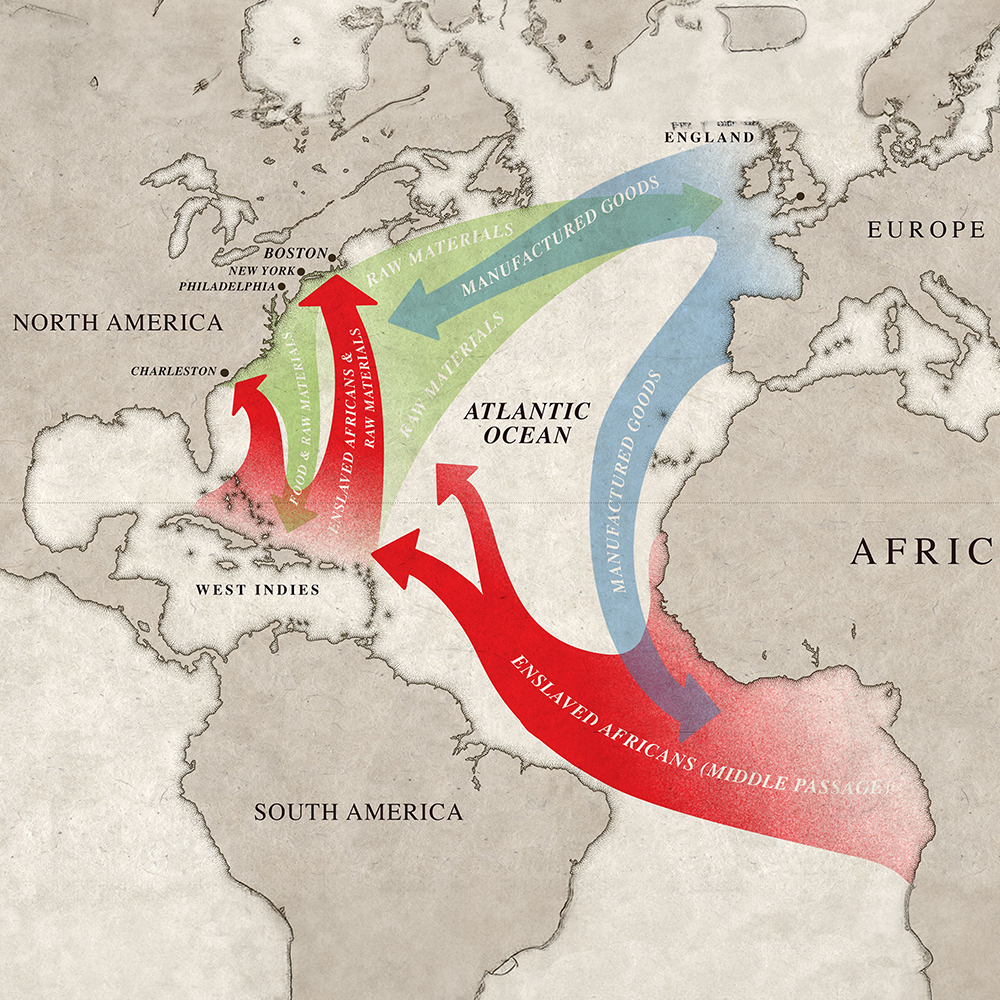 In the Caribbean, British merchants and plantation owners established one of history’s first large-scale slave economies. Slavery had existed throughout human history, but never before had entire colonial economies been organised around slave labour for industrial-scale production. Beginning in Barbados in 1627, enslaved Africans were forced to cultivate sugar cane under brutal conditions. They worked in chain gangs and around-the-clock production systems that would later spread throughout the Caribbean, South America and the southern United States.
Violence, coercion and terror were used to force enslaved workers to cut, mill, boil and refine sugar for export to Europe. This formed part of the lucrative triangular trade linking Britain, West Africa and the Americas. The products of slave labour – sugar, tobacco and later cotton – generated immense wealth and helped lay the foundations of modern capitalism.
Much of Britain’s elite benefited directly or indirectly from slavery. Wealth derived from the trade flowed into banks, insurance companies, landed estates and political institutions. Barclays, Lloyd’s of London, the Church of England and many aristocratic families all had links to slavery. British ships carried manufactured goods to Africa, exchanged them for enslaved people, transported those captives to the Americas and returned with plantation products to sell in Europe.
Slavery had existed throughout human history, but never before had entire colonial economies been organised around slave labour for industrial-scale production
The profits generated by this system left a lasting mark on Britain. Streets, buildings and public institutions were named after slave owners and merchants. Colston Hall in Bristol, Buchanan Street in Glasgow and London’s West India Docks all reflected fortunes accumulated through slavery. These profits, combined with Britain’s growing maritime trade, helped provide the capital that financed the Industrial Revolution.
Industrialisation ultimately brought an end to slavery, though not solely for humanitarian reasons. Enlightenment ideas about liberty, the French Revolution, growing abolitionist movements and repeated slave uprisings all contributed to changing attitudes. However, economic factors were also critical.
Slavery had been central to pre-industrial economies, but the technologies and production methods emerging during the Industrial Revolution transformed economic incentives. Factories powered by machinery and fossil fuels proved more productive and efficient than plantation systems reliant on forced labour. Slaves were expensive to purchase and maintain, and their productivity was limited compared to industrial production methods. As Britain industrialised, slavery increasingly appeared economically outdated.
As Britain industrialised, slavery increasingly appeared economically outdated
This economic transformation helps explain why Britain became both the first industrial power and the first major state to abolish slavery. The wealth generated through empire and the slave trade helped finance industrialisation, while industrialisation itself reduced Britain’s dependence on slavery. Having completed this transition, Britain abolished slavery throughout most of its empire with the Slavery Abolition Act of 1833 and subsequently promoted abolition abroad, often using the issue to exert moral and political pressure on rival powers.
Yet abolition carried a final injustice.
To compensate slave owners for the loss of their “property”, the British government borrowed £20 million – an enormous sum at the time – from the Rothschild banking family. The compensation package represented roughly 40 per cent of government expenditure and around 5 per cent of Britain’s GDP.
The debt incurred to compensate slave owners was not fully repaid by British taxpayers until 2015.
Not a single penny was paid to the men, women and children who had endured slavery.
It is this fact that lies at the heart of today’s reparations debate. While governments across Europe and North America argue that present generations cannot be held responsible for historical crimes, supporters of reparations point out that states were willing to compensate those who profited from slavery while offering nothing to those who suffered under it.
Nearly two centuries after abolition, that unresolved question continues to shape political debate from the Caribbean to Africa and beyond.