

|
Getting your Trinity Audio player ready...
|
Welcome to The Geopolity’s What We’re Watching (3W), our daily look at the interconnected worlds of Geopolitics, Economics and Energy. Curated from the world’s leading sources of information, our analysis and commentary is designed to help you make sense of the events driving the major developments in the world.
In this roundup, we take a closer look at the US offer of a peace deal to Iran.
The US has sent Iran a 15-point plan to end the war, writes The New York Times. Pakistan’s army chief, Field Marshal Syed Asim Munir, has delivered the proposal to Iran, while Egypt and Turkey are encouraging the Iranians to start negotiations.
The proposal aligns with Israel’s position, and therefore includes many of the same demands the US made during the last round of nuclear talks in Geneva, writes Axios. According to the US, Iran already agreed to the key US – Israel Alliance demands, and has agreed to give up its 450kg stockpile of 60%-enriched uranium, accept enhanced UN inspections and monitoring of its nuclear sites, limit the range of its ballistic missiles, and cut back on support for proxies.
In return for meeting the Alliance demands, Iran would receive sanctions relief and civilian nuclear cooperation, writes The Associated Press.
The aim of the intermediary parties, in particular Pakistan, is now to organize a meeting between representatives of the US and Iran, writes The Wall Street Journal. Ideally the meeting should be this week still, The Wall Street Journal writes separately.
The proposal aligns with Israel’s position, and therefore includes many of the same demands the US made during the last round of nuclear talks in Geneva
In the 3W view, the US proposal would make sense if the Alliance was in a winning situation vis-à-vis Iran. Our assessment is, however, that it is not. In particular Iran’s closure of the Strait of Hormuz, for which we do not see a military solution that the Alliance could execute, has put the US in a stranglehold position. Most likely, therefore, the US is making this diplomatic push from a position of weakness, we believe. It needs an offramp, desperately, to prevent its war from destroying the global economy – something US domestic voters and the world at large would hold president Trump personally responsible for.
Iran should be expected to demand significant concessions from the US, therefore. And indeed, this appears to be the case. It demands the closure of all American bases in the Gulf, reparations for the attacks on Iran, permission for Iran to tax traffic through the Strait of Hormuz, an end to Israel’s attacks on Hezbollah in Lebanon, and immediate lifting of all sanctions, writes The Wall Street Journal.
If our 3W assessment is correct, that would explain why Israel is not happy with the US efforts to find a negotiated settlement. Because as we document earlier in our analyses of the US – Iran Alliance War on Iran, it wants the war to continue until Iran is devastated – and ideally the Gulf states as well. In response to the news, therefore, Israel’s prime minister Benjamin Netanyahu already indicated that he would not consider himself bound to any agreement, if it does not fully give Israel everything that it wants. “President Trump believes there is an opportunity to leverage the tremendous achievements we have reached alongside the US military to realise the goals of the war through an agreement, an agreement that will safeguard our vital interests,” Netayanhu said according to The National, adding, “We will safeguard our vital interests under all circumstances”.
According to The New York Times and The Wall Street Journal, Saudi Arabia’s de factor ruler Mohammed Bin Salman is aligned with Israel that now is not the time for negotiations, and that the War on Iran should continue. MBS has argued that the US should consider putting troops in Iran to seize energy infrastructure and force the government out of power. Saudi officials rejected this assertion, however. “The kingdom of Saudi Arabia has always supported a peaceful resolution to this conflict, even before it began,” the Saudi government said in a statement, noting that officials “remain in close contact with the Trump administration and our commitment remains unchanged.” Interestingly, Reuters asserts the exact opposite of NYT and WSJ. Trump’s abrupt pause in his showdown with Iran followed warnings from Gulf states that the war was veering into a far more perilous phase and rising fears among officials in the region that Washington had misjudged Tehran’s readiness to escalate, it says, and that US strikes on Iran’s power plants would trigger Iranian retaliation on their own vital energy and desalination facilities.
the US proposal would make sense if the Alliance was in a winning situation vis-à-vis Iran. Our assessment is, however, that it is not
Our 3W assessment is that the latter assertion is more likely. We do not hold the ruling regimes in the Gulf in very high regard, but they are not completely stupid either. Possibly, Israel pushed for the assertion by NYT and WSJ in an attempt to trick the Iranian regime into an attack on Saudi, as a result of which the war would be escalated and the negotiations would be stopped.
At the same time, it should be recognized that there is a possibility that the entire diplomatic process is another trick by the US – Israel Alliance. Iranian officials have told the countries trying to mediate peace talks with the US – Pakistan, Egypt and Turkey – that they have now been tricked twice by President Trump and “we don’t want to be fooled again,” writes Axios.
There is significant support for this assessment. For example, at the same time as offering the peace proposal, the US ordered about 2,000 soldiers from the Army’s 82nd Airborne Division to begin moving to the Middle East, writes The New York Times. The 2,500 Marines from the 31st Expeditionary Unit that were sent to the region from Japan last week are scheduled to arrive in the Middle East later this week, NYT adds.
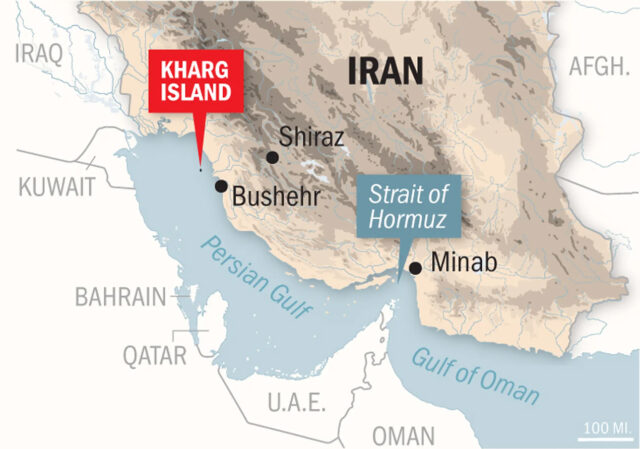
What this all means is that uncertainty remains. It is possible that the US is desperate for an offramp, and is therefore not only willing to compromise with Iran, but also willing to force Israel to accept the compromise solution. A second option is that while the US is willing to compromise, Israel undermines the deal – either through its political and economic agents in the US, or through a military operation in the Gulf. A third option is that the negotiations are again designed to lull Iran into a sense of security, as the US – Israel Alliance prepare for execution of a limited ground operation in Iran that turns the tables on the current battlefield. At 3W we have no idea what this operation could be, though. The discussed occupation of Kharg, or occupation of Iran broader coastline, or the capture destruction of the highly enriched uranium we do not see as realistic options.
So although we at 3W are skeptical, the financial markets are more optimistic a deal will be reached. Based on the rumors regarding the peace deal, oil prices have already dropped to below $100 per barrel, writes The National. Brent crude was down 5 percent to $99.16 a barrel during early morning trading on Wednesday, while WTI traded 4 percent lower at $88.41 per barrel.
But, close to one month into the war, the physical energy supply disruptions will now start to bite, says energy-expert Peter Tertzakian, speaking to The Financial Post. Crude and natural gas shipped from the Gulf region requires 20 to 30 days to arrive at its destination in (primarily) Asia and Europe, meaning that the last vessels that went through the Strait of Hormuz before Iran closed it are now arriving at their destinations. The physical shortage of crude oil and natural will therefore start to build now. This will drive energy rationing, which will have far reaching, negative impacts on the global economy.
So, a peace agreement is needed urgently, writes The Wall Street Journal. Already, what little oil can get out of the Arabian Gulf via Oman is selling at $160 per barrel. As the supply is limited, demand for actual delivered heavy sour crudes produced elsewhere is also pushing up fast. “The disruption is so massive, we will turn into full panic mode if this situation is not resolved rather quickly,” it quotes one energy analyst as saying.
Shell CEO Wael Sawan agrees and said countries might need to start reducing their consumption of oil and gas as the war in the Gulf starts to create “serious physical strains” across energy markets, writes The Financial Times. “It’s a ripple effect . . . South Asia first gets that brunt, that’s moved to south-east Asia, north-east Asia and then more so into Europe as we get into April,” he said, speaking at the CERAWeek oil and gas conference. FT notes that countries such as Canada and Norway will greatly benefit from the situation, as energy consumers around the world will turn to them to offset the loss of the Arabian Gulf barrels.
Australia is among the first developed countries affected by actual energy shortages. It relies heavily on diesel to power its mining and farming sectors, writes Nikkei Asia, and smaller miners and farmers are already facing tough decisions about whether to scale back operations due to a lack of available diesel. Australia’s farmers face a double hit as the Gulf is also a major nitrogen fertilizer production and transit hub. With supply constrained by the conflict, prices have soared. This is forcing farmers to scale back plantings, meaning fewer crops and ultimately higher prices.