

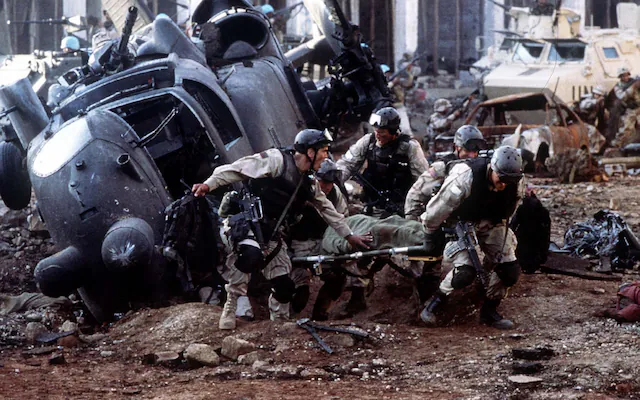
On Christmas day the US bombed the African nation of Somalia for the 117th time in 2025. In just the first month of 2026, the US has bombed Somalia 27 times. For a President who promised to reduce US global military action and America’s forever wars this has clearly not been the case. For many, the image of US choppers in mangled metal in Mogadishu brought ‘black hawk down’ into global political jargon. America’s disastrous intervention in the 1990s is a distant memory today.
The US has been involved for over three decades in Somalia, from backing a dictator to ‘humanitarian’ intervention’ and failed state-building to the current “war on terror” campaign. It’s the war many have not heard about as it gets little global media attention. It is just one of the many forever wars the US remains involved in, despite President Trump’s promise to end such wars.
The Gateway to Africa
Somalia, much like the rest of Africa was carved up by the Europeans in the 1884 Berlin conference. Britain would come to control the north of Somalia, as she wanted access to the Red Sea and Italy came to control South Somalia. In 1960 both North and South Somalia gained independence as much of the continent was going through decolonisation. The unification of both the North and South of Somalia became the Somali Republic on 1st July 1960.
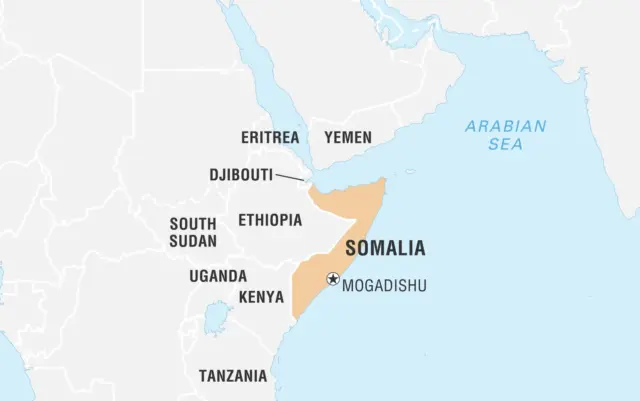
Somalia has always been strategically placed due to its location on the coastlines of the Red sea and the Gulf of Aden, Bab el-Mandeb and the Arabian sea. This makes Somalia the gateway to Southern Africa and the Arabian Peninsula. Somalia in time would also come to possess significant resources from Uranium, oil and gas.
In 1969, the sitting president Abdirashid Ali Shermarke was shot dead by one of his own bodyguards. His assassination was quickly followed by a military coup by Major General Mohamed Siad Barre who established the Somali Democratic Republic. He established his party as the sole political party, abolished the assembly and constitution and centralised the state. He ruled with an iron fist and was eventually backed by the US.
Washington provided hundreds of millions of dollars in military aid and economic assistance throughout the 1980s. As a result, the US gained access to Somali ports and airfields for Cold War logistics and surveillance. Barre’s regime became a key anti-Soviet bulwark in East Africa — despite growing human rights abuses.
As the 1980’s proceeded Somalia was rotting from within. Barre relied on his own Marehan clan and allied groups for power. This alienated rival clans, especially the Isaaq in the north and the Hawiye in the central-south regions. His regime became brutally repressive to maintain rule, mass arrests, torture, and killing of dissidents became widespread. In the north, the Somali National Movement (SNM) led an uprising, which Barre crushed with extreme force — bombing Hargeisa and Burao in 1988. Thousands were killed; Amnesty International called it one of the worst atrocities in Africa that decade.
Alongside political problems the economic situation worsened with corruption and mismanagement destroying the economy. State socialism collapsed after Soviet withdrawal and despite US aid propping up the regime, none of this could fix the structural decay. Severe droughts and famine (1980–81, 1984–85) deepened resentment. By the late 1980s, inflation, unemployment, and unpaid soldiers turned the army against Barre.
With the Cold War nearing its end by the late 1980s, Somalia’s strategic importance for the US plummeted. The US cut aid and with no Soviet or American patron, Barre lost the external funding and weapons that had sustained his regime.
By the 1990s multiple rebellions were in full swing in the form of clan-based insurgent movements. These groups coordinated offensives on the capital Mogadishu. There were even mutinies within the army. Barre’s forces bombed Mogadishu indiscriminately, killing thousands and the US and international community evacuated their embassies. In January 1991, rebels entered Mogadishu and Barre fled the capital. The central government disintegrated, and Somalia descended into civil war and warlordism.
The subsequent loss of the centralised government led many to call Somalia a failed state, or even a collapsed one. However, the collapse of the Somali state was a blessing for its citizens, resulting in improved welfare indicators compared to life under Barre’s rule.
Washington provided hundreds of millions of dollars in military aid and economic assistance throughout the 1980s. As a result, the US gained access to Somali ports and airfields for Cold War logistics and surveillance. Barre’s regime became a key anti-Soviet bulwark in East Africa — despite growing human rights abuses.
Black Hawk Down
In 1992 the US intervened under the umbrella of the UN, calling its intervention a humanitarian one. President George H.W. Bush sent in 25,000 US troops to protect humanitarian operations. At first, it worked. By early 1993, famine deaths dropped sharply and aid reached millions. Then, Washington changed the mission to the infamous nation building.
After Bush left office, Bill Clinton inherited the mission. He expanded the mission mandate from humanitarian to nation building. Which meant disarming the militias, rebuilding the Somali state, and enforcing peace among warlords. This turned a humanitarian operation into a military-political occupation — in a country that had no government, no army, and no unified identity. The US went from relief provider to combatant in Somalia’s clan war. The US forces tried to disarm factions by force, and this only made the US the enemy of the clans and by extension, a target.
In the battle for Mogadishu in 1993 the US launched a mission to capture the top lieutenants of the Habr Gedir clan using elite Rangers and Delta Force. The mission went catastrophically wrong when two Black Hawk helicopters were shot down and 18 American soldiers were killed, and dozens wounded. Hundreds of Somalis — fighters and civilians — also died. Graphic footage of dead US soldiers dragged through Mogadishu’s streets was broadcast worldwide. This single battle destroyed US public and political support for the mission. The US failed to bring any stability and withdrew humiliated in 1995.
Decade of Collapse – 1995-2005
After the US withdrawal in 1995 until the emergence of the Islamic Courts Union (ICU) in 2006, Somalia went through anarchy, warlord rule, failed peace efforts, and fragmented attempts at state reconstruction.
There was no central government after the US left humiliated. Somalia broke into fiefdoms run by clan warlords, each controlling territory, ports, and checkpoints for revenue. The capital Mogadishu was divided between rival factions of the Hawiye clan — particularly Ali Mahdi Mohamed (recognized by the UN) and General Mohamed Farah Aideed. Both claimed to be president; neither controlled more than a few streets. For most Somalis, they suffered from famine, banditry, and lawlessness.
From 1997 a string of failed peace initiatives, led mostly by neighbouring states and the UN took place. By early 2000, Somalia existed only as a name. There was no functioning central state, no national army, and no rule of law. In late 2000 the Transitional National Government (TNG) emerged as a new reconciliation effort took place in Arta, Djibouti. It was headed by Abdiqasim Salad Hassan, a former Barre official and included civil society, Islamic groups and clan leaders. The international community recognised it as Somalia’s government. But it failed quickly as it only controlled parts of Mogadishu — the rest was still in the hands of warlords, who saw it as an attempt by old regime cronies to regain power. Somalia came to have two competing governments — one internationally recognised but with little control and the other being the warlords with their clans who were militarily powerful but fragmented.
After the TNG collapsed, another peace conference in Kenya produced the Transitional Federal Government (TFG) in 2004. The TFG was backed by Ethiopia but distrusted by many in Somalia. It was based in Kenya, later moving to the Somali town of Baidoa, since Mogadishu was too dangerous.
Somalia broke into fiefdoms run by clan warlords, each controlling territory, ports, and checkpoints for revenue. The capital Mogadishu was divided between rival factions of the Hawiye clan
The Islamic Courts Union (ICU)
By 2005 Somalia had suffered from a decade of crisis due to foreign interference and failed warlord wars and rule. This led to the emergence of a grassroots alternative to warlord rule. As the warlords’ control disintegrated, local communities turned to Islamic shari’ah courts to provide basic order, justice, and security. These courts were clan-based religious institutions that focused on stability and crime control. They banned looting, reopened markets, and offered dispute resolution where warlords offered only chaos.
These local courts began uniting under a common umbrella — the Islamic Courts Union (ICU), led by Sheikh Sharif Sheikh Ahmed and Sheikh Hassan Dahir Aweys. By mid-2006, the ICU had defeated US-backed warlords and captured Mogadishu. For the first time since 1991, the capital experienced relative peace — checkpoints removed, trade resumed, and aid returned. Many Somalis welcomed the ICU as a law-and-order alternative to 15 years of chaos. The ICU brought some degree of law and order by implementing some parts of the Shari’ah.
The US Intervenes Again
As the ICU was not western, UN or US backed, this became a problem for the US. The US began to build the narrative after 9/11 that Somalia was part of its war on terror. The US accused the ICU of providing sanctuary to al-Qaeda.
The US proceeded to pressure Ethiopia to invade Somalia and overthrow the ICU government. The US provided logistical, and intelligence support to the 50,000 Ethiopian invasion force. Ethiopia officially intervened to back the Transitional Federal Government (TFG). They drove the ICU out of Mogadishu and re-installed the TFG with US military backing. Ethiopia left after three years of occupation. Whilst the ICU was gone, Ethiopia originally believed their invasion would be an easy victory. Its forces got bogged down in an insurgency and saw their departure as a withdrawal rather than a victory.
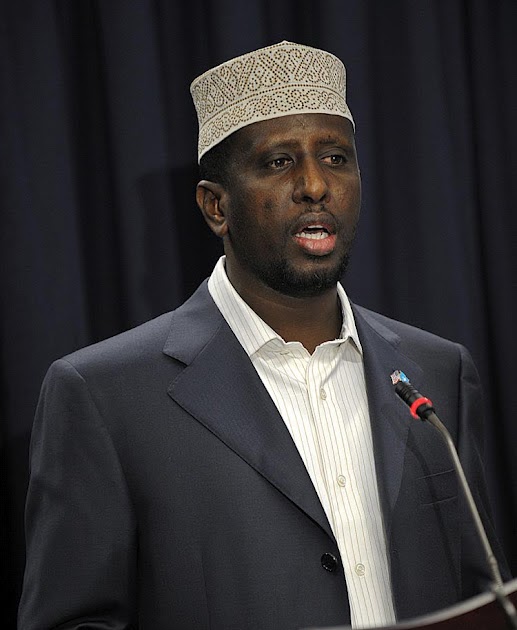
The overthrow of the ICU in 2006 led to the organisation splitting apart. The ICU splintered into several different factions. Some of the more radical elements, including Al-Shabaab, regrouped to continue their insurgency against the TFG and oppose the Ethiopian military’s presence in Somalia. The leader of the ICU – Sheikh Sharif Ahmed went into exile, where he began negotiations with the TFG and signed a pact in 2008. He went on to become the Somali president from 2009-2012. Al-Shabaab continued with their attacks and launched a full-scale insurgency.
To counter al-Shabaab, the African Union deployed the African Union Mission in Somalia (AMISOM). The TFG, followed by a number of western supported transitional governments, attempted elections, international recognition efforts and the rebuilding of institutions. Despite this, governance in many areas remained weak; al-Shabaab retained control over large rural territories and continued its attacks and bombings.
A History of Failure
For the US, Somalia is a strategic territory that must firmly remain within America’s sphere of control. Due to this the US has implemented a decades long disastrous strategy of supporting clans to power, despite them having little popular support. The US intervened in 1992 only to face defeat by the clans who defended their country against foreign interference. The US then resorted to finance and aid to maintain its position, but the country descended into chaos.
The US then watched in horror when the Islamic Courts Union, an indigenous movement successfully ruled over most of the country and was seen as the solution to the country’s ills. The US then pushed Ethiopia to invade the country, who only made things worse when they overthrew the ICU, but themselves got embroiled in an insurgency.
Ever since, the US has continued to support corrupt tribes into transitional and temporary government in Mogadishu, despite them controlling little territory. As a result, the US has had to rely on regional nations to do the heavy lifting whilst the US provides aid and intelligence. Turkey has come to play a central role in this, it maintains Mogadishu’s government acting as the most important security and diplomatic partner. Turkey has its biggest embassy and military training centre, Camp TURKSOM, in Mogadishu.
For the US, its Somalia strategy rests on two directions. The first, a reduction of US Embassy staff in Mogadishu, letting the central government run the country on its own feet. The fear is that this would hasten its collapse. The second is staying the course and increasing military action such as drone strikes against al-Shabaab.
The US military strategy has been a complete failure for three decades. It’s something President Trump wishes to continue. Somalia is now officially America’s longest war, the war that’s undeclared, and one most of the world doesn’t even hear about.