


In international diplomacy few concepts are more fundamental than those relating to alliances. The essential truth, too often ignored, is that an ally is not necessarily a friend. An alliance is merely a convergence of interests on specific matters; beyond these narrow issues, allies are often competitors and sometimes enemies —especially where power is symmetrical or infused with memories of Empire.
When Henry Kissinger warned that to be America’s enemy was dangerous but to be its ally was fatal, European leaders were naïve. They assumed that shared history, values and cultural affinity accorded them privileged status in Washington’s calculus. They were mistaken. While hostility between great powers carries risks, its parameters are clear: adversaries enjoy strategic autonomy. Allies, by contrast, are constrained by commitments that the United States itself interprets flexibly. Washington extracts concessions—political, economic and strategic—from friend and foe alike. It perceives no binary between war and peace, but rather a continuum on which coercion and cooperation coexist.
Europe holds particular interest for the United States. China’s strategic horizons remain largely confined to its periphery. The major European powers remain colonial —Britain, France, Germany and Italy—still nurture a vestigial sense of imperial entitlement and harbour resentment at the loss of influence after 1945, when the US and USSR dismantled their colonial enterprises. They to this day still feel an “benevolent” entitlement to interfere in the affairs of their former colonies much like a parent feels entitled to a degree of involvement in the affairs of their offspring. Thus, although nominally allies, Europe and America are also competitors—albeit unequally matched. Given the opportunity, Europeans would dearly love to throw off the constraints placed upon them by the US and supplant US hegemony over the world and resurrect their empires in one form or another.
When Henry Kissinger warned that to be America’s enemy was dangerous but to be its ally was fatal, European leaders were naïve
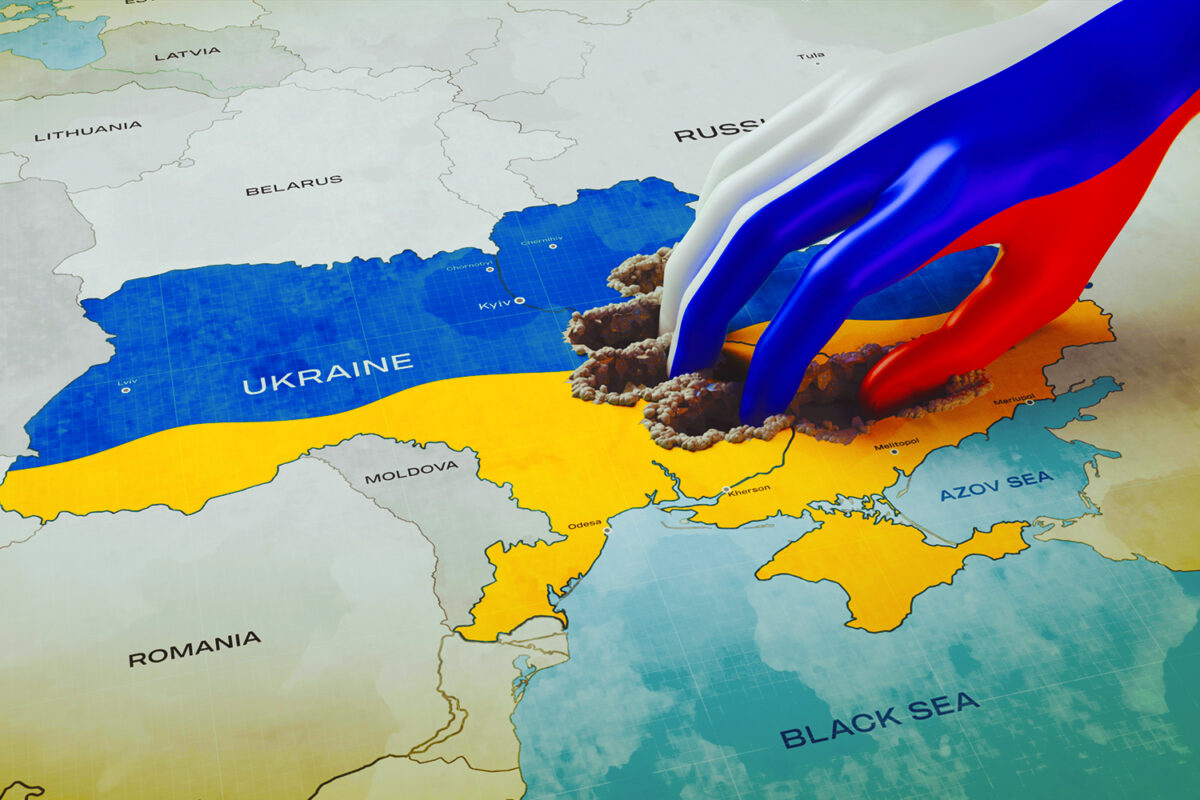
The war in Ukraine, and the outlines of a prospective settlement, illustrate this tension. Washington has gained politically and economically from the conflict; Europe has paid the price. Whereas Europe needed either to avert the war or secure a swift Ukrainian victory, the United States required a prolonged confrontation. President Biden voiced unwavering support, yet delivered materiel incrementally, rarely at levels capable of altering the battlefield decisively. By contrast, Washington has promised Taiwan hundreds of ATACMS systems for a hypothetical contingency.
The consequences for Europe have been severe. Surging energy prices invigorated the American shale industry, previously uncompetitive in Europe, while high costs rendered European industry from French vineyards to German steel manufacturers unviable. Investment has migrated to the United States, not least in energy-intensive AI-related infrastructure. Deprived of Russian gas, Europe now relies on expensive imports from the US and Middle East. German unemployment has risen sharply.
Politically, the war has offered opportunities to Washington. Russia has suffered grievous losses—estimates range close to one million casualties—and burned through its Soviet-era armour. Its economy has been refashioned for war. Chinese support, though crucial, has come at a cost: cheap Russian hydrocarbons are exchanged for Chinese manufactured imports that hollow out Russia’s civilian industrial sector. The Kremlin, once the senior imperial power, now risks dependence on a former subordinate. Sooner or later, Moscow will require a negotiated exit.
A drawn-out conflict affords Washington leverage to reduce Russia’s economic resilience and forestall its alignment with Beijing in any future confrontation in the Pacific. At the same time, the war has muted European aspirations for autonomous defence. Europe’s military weakness and fragmented decision-making have been laid bare. A diminished but militarised Russia would remain a threat to the Baltic and Central European states, complicating EU security for years.
Europe lacks America’s “exorbitant privilege”: Washington can issue dollars at will, exporting inflation; Europeans must fund their commitments through taxation or borrowing
Domestic European politics are fracturing under the strain. The Ukraine issue cuts across traditional party lines: elements of the right and left alike express sympathy for Moscow; others advocate confrontation. Against this backdrop, a leaked 28-point US-Russian peace framework has provoked consternation in European capitals. To many, it resembles a capitulation, resurrecting Russian demands first aired in Istanbul in 2022.
The draft envisages: guarantees of Ukrainian sovereignty coupled with strict limits on Ukraine’s armed forces; constitutional renunciation of NATO membership; a freeze along current front lines; international recognition of Russian control of Crimea, Donetsk and Luhansk; and the re-integration of Russia into global economic structures, including a return to the G8. A joint US-Russian council would supervise implementation, with sanctions triggered by violations.
European governments object on several grounds. A 600,000-strong Ukrainian army—with perhaps 150,000 combat troops after support functions—would be insufficient to deter Russia, making Europe permanently dependent on US security guarantees. The fate of frozen Russian assets is equally contentious. Europe lacks America’s “exorbitant privilege”: Washington can issue dollars at will, exporting inflation; Europeans must fund their commitments through taxation or borrowing. Under the proposal, $100bn of Russian funds would be spent on reconstruction, primarily in occupied regions; the remainder would capitalise joint US-Russian ventures in Russia’s energy and mineral sectors. In both cases the beneficiaries are Russian and US.
For Washington, such access represents a rare prize: influence in Russia’s resource economy, leverage over China—Russia’s primary customer—and a wedge between Moscow and Beijing. For Europe, it amounts to rewarding and emboldening Russia’s while undermining its own security.
The war in Ukraine has thus exposed a structural tension at the heart of the transatlantic alliance. America’s strategic objectives have always been to contain European nations and restrict their influence to Europe, and for the US the European nations remain competitors with global ambitions. Kissinger’s warning, dismissed decades ago, resonates anew.
One comment
Rachid Salbi
28th December 2025 at 10:07 pm
Very interesting article. Has Trump redefined the transatlantic Alliance? Will that relationship between Europe and US, ever go back to the pre “Trump 2” era, which can be widely considered as a successful one, that lasted over 70 years. Or will history note a pre and post Trump, transatlantic Alliance?