


This article is an extract from the forthcoming annual geopolity report, Strategic Estimate 2026. The full report will be published on 31 December 2025.
On 9th October 2025, President Donald Trump convened his cabinet one day after announcing that the “first phase” of the Gaza ceasefire would soon begin. During the meeting, he made a dramatic claim: “We settled seven wars… and this is number eight.” Earlier , addressing the UN General Assembly on 23rd September 2025, he outlined his narrative: “In just seven months, I have ended seven unendable wars… some lasting 31 or 36 years.”
Trump implied that he had achieved what previous administrations could not. Trump all but nominated himself for the Nobel Peace Prize, which he did not win in the end. So, has Trump really ended 7 wars?
Egypt-Ethiopia – Both African nations are not formally at war, but tensions have been simmering. Ever since Ethiopia built the Grand Ethiopian Renaissance Dam (GERD) on the Blue Nile, near its border with Sudan. Relations with Egypt have been simmering as the Nile is the lifeline for Egypt — it supplies about 97% of Egypt’s freshwater, the new dam will reduce water flow downstream, threatening agriculture and livelihoods for over 100 million Egyptians. Ethiopia insists the dam is crucial for its economic development and electricity generation and it believes it has a sovereign right to use its water resources.
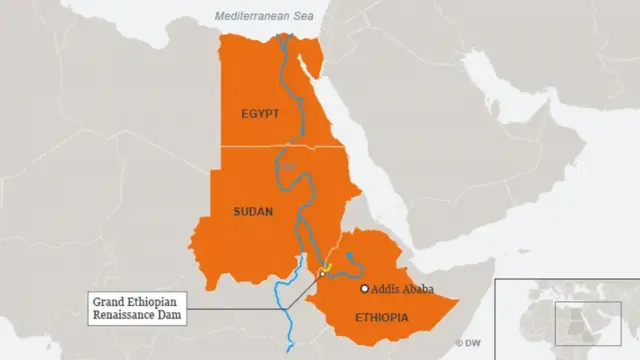 There have been no military clashes, but the rhetoric has been hostile. Egypt has repeatedly said that “all options are on the table” to protect its water security. Ethiopia has accused Egypt of “neocolonial attitudes” based on outdated treaties from the colonial era that favoured Cairo. No direct military conflict has occurred. There have been no airstrikes, troop movements, or declared hostilities between the two. Instead, the dispute has played out in diplomatic, legal, and propaganda arenas, with mediation efforts by the African Union (AU), the US and the Arab League and other African neighbours.
In July 2025, both countries resumed African Union–led talks, and some progress toward a framework on dam operation and drought management was agreed. However, no comprehensive agreement has yet been finalised. Egypt remains wary, calling for legally binding guarantees on how Ethiopia will release water in dry years.
Trump claims to have played a role in easing tensions, facilitating agreements and talks. But no war has taken place, therefore there was no war to end and tensions still remain, therefore Trump’s claim of ending this war is false.
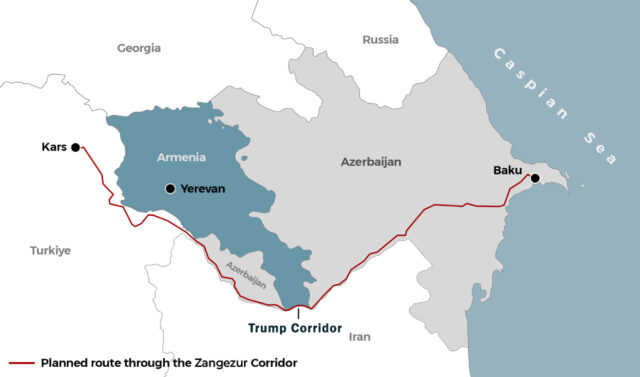 Armenia-Azerbaijan – The Caucasian nations have been at war effectively since the collapse of the Soviet Union in 1991 over the Nagorno-Karabakh enclave. This Armenian-populated region ended up inside Azerbaijan and over decades a number of wars has seen Azerbaijan acquire more territory. As this has taken place the ethnic Armenian population was displaced and the borders remained.
On 8th August 2025, the Armenian PM Nikol Pashinyan and Azerbaijani President Ilham Aliyev signed a peace agreement at the White House. Trump took credit for the agreement that established peace and this included the opening of transit and trade corridors, border normalisation and mutual recognition. The Zangezur corridor was officially called the Trump Route for International Peace and Prosperity.
Whilst Trump can be credited with ending this war, it should be kept in mind there are broader aims in the Caucuses by the US. The war was used by the US to achieve its main goal, of diluting Russian influence in the region. This is why, still today the deal has not been fully implemented. Some preconditions remain controversial, such as constitutional changes in Armenia, border delimitation and the rights of displaced persons. There has been opposition and protest within Armenia over what the peace deal might give up. So, the peace treaty exists in principle, but many details are still to be resolved. So, this is really a half-baked resolution for Trump, not a peace deal that has ended war.
Pakistan-India – In May 2025, both South Asia’s nuclear powers went to war that lasted 3 days. The war’s trigger was the Pahalgam attack in Indian held Kashmir, which India blamed on Pakistan based militants. This was the fifth major war between both nations since they gained independence in 1947, amongst many other skirmishes and attacks.
Both nations agreed a ceasefire after 3 days after Pakistan successfully downed a number of Indian jets and was on the offensive over Indian held Kashmir. The US intervention came when Pakistan could have dealt India a major blow but agreed to deescalate from a position of strength.
Trump has claimed US mediation helped bring about de-escalation between both nations and some of this is true. But what the US did was impose a halt to military action in this particular war, the underlying issue of Kashmir remains and this has not even been part of any post-war action. Therefore, to say Trump resolved this war is a major stretch of the term.
Serbia-Kosovo – Kosovo was a US creation during the Balkan wars of the 1990s. The US did this to weaken Russian influence in the Balkans and ever since Serbia – who was expanding during the Balkan wars has disputed Kosovo’s status as an independent nation.
Trump claims that diplomacy under his administration has helped reduce tensions between Serbia and Kosovo and he claims he’s ended the war. But whilst there have been talks between Kosovo and Serbia the underlying issues all remain unresolved. Kosovo is independent (recognised by many countries, but not by Serbia) but Serbia continues to dispute its border and minority rights. There is no fully resolved permanent peace deal in place.
Therefore, Trump has not ended or resolved anything in this conflict, despite his claims.
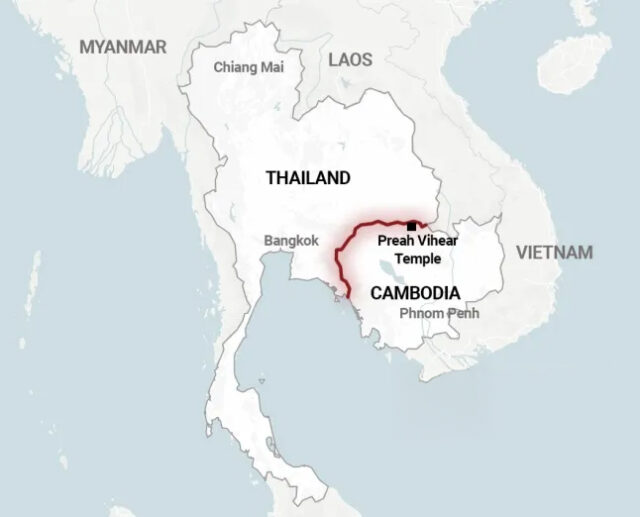 Thailand-Cambodia – The Asian nations have for long had border disputes that have led to regular low-level tensions. In May 2025 a skirmish at Chang Bok on the border between both nations led to the death of a Cambodian soldier. This heightened matters and set off a chain of retaliations and border tightening. Both countries began taking non-military measures: border crossings closed, trade and supply disruptions, restrictions on goods, etc. These economic and logistical measures escalated the stakes. Then in July 2025, heavy fighting broke out near the Ta Muen Thom temple (on the border between Surin Province in Thailand and Oddar Meanchey Province in Cambodia). This was one of the worst escalations in over a decade. Cross-border shelling took place as well as civilian casualties and displacement. Thailand declared martial law in several border districts.
The conflict drew immediate international concern. ASEAN (with Malaysia as chair), the US, China among others got involved as external actors and pushed for peace efforts. But there is no peace agreement. The conflict was more a border dispute than a war. De-escalation definitely occurred, but to argue, as Trump has, that he’s ended a war is contentious.
 Congo-Rwanda – Since 2022 the Democratic Republic of the Congo (DRC) has seen escalating conflict in its eastern provinces, notably with the M23 rebel group, which is widely reported to be backed by Rwanda. The rebels captured major cities in 2025, displacing millions that caused a serious humanitarian crisis.
In June 2025, the DRC and Rwanda signed a peace agreement in Washington, mediated by the US and Qatar. But the peace deal was rather limited. The peace deal did not include the M23 rebels as parties to the agreement. This is a major gap, since M23 is a central actor in the fighting. Rwandan troops have still not fully withdrawn. The withdrawal deadlines are missed or delayed constantly. Fighting, clashes and instability continue in many zones. As far as the locals are concerned the war is far from over
Trump’s claim that he has ended the Congo-Rwanda war is overstated.
Israel-Iran – At the Sharm al-Sheikh conference in Early October standing in front of the region’s leaders Trump boasted he had brought to an end the conflict that had been raging for 3,000 years. Trump had gathered the region’s leaders to get their buy-in for a peace deal over Gaza that had been raging for two years.
Trump took credit for brokering the ceasefire between Israel and Hamas, for helping end the Israel-Iran confrontations and ending the regional conflict. Israel has however, not abided by the ceasefire agreements; it consistently violated its terms by continuing with killings. It became clear very quickly that most of the peace deal lacked sufficient detail. Whilst this round of fighting stopped, the conflict is not fully resolved, many open issues such as governance, reconstruction and security still remain outstanding. With Iran, many tensions remain from its proxies in Syria and Lebanon and its nuclear programme. While there may be reduced hostilities or pauses, it is not a definitive end as there is no comprehensive settlement in place.
All of the conflicts Trump has proclaimed to have ended are half baked and not definitive in their ending. Trump continues to exaggerate and mislead them. Whilst there have been some diplomatic achievements such as ceasefires, all the conflicts Trump is taking credit for ending are still ongoing. Trump’s role in them was also extremely small and in many cases even disputed. In fact in most of the conflicts Trump is taking credit for there is no evidence of any real resolution.
Across all seven cases, the pattern is consistent:
- Some conflicts saw partial de-escalation
- None reached a permanent political settlement
- Trump’s involvement was often minor, symbolic, or exaggerated
- In several cases there was never a war to begin with
Trump’s narrative of “ending seven unendable wars” does not withstand scrutiny. At best, he brokered short-term agreements; at worst, he claimed credit for events he neither initiated nor completed. The geopolitical reality is clear: none of these conflicts are truly resolved, and several continue to deteriorate.