

|
Getting your Trinity Audio player ready...
|
Welcome to The Geopolity’s What We’re Watching (3W), our daily look at the interconnected worlds of Geopolitics, Economics and Energy. Curated from the world’s leading sources of information, our analysis and commentary is designed to help you make sense of the events driving the major developments in the world.
Since the US is – supposedly – seeking a negotiated settlement with Iran, a “deal” in Trump language, it is worthwhile reviewoing the actual on-the-ground impact of the earlier “deals” involving the US – Israel Alliance, regarding Gaza and Lebanon.
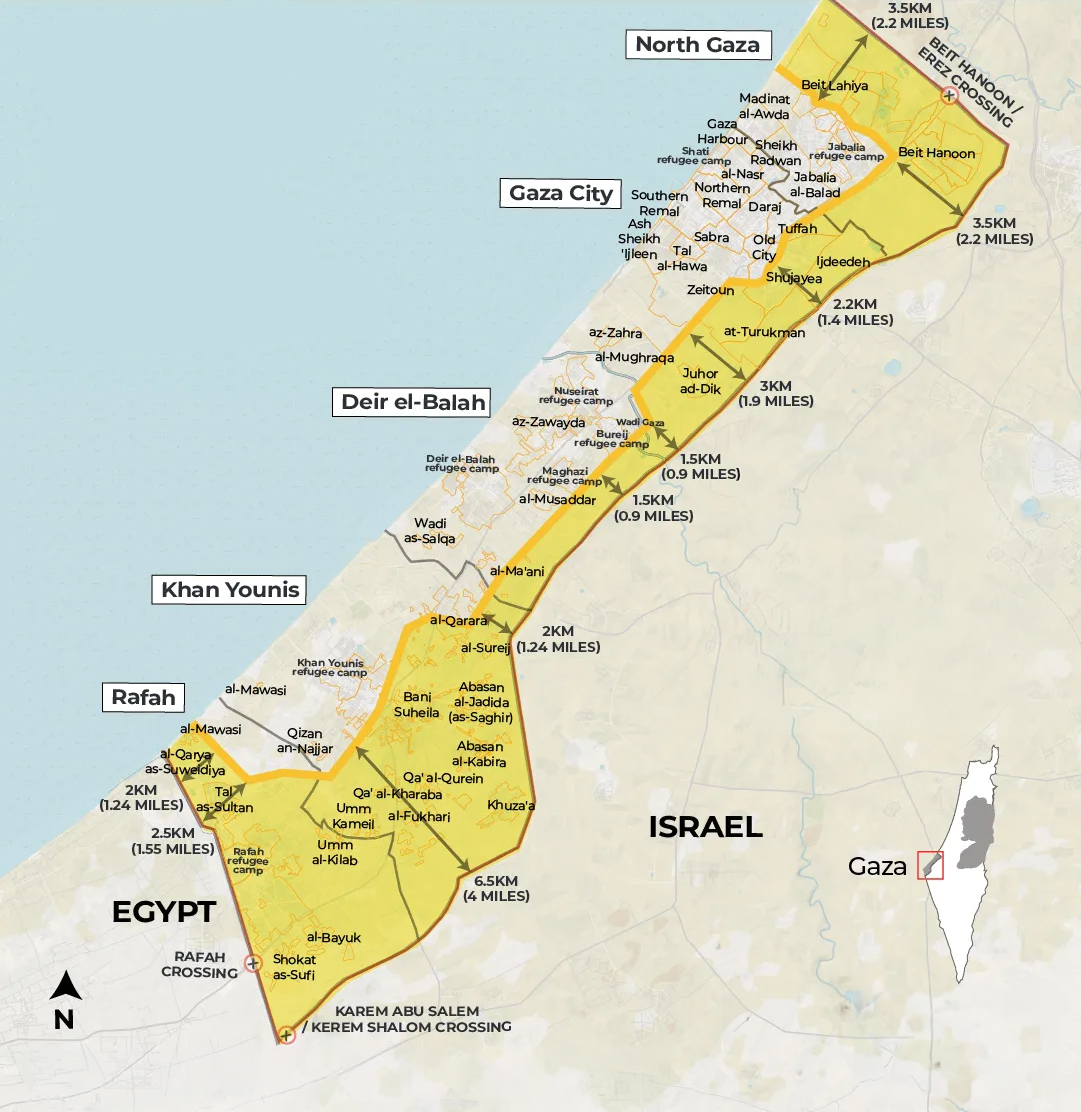
As to Gaza, according to Israeli soldiers spoken to by The Associated Press, the deal from October 2025 is a “joke” as the killing of Gazan civilians has never stopped. Since the deal went into effect, more than 900 people have been killed in Gaza. And things are getting worse, not better. April was the deadliest month in Gaza this year, with 73 people killed by Israeli soldiers. At the same time, the Israeli army is gradually expanding the so-called Yellow Line which demarcates the area inside Gaza it controls. Israeli prime minister Netanyahu has now given orders to the Israeli army to move the Yellow Line so far inside Gaza that Israel will effectively seize control of 70% of the entire Strip, writes The Guardian. Under the October deal, the Israeli army was to withdraw to an area 53% of the occupied territory. Netanyahu said: “We are currently squeezing Hamas. We now control 60% of the territory in the strip. You know, we were at 50, we moved to 60. My directive is to move to … 70%.”
Meanwhile in Lebanon, Israeli forces are making their deepest incursion inside Lebanon in a quarter century, well beyond the Litani river, writes The Associated Press. Netanyahu has nevertheless ordered troops to move further into Lebanon, writes Reuters. His main rival in the upcoming Israeli elections, Naftali Bennett, said he seeks stronger action across the entirety of Lebanon, including hitting the suburbs of Beirut.
In this context, as mentioned, the US and Iran are supposedly still talking about a peace deal. But, we at 3W note, the two sides appear no closer to an actual deal than they were a week ago.
Last Friday, US president Trump withdrew with his close advisors into the Situation Room of the White House, promising to come out with a big announcement, a “final determination” in Trump’s words. But, Axios writes, after two hours the meeting was adjourned without an update. An actual agreement was – supposedly, again – on the table, but trump demanded changes to what had been agreed by US and Iranian negotiators.
The best evidence that the negotiations are stuck came last Wednesday, when US president Trump threatened to “blow up” Oman. It has reportedly held talks with Iran about overseeing passage through the Strait of Hormuz, writes Al Jazeera. “Nobody is going to control it,” Trump said of the strait during a cabinet meeting in Washington. “It’s international waters, and Oman will behave just like everybody else, or we will have to blow them up.”
How to make sense of all this. In our 3W view, it confirms our initial assessment of the current state of the US – Israel Alliance War on Iran:
- The US wants to get out of the current stalemate, due to the impact Iran’s control over the Strait of Hormuz is having on the global economy (and US global standing). This is why the US wants to talk to Iran and make a deal.
- But, the US is not willing to make the compromises in the direction of Iran that are necessary to reach a real “deal”. It is by and large stuck in the “hegemon’s mindset”, thinking it can just demand and threaten to get what it wants, unable to see that the failure of its 40 days of war on Iran has proven this is no longer the reality. This is why the US keeps insisting on demands that Iran finds unacceptable.
- If and when signs present themselves that the US could be breaking out of this psychosis, in which it sees the world the way it wants to see it, not in the way it really is, the US’s “special ally” Israel quickly steps in. This is why Israel escalated in Lebanon over recent days, because that made it more difficult for the US and Iran to reach a deal, as Iran insists that the deal includes an end to Israel’s War on Lebanon.
- In parallel, Israel deploys its army of lobbyists inside elite US power circles to make US decision-makers change their mind, whenever their mind is not aligned with the Israeli perspective. This, in the 3W view, explains why Trump complicated negotiations when he demanded Saudi Arabia sign an Abraham Accord with Israel as part of the Iran deal. And, in our view it explains why Trump increased his demands regarding Iran’s nuclear capabilities again over the weekend. An opening for negotiations was created last week when Trump lowered his demands by saying he could not accept Iran having a nuclear weapon – a demand acceptable to Iran since it is focused on maintaining a civilian nuclear program. After a week of negotiations on this basis, this weekend Trump increased his demand again, suddenly saying an Iranian commitment not to seek nuclear weapons would not be good enough.
As 3W also noted last week, this effectively means Israeli stranglehold over US policy decision-making is devastating for US geopolitical interests. The current stalemate is further evidence of this assessment, as time is on Iran’s side, not the US’s.
As such, at 3W we expect over coming months and years the calls from within elite US power circles to distance the US from Israel, to grow. US senator Chris Van Hollen was a first with his opinion piece in The New York Times Over at Foreign Policy, Middle East expert Steven Cooke says “Cutting or ending U.S. military assistance and sales to Israel is all the rage these days”. He notes how influential analysts have raised the subject since regularly 2020, and agrees with the trend, for US interests reasons.